


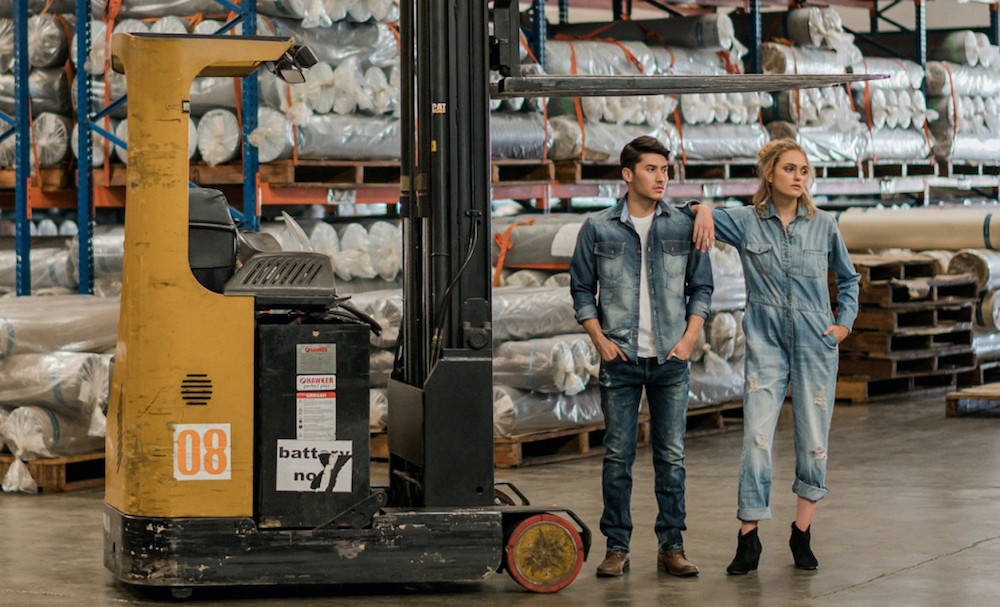
Badjatex’s Denim Blends Responsible Materials with Resource Savings
Since its start four decades ago, fabric manufacturer Badjatex has focused on producing denim responsibly. But recently, the company has ramped up its sustainability strategy.
In 2006, the mill in Bandung, Indonesia began using organic fibers, and it started incorporating recycled cotton into collections in 2009. Other low-impact material moves include sourcing BCI cotton, recycled polyester, TENCEL™ and REFIBRA™.
Badjatex also reduces the environmental impact of its dyeing and finishing through its wastewater treatment plant. The mill saves 5.7 liters of water per meter of denim, and with a total monthly capacity of 2.5 million yards, the resource savings add up. Over the past three years, it has saved 425 million liters of water.
Carved in Blue spoke with Badjatex about its sustainable developments and how it is using TENCEL™ in its collections.
Carved in Blue: Could you tell us a bit about your company?
Badjatex: We are a family-owned, third-generation, privately held company.
Carved in Blue: Badjatex has been open for more than 45 years. How does the denim business look different today than it did in 1975 when you were founded?
Badjatex: It has become a more efficient and sustainable business.
Carved in Blue: What is Badjatex doing to reduce the environmental impact of denim production? What are some of the latest techniques or technologies that you have adopted towards this goal?
Badjatex: We are investing in sustainable production and a next-generation waste/recycling management system—for example, our investments in G2 Dynamic from Jeanologia and new wastewater treatment plant.
We’re working on processes internally to create zero waste and closed loop system production.
Carved in Blue: What are your customers asking for when it comes to sustainability?
Badjatex: They are asking for a whole spectrum of sustainability from materials, process and waste management.
Carved in Blue: When did you first start using TENCEL™? What types of fabrics are you creating using TENCEL™?
Badjatex: From 2012 we are using TENCEL™. Initially we did dress and shirting fabrics. From 2020, we are focusing on bottom weights.
Carved in Blue: How does TENCEL™ fit into Badjatex’s broader sustainability efforts?
Badjatex: It is a key sustainable fiber.
Carved in Blue: What’s in store for Badjatex in 2021?
Badjatex: We hope to launch a zero-wash product which can be adopted commercially.