


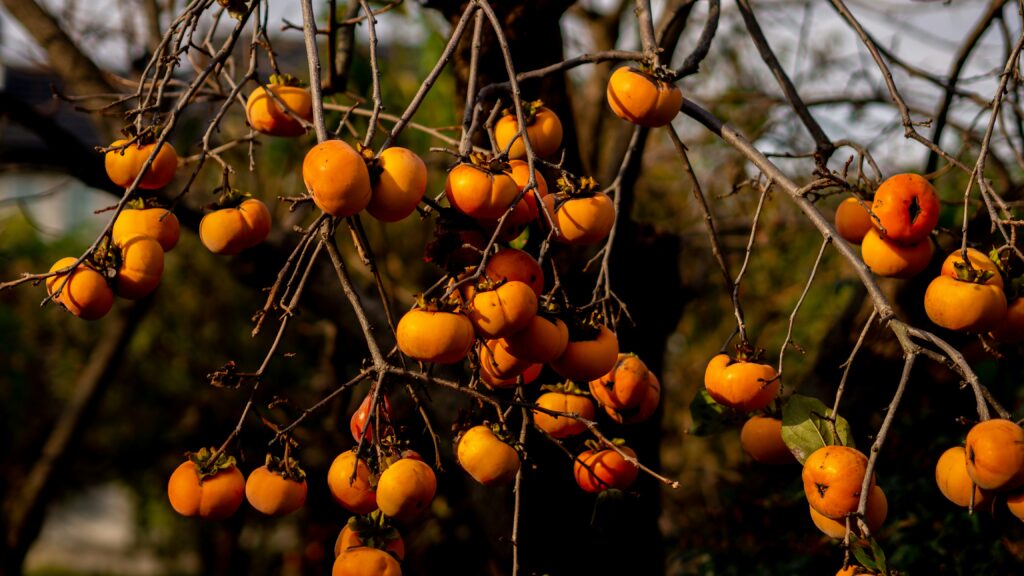
Fruit to Fabric: How Denim Has Adopted Ancient Persimmon-Based Dyes
Denim is most commonly associated with the color blue, but a traditional Japanese dyeing technique lends the textile a distinctly different hue.
The Kakishibu dyeing process dates back centuries. It gets its name from persimmons, “kaki” in Japanese. Unripe fruit from persimmon trees is picked and then peeled and fermented, which can take months or years. This process extracts tannins, organic compounds in the fruit, into the liquid.
Yarns are dipped into this dye and then left to dry in the sun. Tannins in the dye react to the sunlight, changing the shade of the yarn. With Kakishibu, a range of shades can be created by repeating this process, from oranges and ambers to rusts and browns.
Beyond the striking color, this persimmon-based dyeing can give natural fibers better durability, as well as help to repel water and resist insects and mold.
Brands have tapped into this less common dye. Back in 2023, Naked & Famous Denim made a limited-run collection of hand-dyed Kakishibu selvedge jeans. Kapital has used the dye in its Century Denim line. And as Studio D’Artisan was commemorating its 45th anniversary in 2024, part of the celebratory collection was kakishibu jeans.
“Kakishibu dyeing is a beautiful reminder of the value of traditional practices,” noted Naked & Famous Denim in a blog post.
Natural dyes have long been overshadowed by synthetic options, but sustainability demands are starting to bring plant-based options back into focus. Kakishibu dyes are available for purchase, allowing individuals to get their hands on the color for textile dyeing. What is old is now new, and the dyes offer a simplified, non-toxic coloring process to create new garments or upcycle textiles.
“Recently, Kakishibu has been recognized as a great alternative to synthetic dyes by more people interested in nature and wellness because it has many natural, beneficial properties, such as deterring insects and having an anti-mold effect for wood and cloth,” wrote Loop of the Loom, which sells the tannin dye and operates “zen weaving dojos” in the New York area. “We believe Kakishibu is a wonderful dye that can be shared with the world and the new generations.”