


Jeanologia, Aitex and Pizarro Close the Loop on Textile Wastewater
The textile industry has a significant water footprint. Each year, 93 billion cubic meters, or kiloliters, of water are used to produce fashion and fabric products, representing roughly 4 percent of all global water usage. The production of approximately 150 billion garments per year also creates between 17.5 and 50 billion cubic meters of wastewater.
Denim laundry innovator Jeanologia has been a pioneer in reducing denim’s water impact. Among the company’s technologies are solutions and machines that replicate the same water-based finishing techniques with minimal or no water, leveraging alternatives such as ozone. Now, Jeanologia is teaming up with the Textile Industry Research Association (AITEX) and Portuguese textile firm Pizarro to create circular systems for water in the industry.
The collaborative project, dubbed LIFE Anhidra, is supported by a grant from the European Union’s LIFE program, which funds initiatives addressing the environment and climate action. In the system developed, textile wastewater from washing and finishing is treated so that up to 95 percent of water can be reused. There is zero discharge or contamination and the process reduces wastewater generated by 98 percent. Additionally, no complex treatments are needed, and energy consumption can be reduced by up to 15 percent. The partners say it is not only resource efficient, but also cost less than traditional wastewater treatment.
“Anhidra not only transforms water management in the textile industry but also proves that sustainability and competitiveness can go hand in hand,” said Vicent Albert, product and technology director at Jeanologia. “This system sets a new global benchmark.”
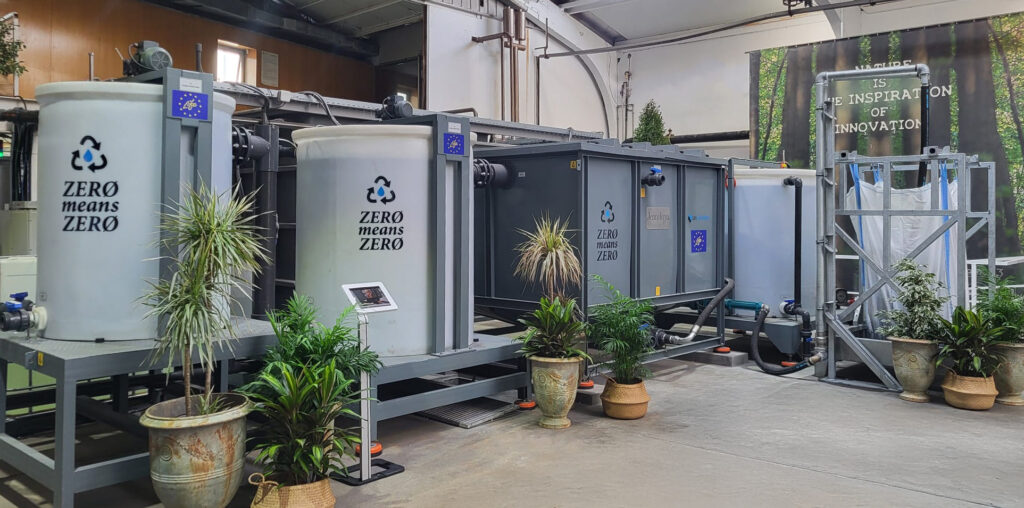
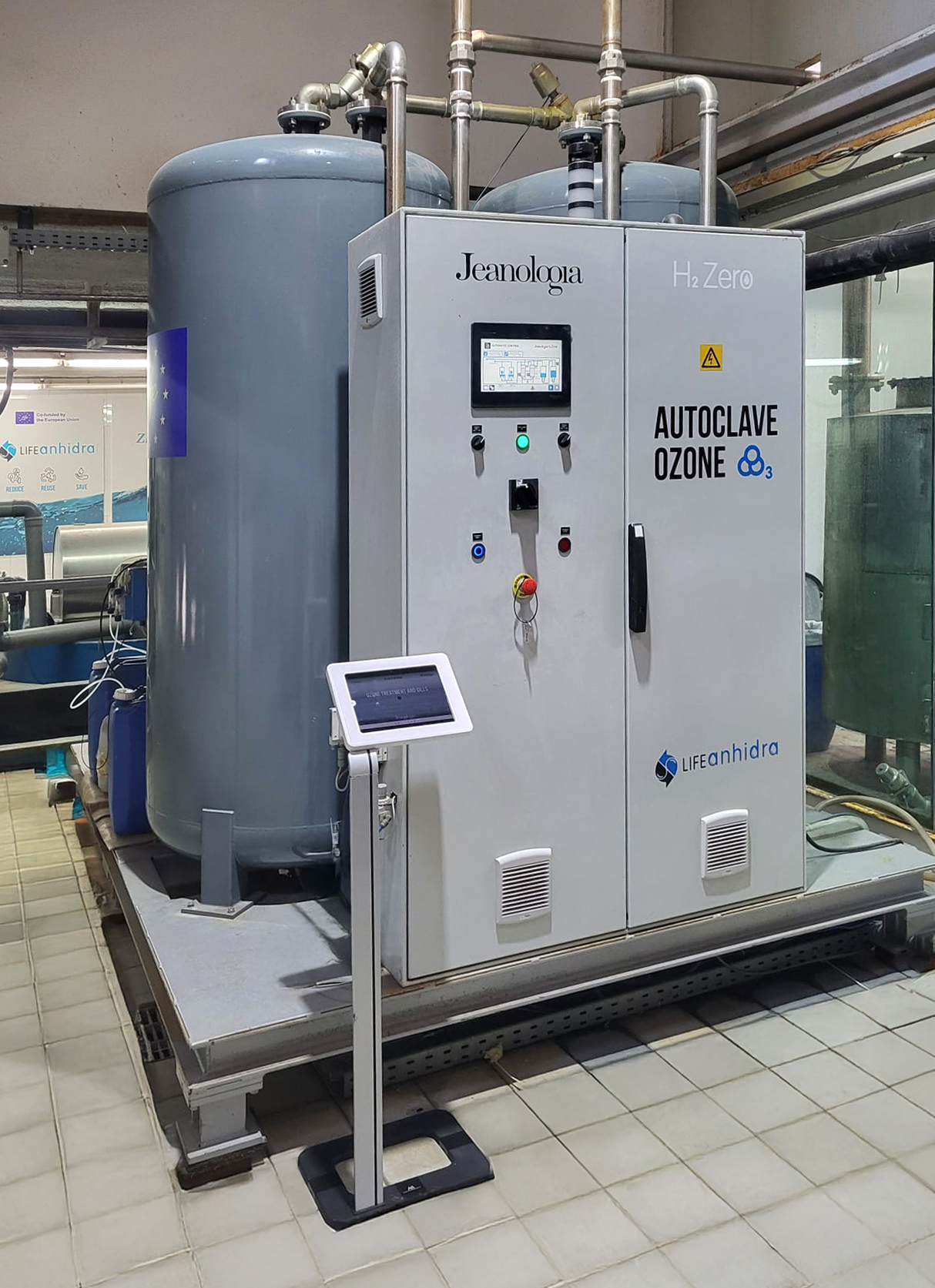
With the expertise of Aitex, Anhidra is not only focused on reusing water, but also the small textile pieces filtered and collected during water treatment. The partners are working to turn these fragments into new textile products.
Anhidra is currently in use at a pilot plant within Pizarro’s factory, and the collaborators held an event at the Guimarães, Portugal plant to introduce the solution. During the presentation, attendees got to see the pilot plant in action.
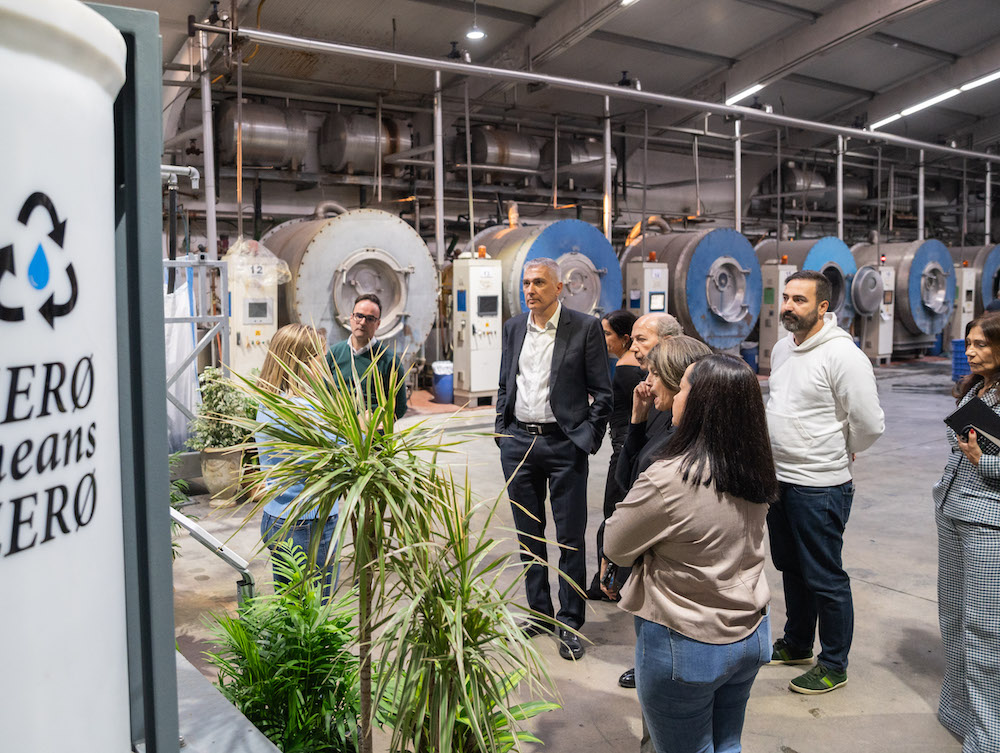
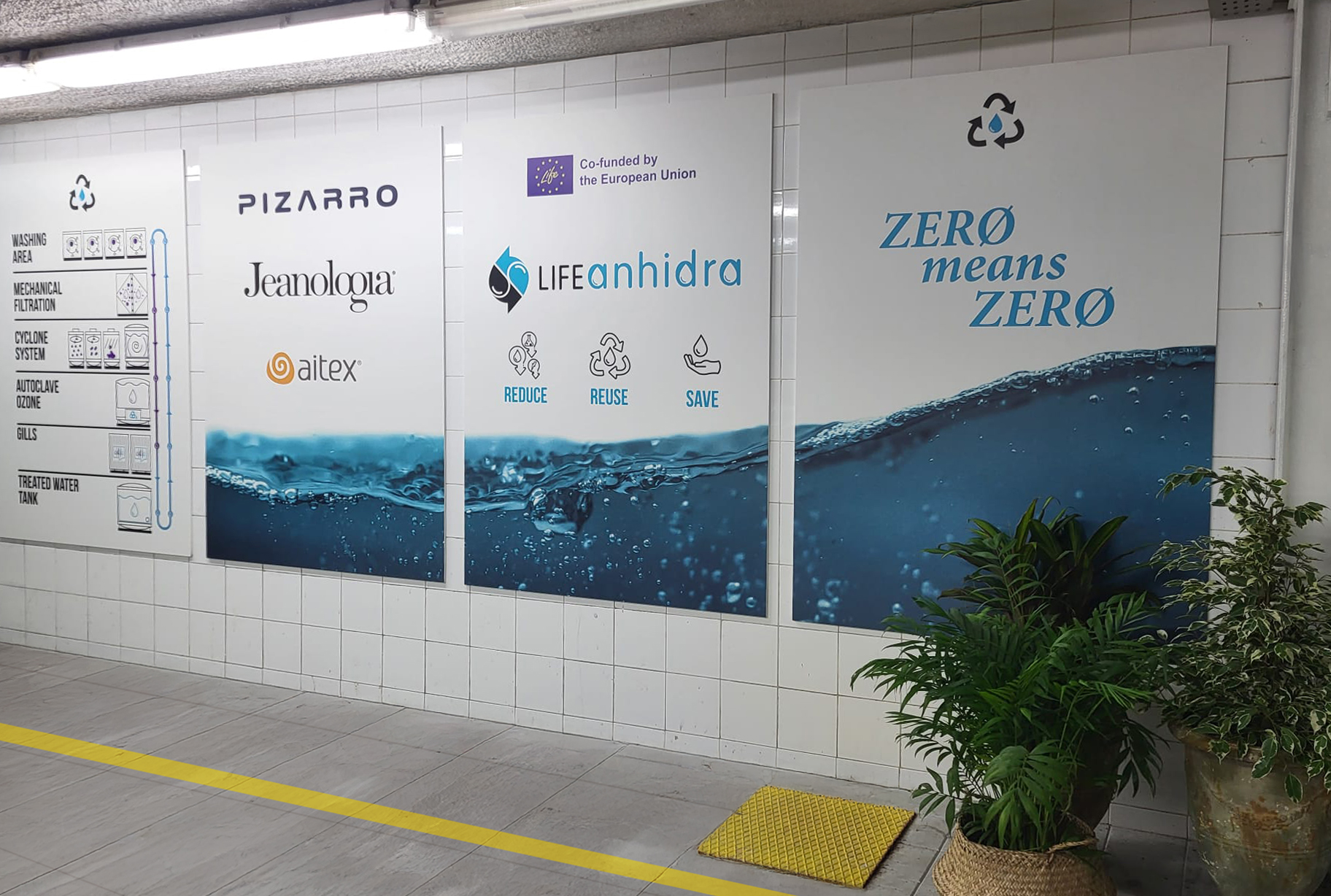
“Anhidra represents a radical shift in how we address environmental challenges in a resource-intensive industry like textiles,” said Manuel Pizarro, CEO of Pizarro. “It is a sustainable, efficient and essential solution.”
The goal is to introduce Anhidra at 36 industrial facilities in the next three years and scale the footprint to 100 factories within five years. If this target is reached, it is estimated that it will save 12.34 million cubic meters (kiloliters) of water per year.
“Our goal is to make this technology accessible to the entire textile industry, contributing to a more sustainable future for fashion and the planet,” said Vicent, who also served as the project coordinator.