


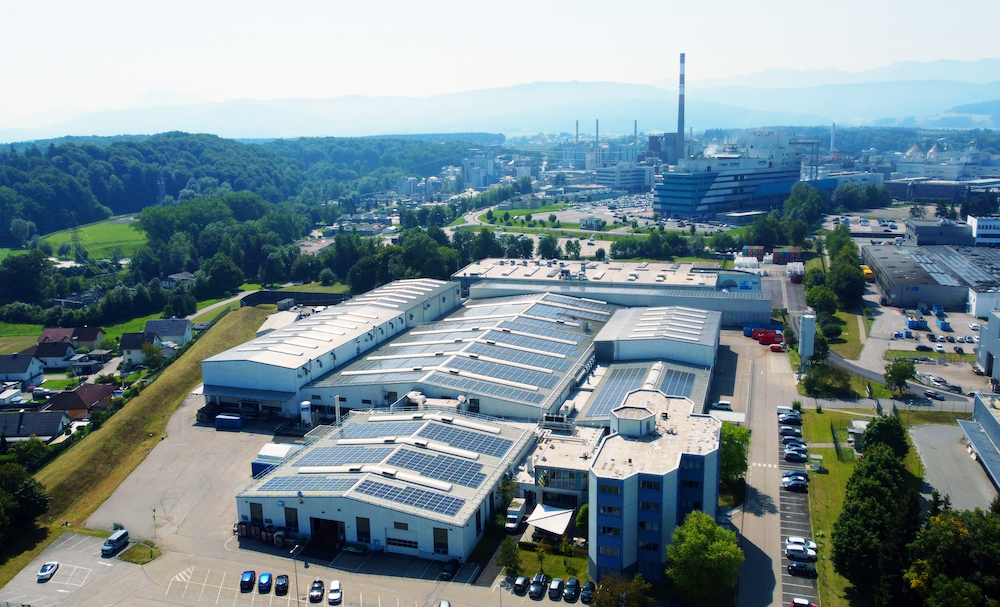
Lenzing Escalates Energy Transition with Photovoltaic Plant
As Lenzing Group works toward our target of net-zero emissions by 2050, one of the key investment areas is renewable energy.
We are increasingly powering our regenerated cellulose fiber facilities with energy sources such as solar, wind and biomass. Building on these efforts, the company is expanding its photovoltaic capacities through a new plant in partnership with Verbund. The new plant will produce 1.3 megawatts peak (MWp), bringing the photovoltaic park’s total output to 8.3 MWp.
“The partnership with Lenzing is an important step for us toward a sustainable energy future,” said Martin Wagner, managing director of Verbund Energy4Business. “Together, we are not only shaping energy independence of companies, but also actively contributing to the energy transition. The new photovoltaic system is further proof that we are driving forward the transformation of the energy market through cooperation. Verbund remains a reliable partner in supporting companies such as Lenzing on their path to a more sustainable future.”
Photovoltaic energy technology pulls from sunlight to create electricity. Sunlight is a low-impact, renewable input for energy.
Lenzing has made previous investments in renewable energy, with the simultaneous strategy of diversification. Three hydropower plants produce a total 2.3 MW, and it has inked deals for renewable energy supply, such as a contract with WLK energy for the purchase of around 13 MW of wind energy. It also teamed with Enery and Energie Steiermark to finance a photovoltaic plant with a capacity of 5.5 MWp in the district of Deutschlandsberg, Austria.
“To ensure our long-term competitiveness, we are focusing on a sustainable energy mix of biomass, photovoltaics, wind energy and hydropower,” said Christian Skilich, member of the Lenzing Group executive management. “Investments in renewable energies and production that is as energy autonomous as possible are central components of our strategy. Political support—for example, through electricity price subsidies—is equally essential in order to achieve our ambitious sustainability and climate goals.”
Producing cellulose fibers requires significant energy, so Lenzing has made energy a key part of its plan to meet its science-based targets. By 2030, the company intends to reduce Scope 1 and 2 emissions by 42 percent and Scope 3 emissions by 25 percent. In addition to choosing lower impact sources, the group is also enhancing efficiency at its production sites, turning to more sustainable logistics solutions and engaging its value chain partners to shrink Scope 3 emissions that stem from outside its own operations.