


Exploring the Kingpins x Ravensbourne Innovation Project, Part II
The denim industry should be consistently inspired by the upspring of new talent set to change the space.
The Kingpins x Ravensbourne Innovation Project tasked second year fashion students at the London university with designing a sustainable denim brand in just 10 weeks.
“It was very promising to see that much of creative and up to date ideas, styles and stories from the students,” Orta Anadolu’s Zennure Danisman said. “We can now call the students as ‘Young Designers’ because they all have proven to have a unique design insight and vision. Additionally, that was not only a design challenge for them. Each and every group had their business plans in that journey. They created a new brand with the marketing strategy, sales strategy and a brand image. Moreover, keeping sustainability at the core of the design methodology was very important and praiseworthy. Origami jeans that has created with the minimum fabric usage purpose, the aviator women collection for the powerful women, well designed tailored garments and futuristic images, sustainable materials, low impact designs including the carbon offset plan, crafted details, the packaging ideas, artisanal jacquard details and the runway ideas, and so on and so on…They all made me very excited and I was honored once again about how right we did about supporting young talents.”
Carved in Blue is sharing Part II in a three-part series of stories from the fledgling designers and the judges who reviewed their work—and what the project has meant for both.
Ravensbourne student Margherita Ghini counts the project among her greatest experiences thus far.

“It was part of our course to participate in the project but it would have been a challenging experience to have and to learn more about sustainability and how to create a brand,” she said. “One of the best experiences of my life. It taught me a lot of things and I am very proud of the results.”
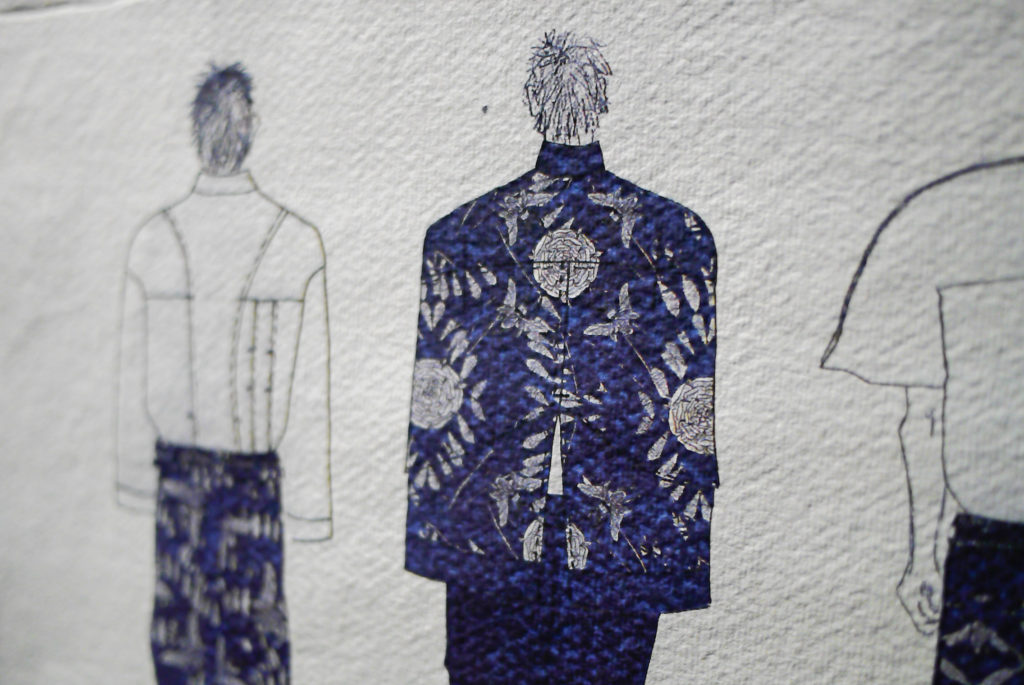
For her designs, which she called “modern and elegant,” jacquard played an important role.
While Margherita admits to the challenges of working in the denim industry, she’s eager to be part of charting its path forward.
“Having the possibility to change and to help the denim industry by being sustainable is the main goal right now,” she said. That’s why her designs were focused on combining design and sustainability. “We saw a gap in the market in this area as it looked like you could not be fashionable and sustainable at the same time. Most of the sustainable denim brands are lacking in creativity.”
Asked ‘what does Carved in Blue mean to her, Margherita said, “Carved in Blue is a way of sharing and learning about this industry, circularity, and sustainability.”
Judges who participated in the project, helping to identify students’ strongest points, also took a lot away from the experience.
Denim Forum’s Sue Barrett said, “One of the things I loved was seeing their passion and creativity in their early mood and concept boards. Remember sketch books…!?” And even more than that has changed since her days as a student. “Students now [are] far more experienced in how to be ready for the marketplace. In some cases, the students seemed so advanced that they were ready to enter the arena and consult through their agile mindsets.”

The feeling was similar for Zennure, and these young designers are changing with today’s consumers’ needs.
“Honestly, both the market dynamics and customer/consumer expectations is changing fast. In university, the creativity and individuality can be assumed as the most important criteria to be successful, while (unfortunately) in the industry there are much more parameters that you have to consider during the production,” Zennure said. “Sometimes these criteria can limit creativity in the market. Trends are no longer as reliable as they were. Choices shift, climate changes, expectations vary, target consumers and their preferences change, good old times when we were certain of what we were doing are over. Yet, we believe, this is not taking us back from where we are, crisscross we are moving forward, since we have to move forward to survive in the industry. Thus, we have to re-define, re-constructed, re-model and most importantly re-think about every fiber, every drop of water, every biochemical, every dye, every finish, every ingredient during our creation of denim in order to expand the life cycle of the design.”
What has changed since the days YKK’s Katie Doherty was a student, is how much sustainability plays into the whole fabric of the conversation. Now, it’s “more common and the main focus for the future,” she said. “Now you can get much more information and also there are many options for purchasing fabrics/trims made in a more sustainable way.”

The sense of collaboration was another positive aspect Sam Trotman from Denim Dudes picked up on during the project.
“I feel that this year’s students really stepped up their projects in terms of creative collaboration amongst each other and also their overall engagement with the brief of sustainability within the supply chain,” he said. “A lot of the groups had got to grips with industry terminology and new forms of technology that are already being implemented in the market which was fantastic to see. It’s impressive to see the student start to speak the same language as the rest of the industry at educational level, which is a testament to the course and its teachers no doubt.”

When asked what advice they would offer to the students, here’s what each judge had to say:
Sue: “When I started in the industry, the elders were the ones who spoke and you just listened. It’s very different now. We need new business models based on youth-driven entrepreneurial spirit so speak up. Be respectful but speak up. Take the knowledge you’ve gained and remember that 80 percent of manufacturing decisions start at the design stage and soon that will be you. So, choose well and do it well.”
Zennure: “First of all, the students need to be aware of their luck about having that much of valuable and experienced mentors. They are learning the denim history and the denim processes, from the people who devote their lives to denim. And at Ravensbourne, they’re learning the material science and the design techniques from the most important experts in the design era. Together with this consciousness, and thanks to digitalization and the transparency in the industry, we believe their vision and we advise them to create more environmentally-friendly designs. We believe in the creativity of young designers and are happy to encourage them to use timeless fabric, denim in their designs that appeal to all ages and tastes.”
Katie: “Keep up the good work and continue working hard towards your goals and dreams. Also, be kind to everyone you meet, you never know who will be a good connection later down the line!”
Sam: “Keep being curious and have an open mind. Be open to learn, unlearn, and relearn. Some things you know and believe might be wrong, and you should be prepared to accept this possibility and change your mind.”