



Consumers Want Natural Materials. Here’s How MMCFs Factor In
Consumers are paying more attention to the fiber content in their clothing. Creators on social media are showing themselves pitching polyester garb and searching for natural materials. Gen Z has taken the synthetic backlash outside of fashion, adopting the term “polyester” as an insult lobbed at something deemed low-quality or cheap.
This attitude shift toward natural materials could be a boon for the planet. It marks a move away from fossil fuels toward plant-based options, and unlike polyester, natural materials biodegrade. Yet one key issue could hold this movement back: a fiber gap. The amount of cultivated materials like cotton, hemp and wool will fall short of the anticipated consumption and demand. Man-made cellulosic materials like lyocell, modal and viscose are primed to fill this supply need. Produced from the renewable feedstock of wood, suppliers like Lenzing Group will be able to provide the volumes needed to offset the gap of natural fibers in the future.
Consumer opinion is another reason to adopt MMCFs. As the Textile Global Report, 2024-2025 study conducted by NielsenIQ Hong Kong for Lenzing found, these materials are already sought-after. Eighty-five percent of shoppers say that they are more apt to buy clothes made with TENCEL™ fibers.
This fiber-conscious mindset affects product research, with 65 percent saying it is worthwhile to look for TENCEL™ on content labels. Some of the attributes they associate with TENCEL™ are “quality,” “trustworthy” and “made from natural materials.”
Importantly, 62 percent of consumers say that TENCEL™ gives them certainty to make more conscious fashion decisions. This vote of confidence from shoppers reflects the work we are doing in climate stewardship.
Among the accolades we’ve received is a leading place in Canopy’s Hot Button report ranking man-made cellulosic fiber producers on aspects including wood sourcing and chemical management. Last year, we received top marks from CDP, putting us on the Climate A-list. We’re also investing in renewable energy and afforestation projects to support carbon reduction.
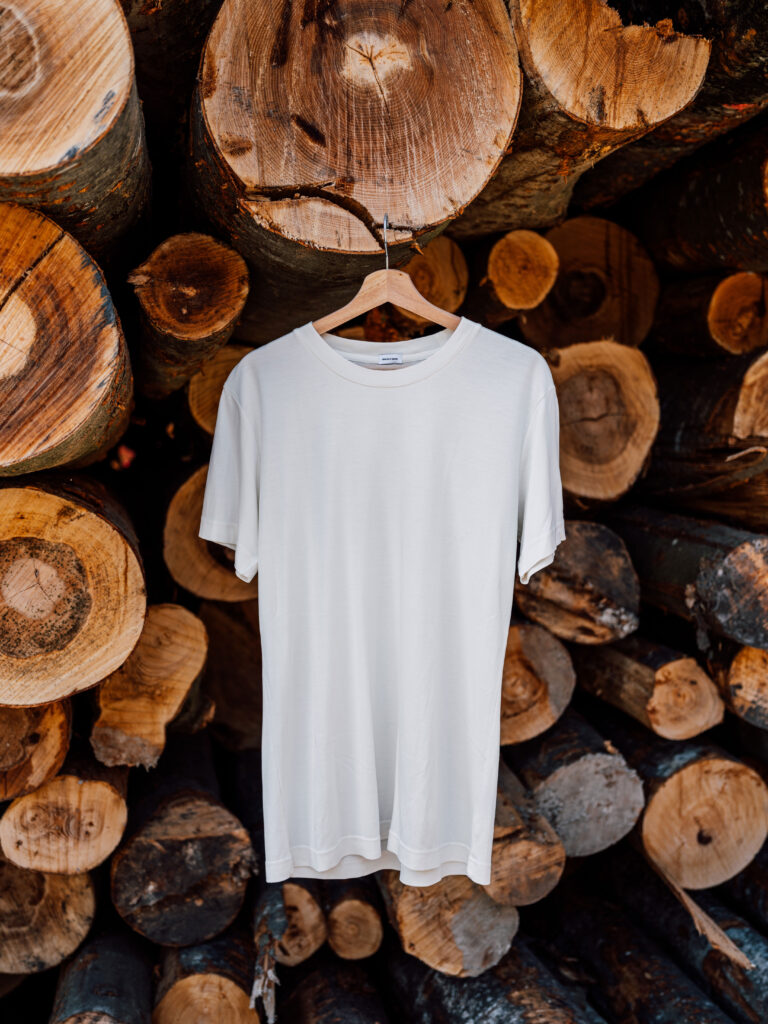
Although synthetics and MMCFS are different factions of fibers, they are both manufactured. Wood-based materials offer some of the traits that product developers are used to in polyester, including uniform fiber length.
In denim, TENCEL™ Lyocell has been used to give jeans a silky smooth hand feel that allows for comfortable rigid constructions containing no spandex. We’ve also engineered fiber solutions like TENCEL™ Lyocell – HV100 that allows for wider use of TENCEL™ in a denim garment, taking stress off the cotton supply.
To make a bigger dent in fashion’s environmental impact, consumer demand needs to trickle up into product development decision-making. For inspiration on how mills, manufacturers and brands are using TENCEL™ fibers, explore the Carved in Blue archive.