


TENCEL™ Lyocell – HV100 Opens Up New Applications in Denim

Since TENCEL™ Lyocell burst on the denim scene in the 1990s, the wood-based fibers have been making inroads in the industry. Despite the advances, there was still one thing holding back adoption: they simply couldn’t fully replicate the look and texture of cotton-heavy jeans. TENCEL™ was shinier, drapier and grayer than cotton-based denim after the washdown. For some denim programs, this was still a fit, but not everyone wanted that look.
Due to this visual differentiation, TENCEL™ has typically been used predominantly in weft applications, making up the interior weave of a garment. Lenzing Group is looking to break this limitation and bring TENCEL™ Lyocell into warp weaves with the introduction of TENCEL™ Lyocell – HV100.
The process behind HV100 is based on the irregular properties of natural fibers. Compared to lyocell, which is man-made in a factory and has a standard fiber length, shape and diameter—much like store bought spaghetti noodles—cotton fibers vary in length. This irregularity is what gives cotton its texture and highs and lows when denim is washed. HV100—which stands for “high variation”—has similar specifications to this by cutting fiber to different lengths between 10 and 28 millimeters.
For denim, this new fiber option from Lenzing offers new possibilities to bring TENCEL™ Lyocell into the warp of jeans. Bringing the appearance closer to a genuine denim look, HV100 has the texture that you would expect in a pair of traditional jeans. It also has a more opaque, matte look and less drape, providing more body yet with a natural softness. Although it is meant to bring lyocell one step closer to a vintage look, the fibers are still typically blended with cotton to give bottom-weight garments more heft.
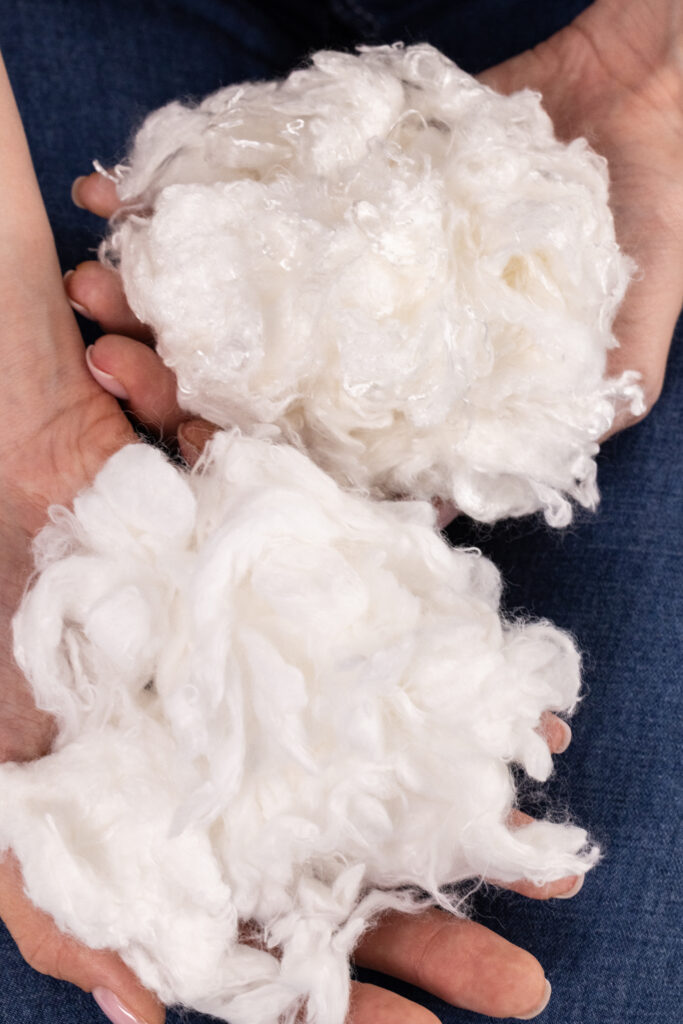
“With the introduction of TENCEL™ Lyocell HV100, we are reaching a new milestone in denim innovation,” said Tuncay Kılıçkan, head of global business development, denim, at Lenzing. “This new development delivers the authentic wash-down performance and opaque, matte aesthetics of a genuine denim, while maintaining the sustainability advantages of TENCEL™. HV100 also enables new design expressions with textured surfaces and a natural, comforting softness — opening fresh possibilities for denim creators worldwide.”
Earlier this year, we sent sample bales to four mills: Advance Denim in China, Textil Santanderina in Spain, Orta Anadolu in Türkiye and AGI Denim in Pakistan. This allowed them to secretly test and sample HV100. Later during the summer months, we expanded this mill outreach and sent samples to more manufacturers around the globe. The results of some of these trials will be on view at Kingpins Show Amsterdam this month.
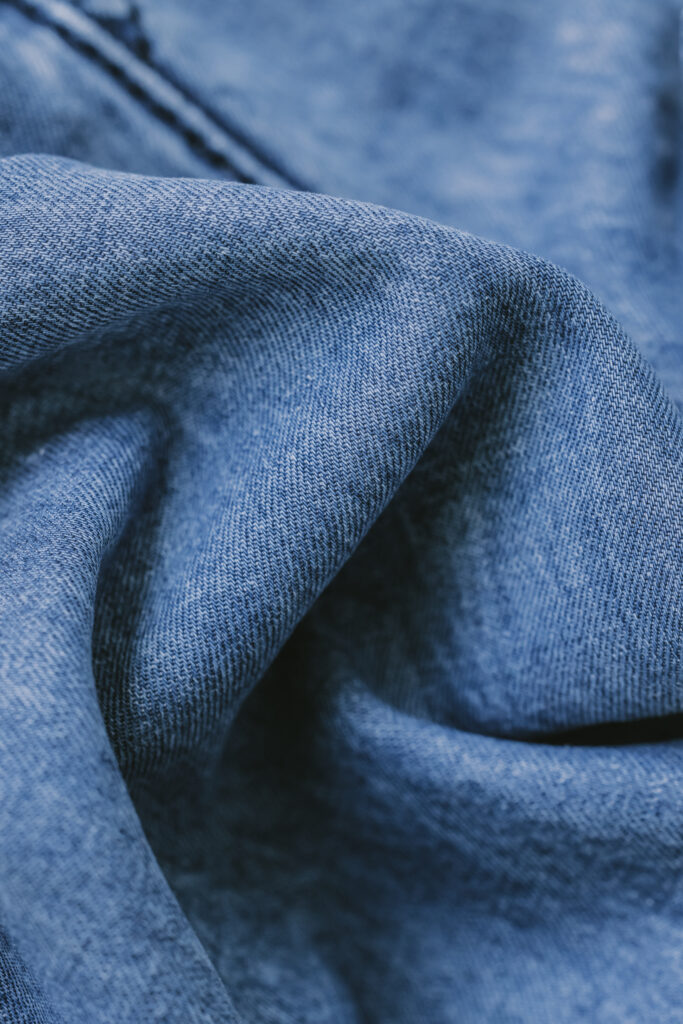
“From a technical standpoint, TENCEL™ Lyocell – HV100 allows us to innovate and co-create with our mill partners in new ways,” said Florian Heubrandner, vice president global business management textiles at Lenzing. “The controlled variation opens up possibilities for yarns and fabrics that weren’t previously achievable with Lyocell. We’re already seeing innovative approaches from different markets that suggest significant potential for product differentiation. We look forward to working with even more partners to use these versatile fibers across a wider range of textile applications, from apparel to home.”