


At Global Fashion Summit, Lenzing’s Krishna Manda Makes Case for Collective Investment
Sustainability is facing an uphill battle at the moment, as disruption and business challenges find budgets and priorities shifting to urgent corporate needs. Yet, the need for adaptation is still present.
The Global Fashion Summit, presented by Global Fashion Agenda, challenged delegates to renew their commitments, adapt to change and accelerate their impact rather than pulling back. From May 5 to 7, around 1,000 of the industry leaders from more than 48 countries gathered in Copenhagen to dissect how collaboration and redesigned business models can support “Building Resilient Futures.”
“Disruption has always been our industry’s most reliable design brief,” said GFA’s CEO Federica Marchionni during her opening remarks. “We have been here before—at the edge of the unknown—and we have always sown something extraordinary from it. The thread that runs through every revolution in this industry is the same: the imagination and the courage of people who chose to act.”
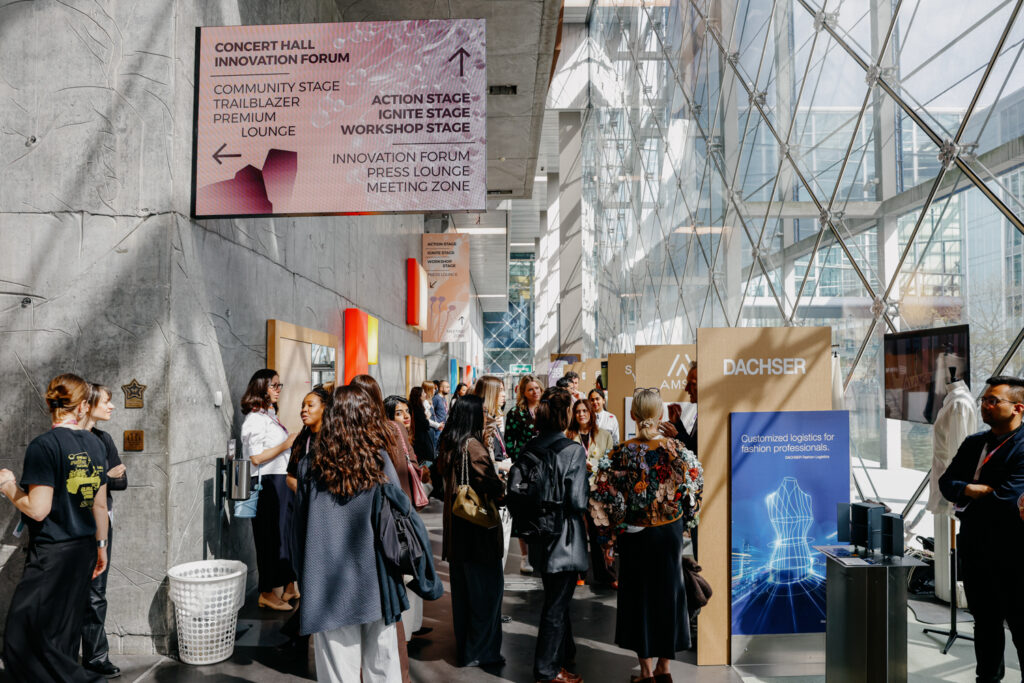
Lenzing Group was among the participants, joining brands, policymakers, investors, innovators and NGOs. After some gatherings and workshops on the 5th, the attendees convened at the Copenhagen Concert Hall on May 6 and 7 to hear panel discussions, case studies and insights from others in the industry.
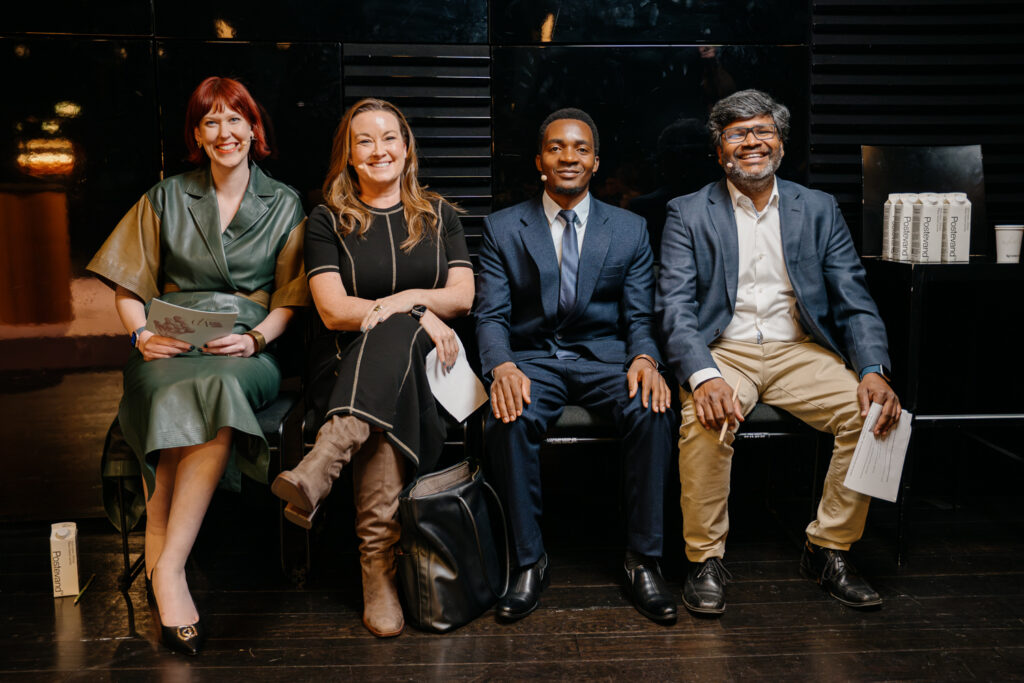
On May 6, Krishna Manda, global head of sustainability at Lenzing Group, participated in a panel about “Scaling Innovation: Next Gen and Low Impact Materials.” Among the points covered in the session—which also included speakers from Uncaged Innovations and Living Carbon Capture Dye System—were whether next-gen materials can go mainstream and scaling these fibers in a cost-friendly manner. Among the requirements in making this system-wide shift are commitments from brands.
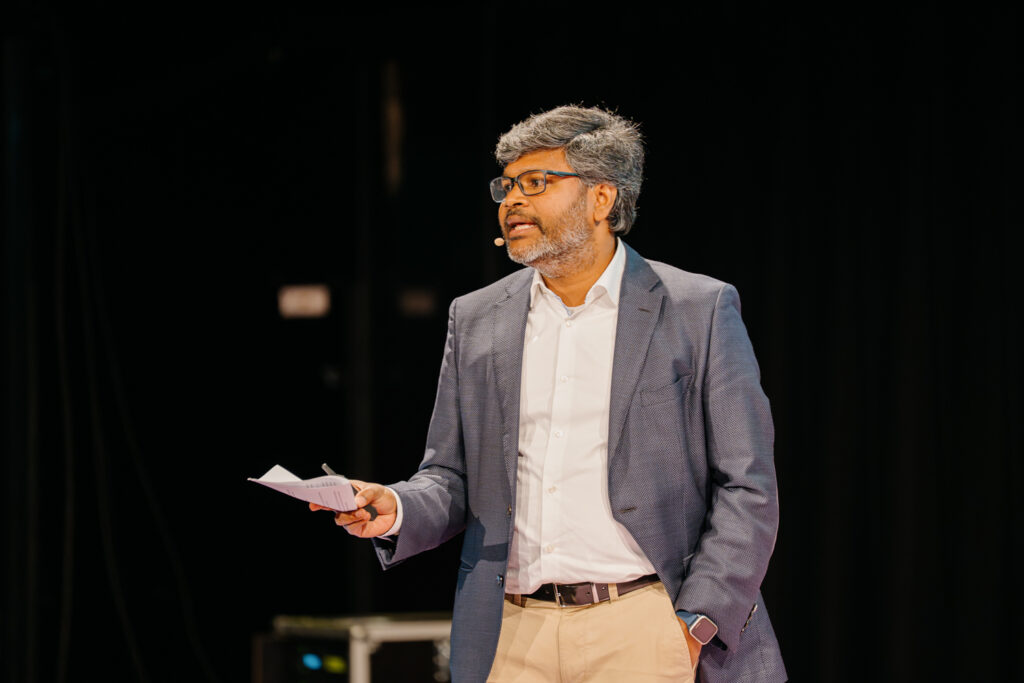
During his presentation within the session, Krishna laid out Lenzing’s goals and investments around climate impact. On its path toward net-zero in 2050, Lenzing has to-date reduced its emissions across Scopes 1, 2 and 3 by 20 percent. Reaching this result took expenditures of around 50 million euros, and the company expects to spend an additional 150 million euros to reach its target for 2030. For the entire industry to reach net zero, it would take roughly $1 to 2 trillion.
These investments in carbon reduction don’t even include the cost of the work being done in circularity. Lenzing has put 25 million euros into alternative feedstock innovation, discovering how to use everything from post-industrial and post-consumer cotton textile waste to hemp and banana fiber in its man-made cellulosic fiber production—which would traditionally use wood-based raw materials.
“If you are making the same product but with ultra-low impact, that is also innovation, because you need to scale it up to work in the whole value chain,” said Krishna. “And you need to change the way you are working, your equipment, everything needs to be changed.”
He asked the audience to consider who should be paying for these investments, noting that there is no straightforward answer. On circularity in particular, there is a premium since the processes around collection and sorting are not scalable and are being established. The answer is also probably not putting the weight on one brand’s shoulders since they are competing against their peers. Lenzing is looking into initiatives that could collectively help support the growth of circular solutions.
Krishna would like to see the industry make more consistent commitments on fiber purchasing, which are currently missing. “That’s what we need from the industry,” he said. “Not that one company takes the risk, but the risk is distributed.”
Some other topics addressed during the seminar series were circularity, microplastics, durability and repairability, decarbonization, labor, transparency and more.