


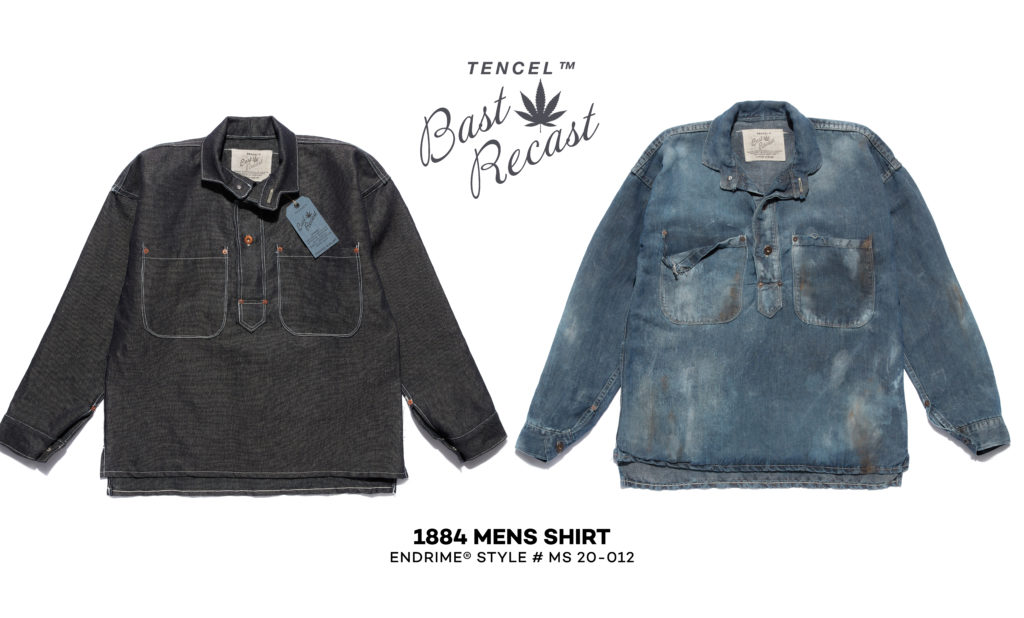
Bast Recast Deep-Dive: Mens Shirt 1884
In the fashion industry, the term “workwear” typically describes menswear relating to the aesthetic of men’s garments originating from the early 20th century.
Such garments, like the chore coat, engineer jacket or dungarees—usually made from heavy denim or canvas—were initially designed and manufactured for the comfort and sometimes safety of working people.
Shirts have been around for millennia. The humble work shirt as we know it is documented to have been introduced around the early 1900s. This kind of workwear shirt made up the bulk of men’s everyday clothing for a wide range of professions—carpenters, mechanics, railroad engineers, farmers, miners. The simple laborer wore whatever they could get their hands on, usually purchased secondhand or picked up from charity.
Most laboring men had a pair of trousers or overalls, a belt, work shirt, cap, socks, boots, and a winter coat. These items had to last for many years before being replaced. Even the upper classes adopted men’s workwear for sports and casual attire on the weekends. Every local shop and city department store carried the essentials: durable pants and overalls, flannel shirts, wool coats, and flat caps. Improvements in materials and fit created new looks every season; however, styles changed little from decade to decade.
Our overshirt style is actually based on a zero-waste pattern, which means that the entire pattern fits on the fabric. And rather like how you can unravel a kimono and it becomes a fabric again, this particular garment is literally end-to-end.
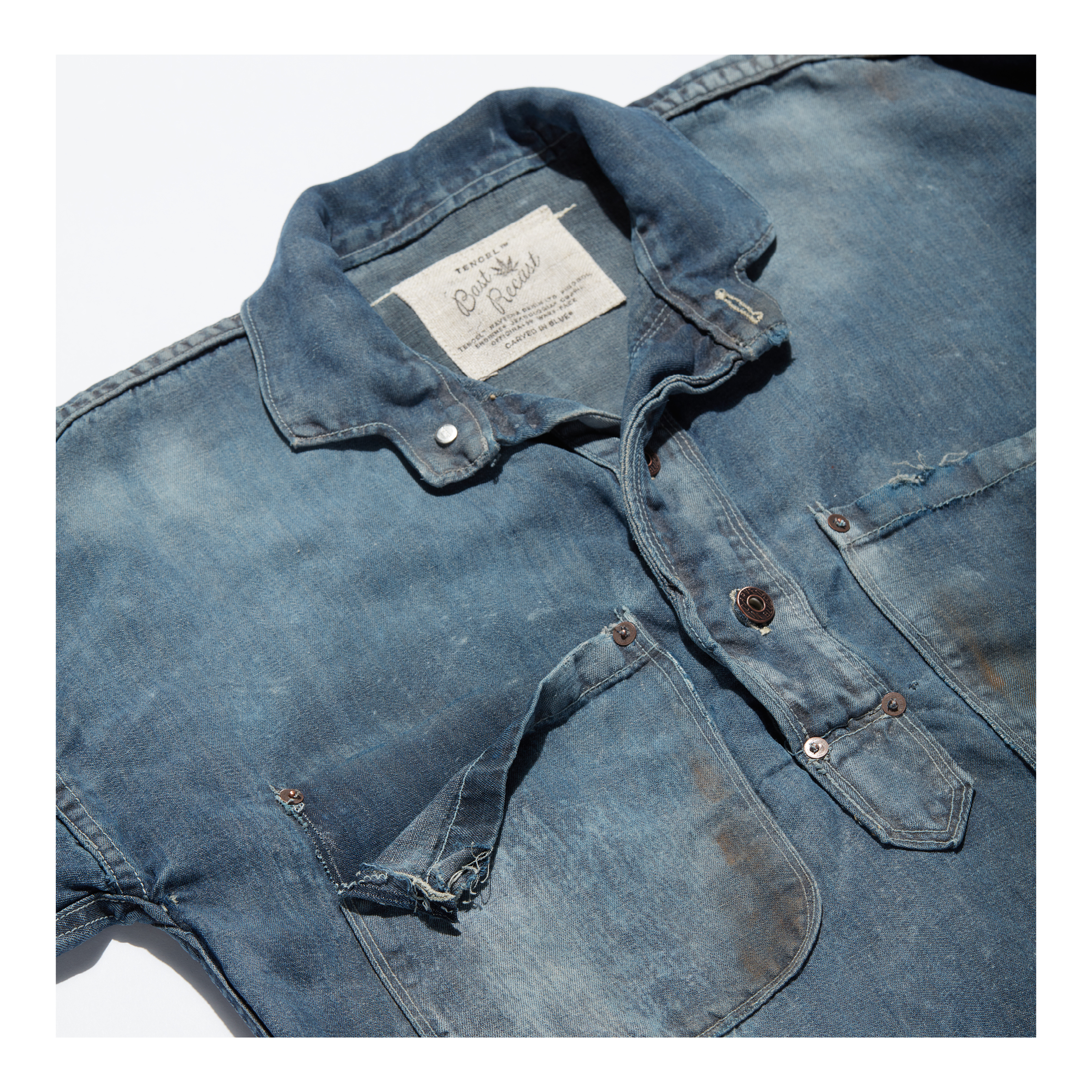
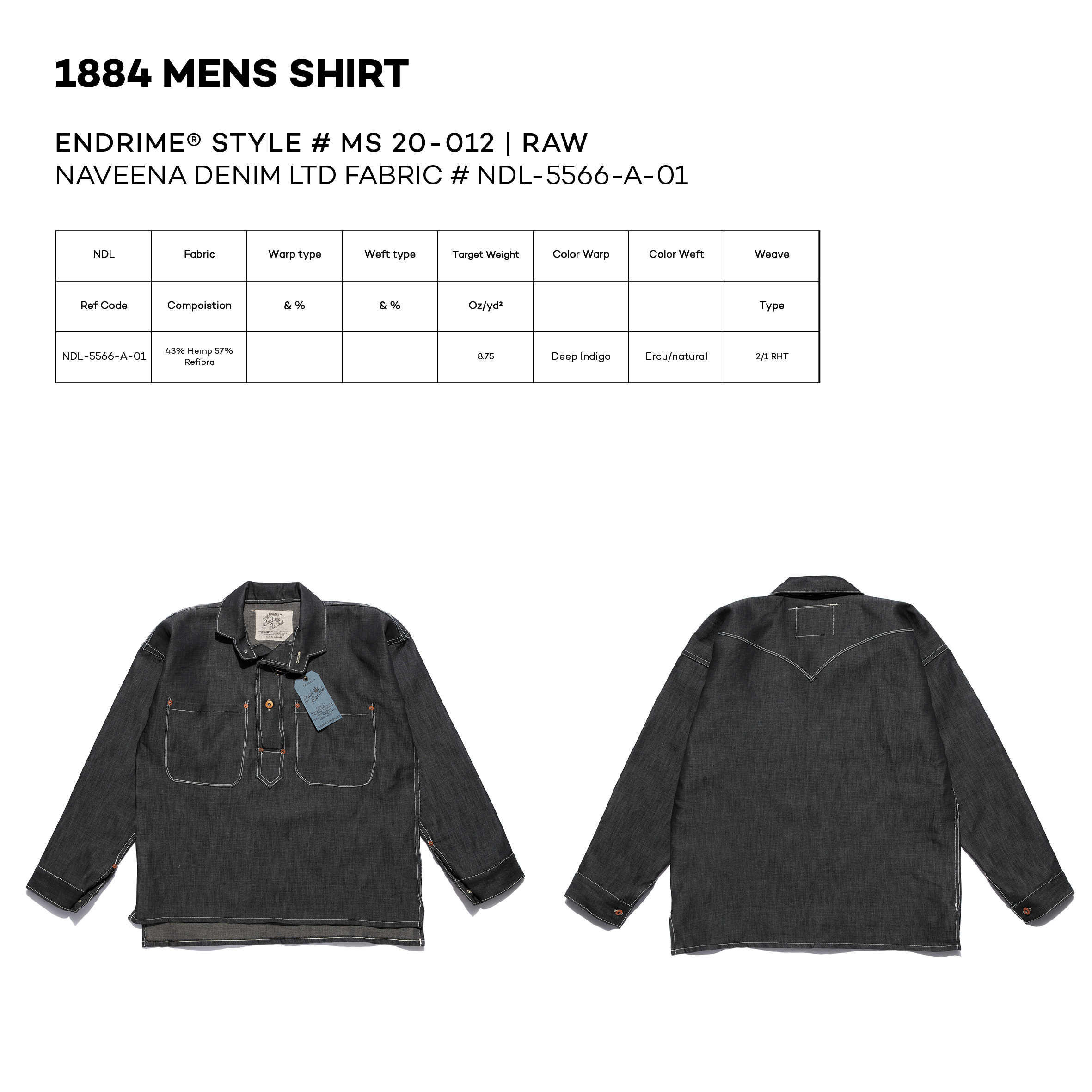
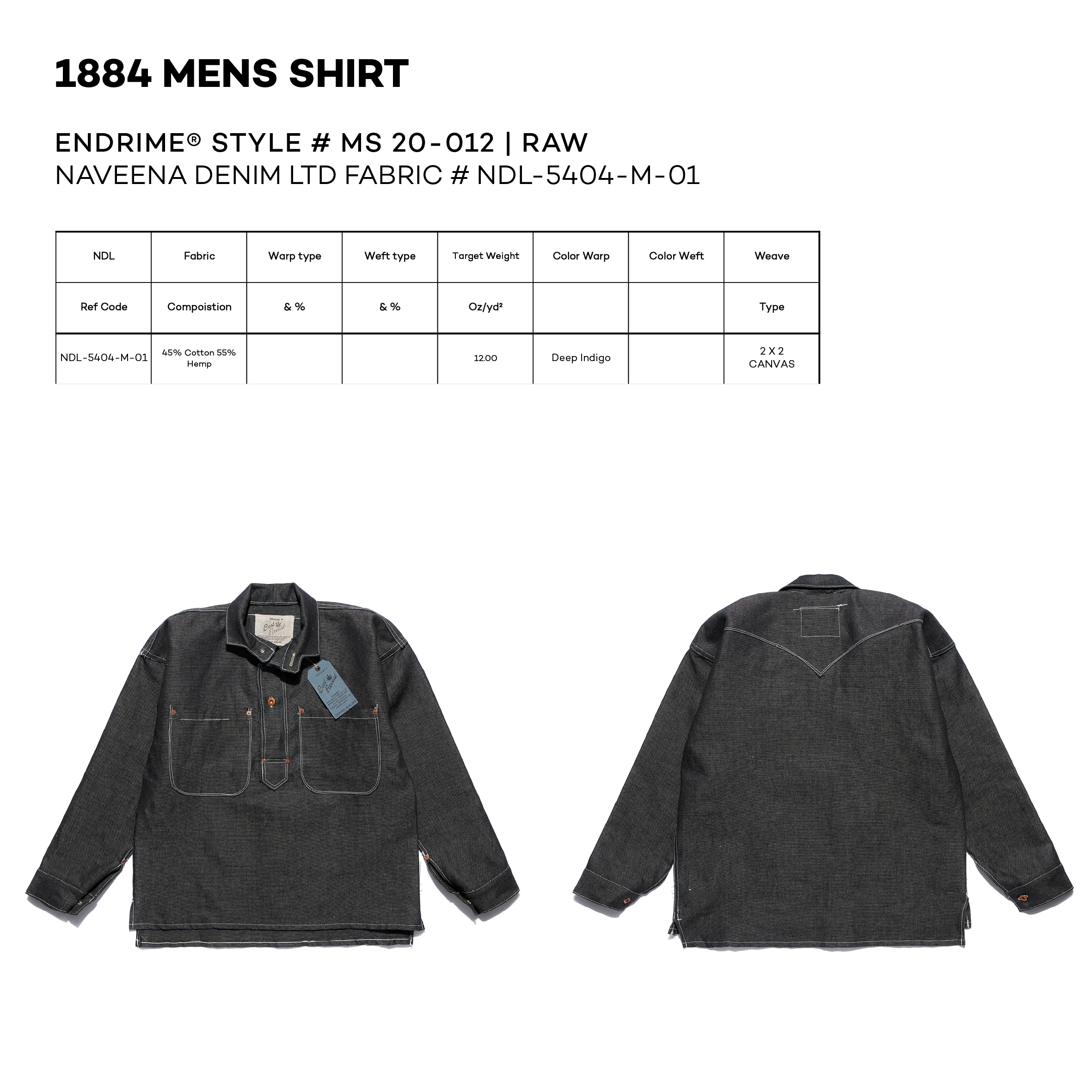
This is an 1870s-80s period Levi’s inspired garment enhanced by a one-piece fly styling on the button placket, which makes it a little more modern. It has period-correct ecru stitching using Crafil’s Celafil® 100 percent TENCEL™ thread. The front pockets are sewn with 3/16” twin needle stitch. It has run and fell clean construction 1/4″ and 5/16” single needle tailored seams. The front button placket is sewn with 1877 Neustadter Brothers patented “Boss of the Road” construction. Lock stitch shirt buttonholes are also period correct. The hem is sewn with a Union Special 43200G machine, which creates a vintage roping effect.
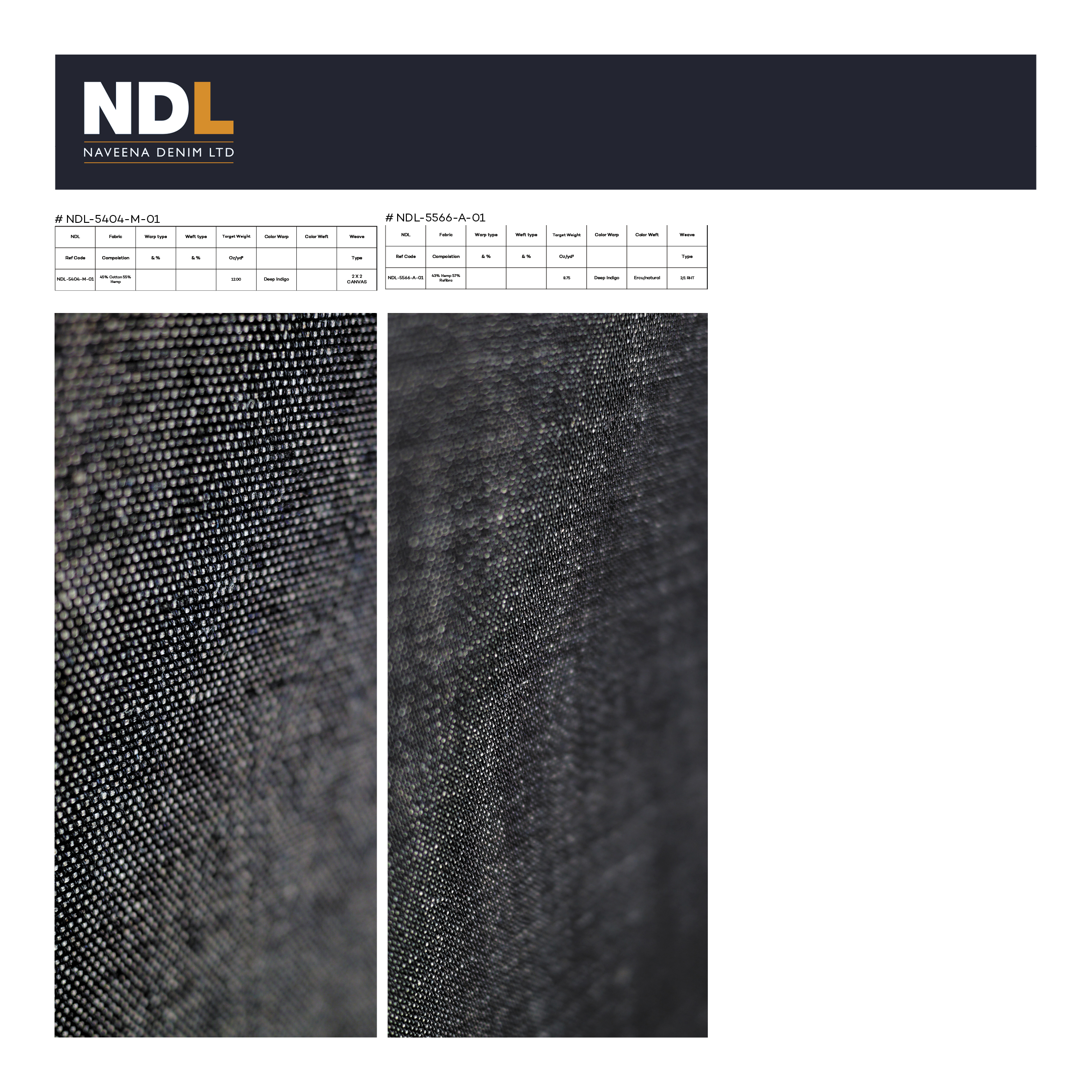
This garment was interpreted in two dark indigo fabric bases—both cottonized hemp blends—a 2×2 duck canvas and a 2×1, which used TENCEL™ x REFIBRA™.
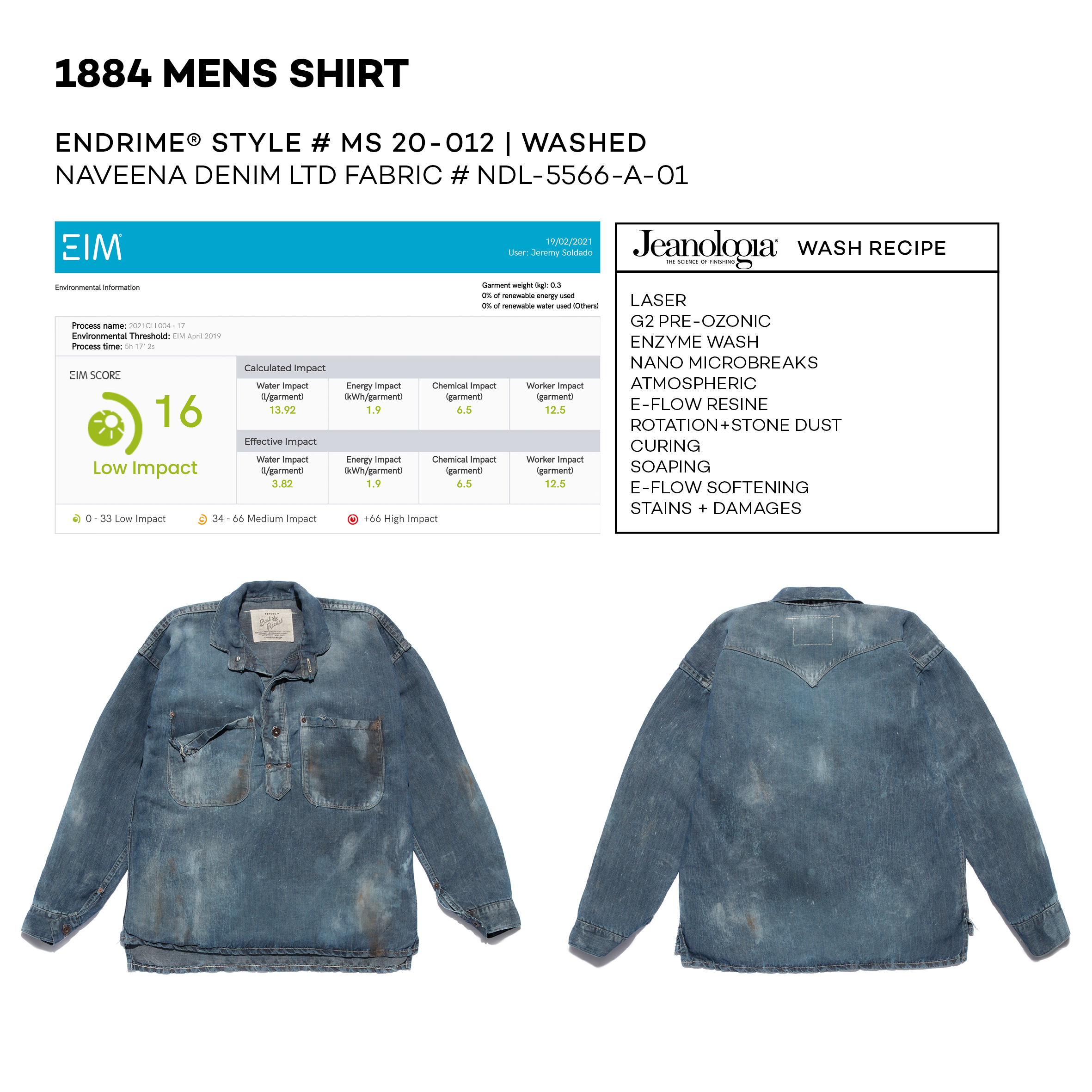
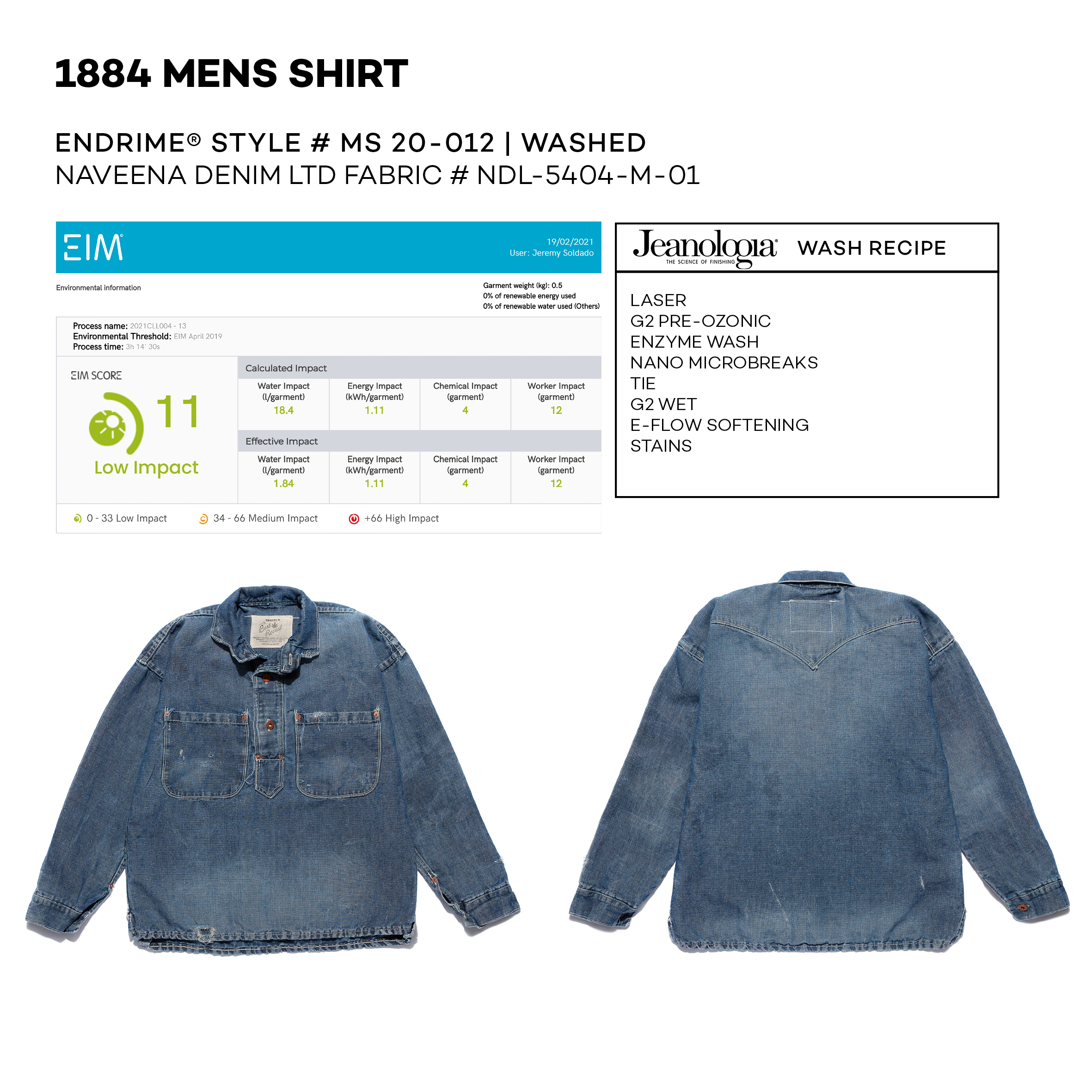
Both bases reacted very favourably to laundry processing, which included laser, ozone, celullase enzyme, nano laser breaks, e-flow resin, curing, soaping and staining—including stone dust—to bring some workwear authenticity to the finish.
Click through the slideshow below to discover the Mens Shirt 1884.
Discover the 1878 Pantaloon from Bast Recast here.