


Bast Recast Deep-Dive: Steam Jean 1890
Industrial uniforms share a common history with regular workwear. They were first created to provide a distinction between different professions and different ranks within the same position, and even between different employers.
Unlike regular workwear and service wear (i.e. military uniforms) whose primary purpose is identification and branding, industrial uniforms were more functional and were designed to be comfortable and practical while also keeping wearers safe from the hazards of manual labor.
Vintage-era men’s workwear really took root in civil society as a result of the Industrial Revolution. Prior to the Industrial Revolution, much of society revolved around people creating their own clothes. They would hem and sew their own garments and provide repairs to any clothes that were ripped or torn. People owned just a few outfits to get by and would have to get a lot of use out of these garments.
There was not really a structured industry producing clothing, so it was a necessity that most people simply handled on their own. It was the French who were leaders in workwear and had developed work uniforms by the late 1800s.
Vintage work clothes, like the now famous “bleu de travail,” were already institutionalized back then. The French name for the classic chore jacket translates as “working blues” and is, in fact, a catch-all for the indigo-dyed cotton overalls popularised by French factory workers in the late 1800s. That means they can either be a jacket, shirt or trousers.
However, the turn of the century ushered in a new era for vintage workwear. In the U.S., farmers, oilmen, miners, construction crew and manufacturing workers may have chosen the classic denim garments to wear to work. These were made of heavy denim cotton or duck cloth in blue, black, white, or thin blue and white stripes. Railroad men usually wore striped garments and painters wore white. All other occupations preferred blue denim. Black denim was less common after the 1920s.
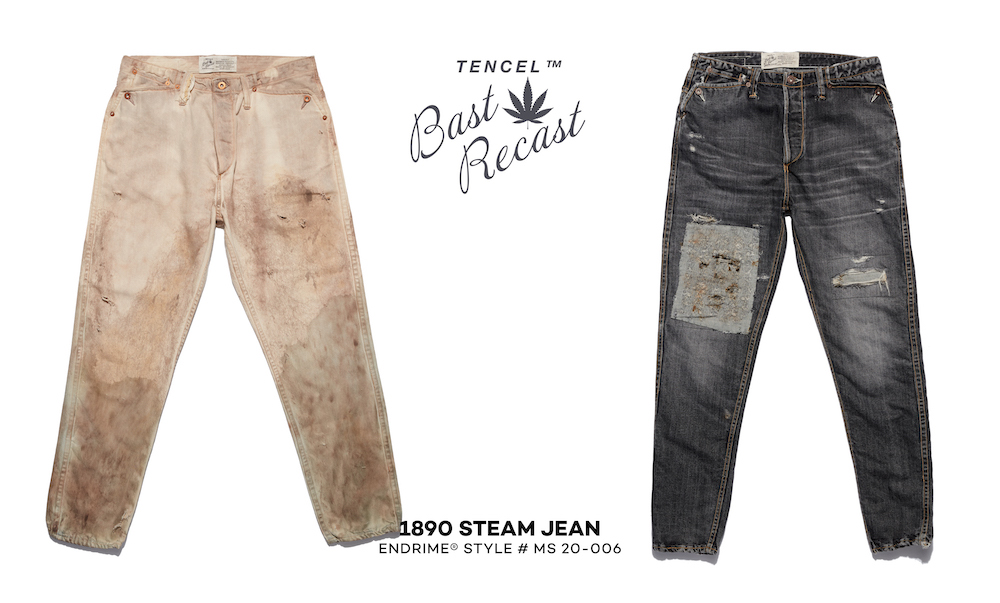
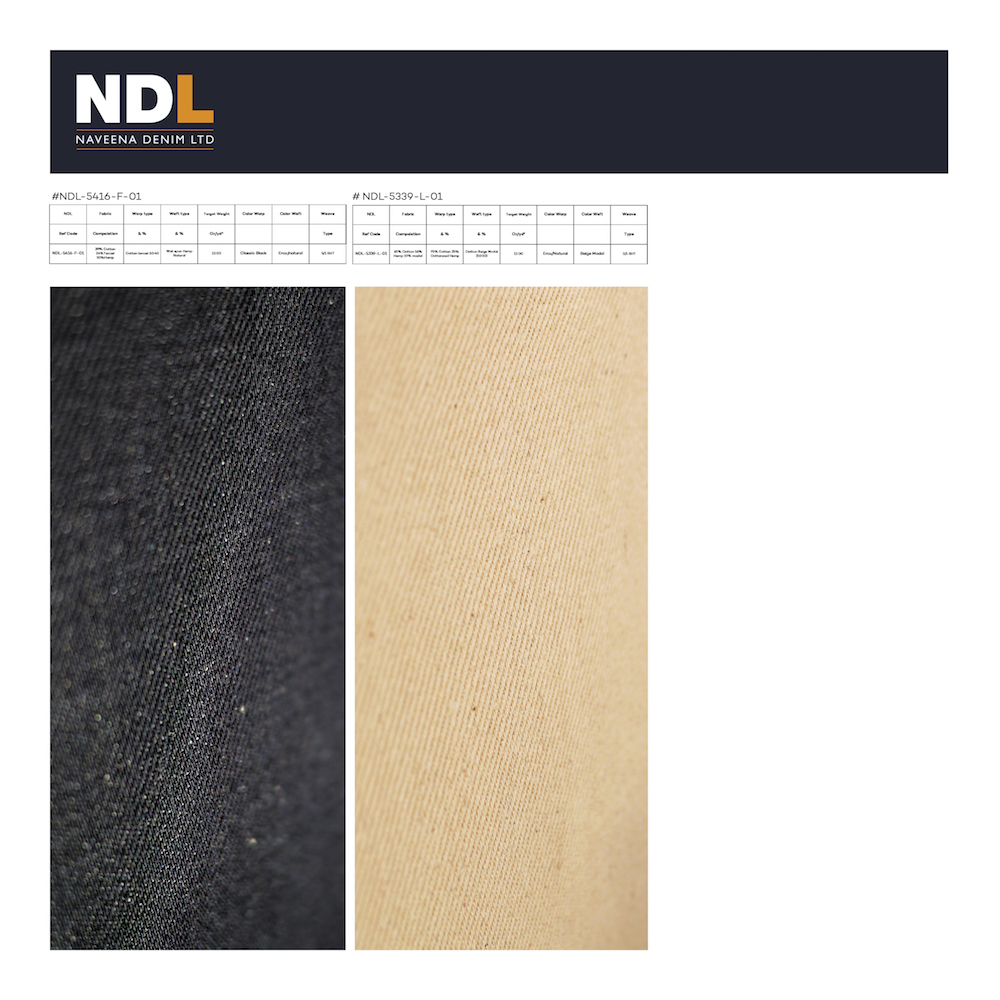
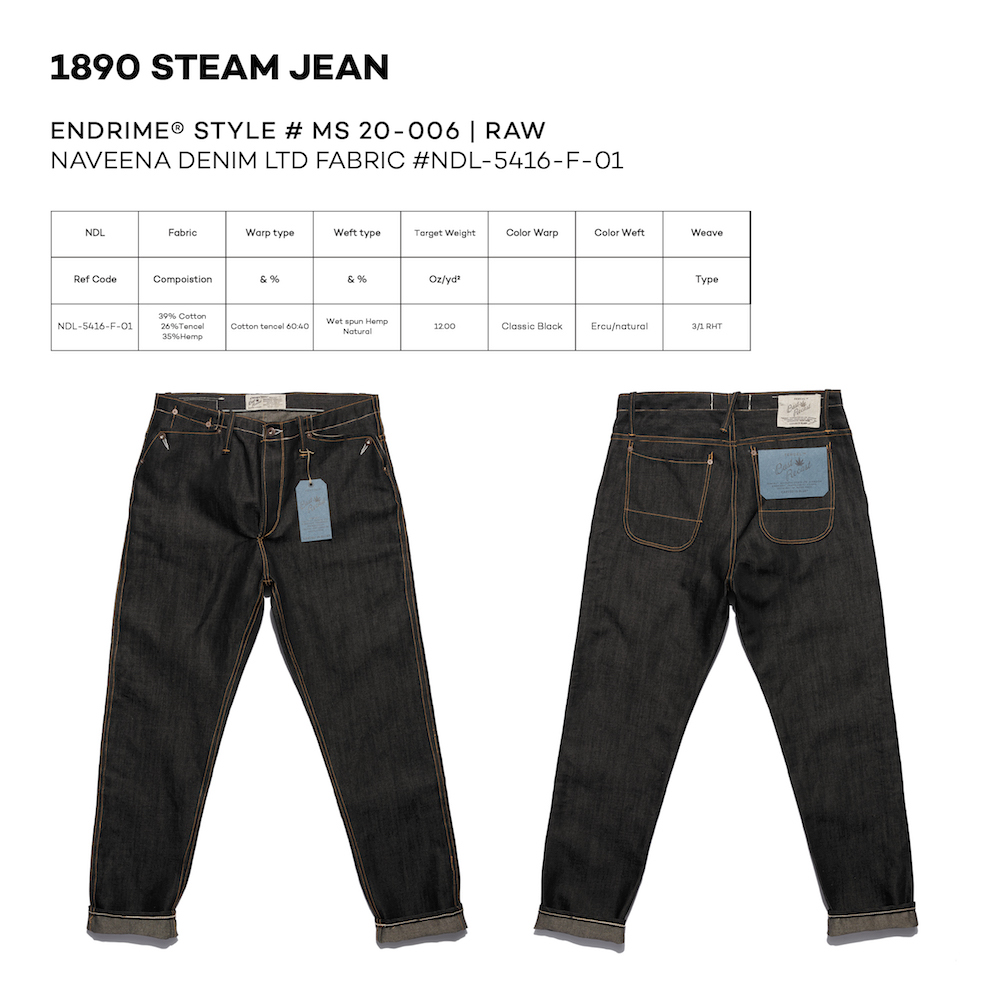
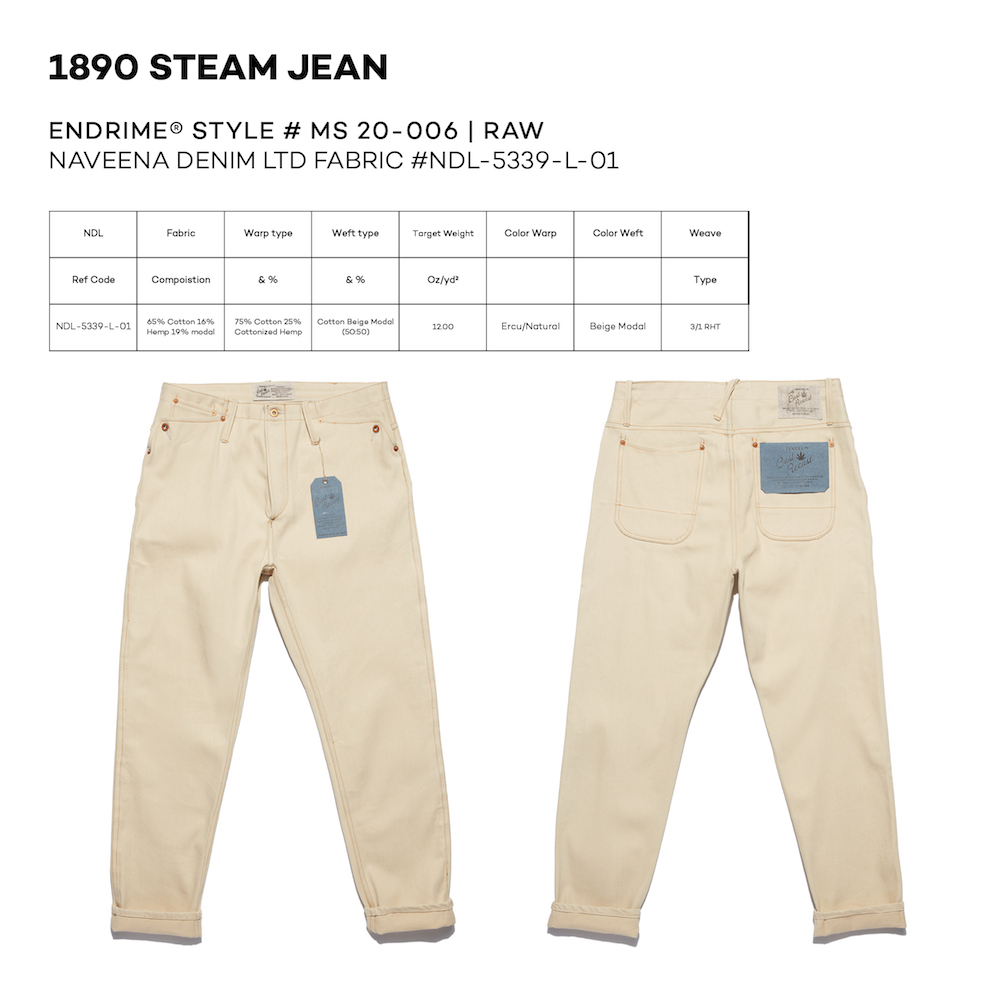
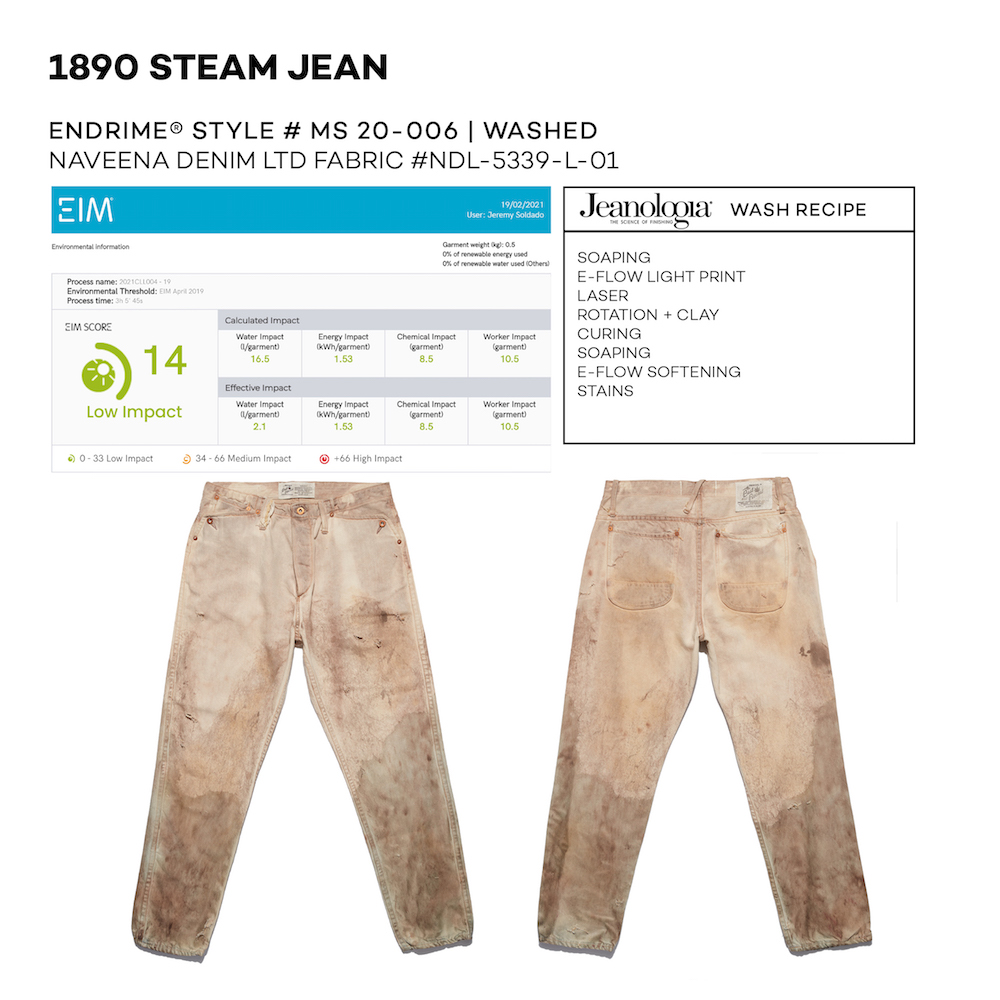
Two fabrics were chosen from the Naveena portfolio for the Steam Jean. Both are 3×1 twills and both are 12 ounces per square yard. Unusually, we chose non-indigo fabrics for this garment style: a black warp-dyed fabric containing TENCEL™ Lyocell with wet-spun hemp and an ecru fabric containing cottonized hemp and TENCEL™ Modal Color in beige to provide a vintage coloration.
Endrime Studio brought a combination of different influences to the design of this garment, incorporating railroad style crossed with workwear tailoring.
Many garments from the 1920s and earlier were actually not made very well, which goes against the perception that this was a “golden period” for garment manufacturing quality. In many cases, production needed to be fast and garments were just “knocked-out” with disregard for quality as we understand it, so there were lots of examples of “mistakes.”
For example, pockets maybe slightly off—meaning they were not symmetrical—and in honor of this, the garment contains a few “on purpose” mistakes.
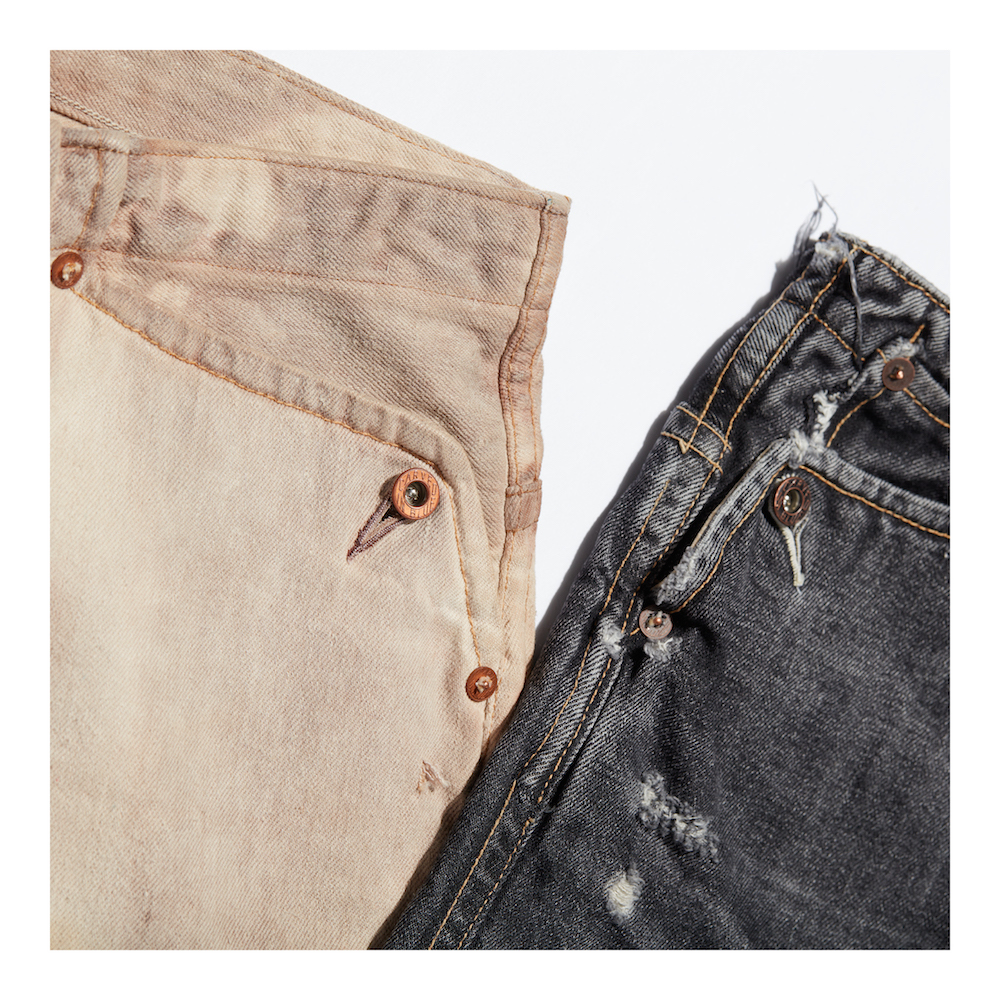
Other constructional details include period correct light tobacco stitching made with Crafil Celafil® 100 percent TENCEL™ thread; vintage grown-on waistband construction; single needle tailored belt loop construction, with loops going into the top of waistband; fly stitch sewn with 1/8 twin needle stitch going to single point; front fly sewn with 1877 Neustadter Brothers patented “Boss of the Road” one-piece continuous fly construction; front pockets sewn with a flap with chainstitch buttonhole, with 1/4” single needle edge stitch; a coin pocket sewn on a higher position that is period correct to the 1870s era; and back pockets shaped based on the railroad inspiration period with 3/16” twin needle stitch construction.
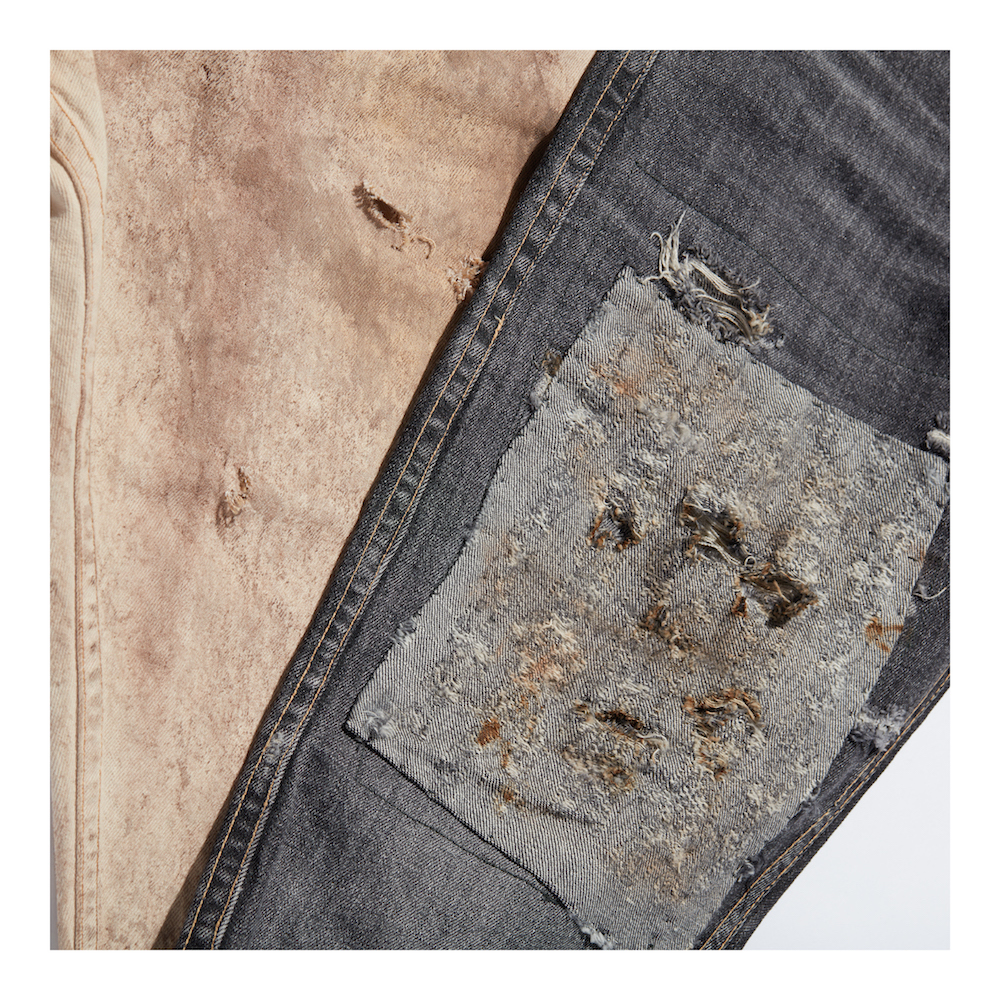
In terms of laundry processing, the black fabric reacted very favorably to the new technologies, resulting in a very natural organic look from both laser and ozone. This was enhanced further by applying some patches and damages. The ecru garment staining effects are exquisite, so much so that the garment look as though it has just been rescued from a mine shaft—simply brilliant craftsmanship from the Jeanologia team.
Click through the slideshow below to discover the Steam Jean 1890.


Discover the 1880 Ladies Shirt from Bast Recast here.