


EIM’s Inaugural Benchmarking Report Outlines Denim Industry’s Impact
The denim industry is making strides in reducing negative effects on the environment and people, but there is still plenty of room for further improvement, according to a report from an impact measurement solution.
EIM—or Environmental Impact Measuring—is a software platform developed by manufacturing technology firm Jeanologia to calculate the impact of garment finishing processes. This includes the consumption of water, chemicals and energy, as well as the impact to worker health. Launched in 2011, EIM has since been adopted by laundries and brands—including Levi Strauss & Co. and American Eagle Outfitters—and the scope of measurement capabilities goes beyond Jeanologia’s own technologies.
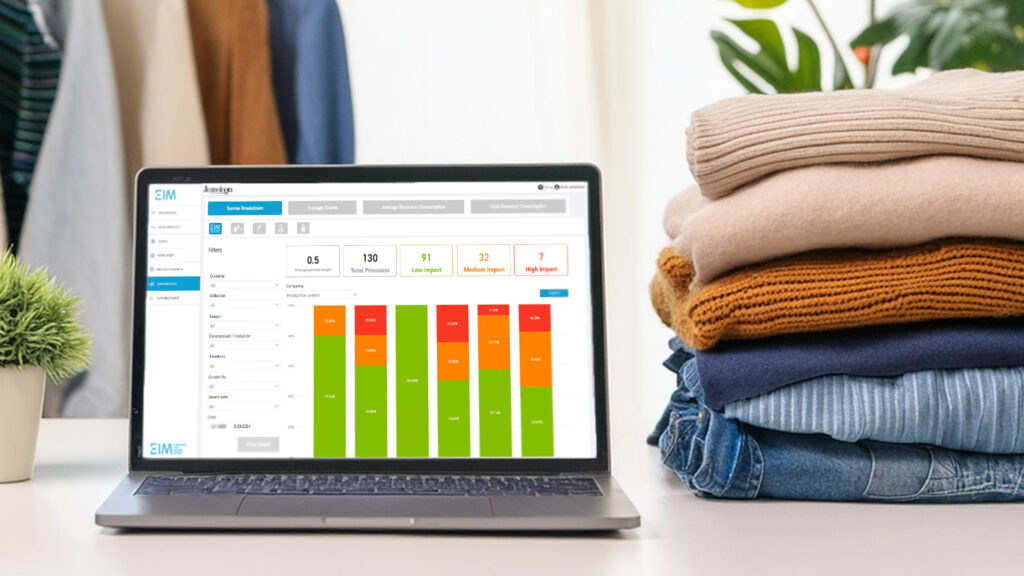
For the first time in its almost decade and a half history, EIM has taken the data collected on its platform and disseminated it to the industry in a report. The report—coauthored by EIM creator Begoña García and Michael Kininmonth, our former TENCEL™ Denim team colleague—provides a benchmark while also laying out actions that denim makers can take to lower their footprint.
“For years, the textile industry has lacked reliable tools to measure its environmental impact, making data-driven decisions difficult,” said Begoña. “This report marks a crucial step toward transparency and continuous improvement, showing that technology is key to measuring and reducing environmental impact.”
Michael shared his thoughts on the report, noting, “It is highly encouraging that the EIM platform, which had such humble beginnings, has seen such wide adoption throughout the denim sector. To me, this shows that the denim industry accepts that there is a real need to change in the way that it operates and is willing to do so. I’m honored to be asked to co-author this report, and I was more than happy to do so, as it represents yet another example of Jeanologia’s pioneering work in the denim laundry sector.”
Pulling anonymous data from EIM users between Jan. 1 and Dec. 31, 2024, the sample size for the report is 115,882 denim processes across 337 manufacturers. Out of this group, 63 percent of processes are low impact, 33 percent are medium impact and just 4 percent are considered high impact. Broken down by category, the area where the industry is succeeding the most in lowering its impact is energy use, with 85 percent of the processes studied showing low-impact scores. Water impact and worker impact were close to the average, but more work is needed in chemicals, of which only 29 percent were low impact and 24 percent were high impact.
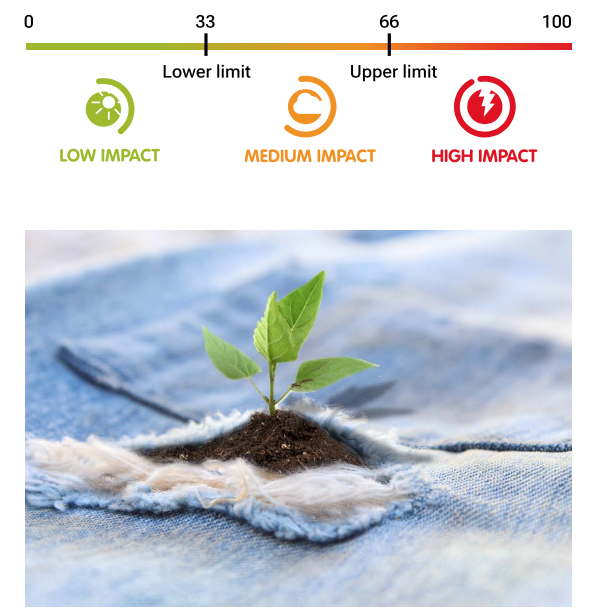
One example of a high impact environmental offender that is dragging down chemical scores is pumice stones, which were present in 16 percent of processes. These have traditionally been used to create worn, vintage looks on denim, but they have a significant impact at every stage. Extracting them degrades habitats, transporting the heavy stones creates emissions, they wear down denim fabrics along with washing machines, and they produce dust that harms workers and they become solid waste once they can no longer be used. As a result, any process involving pumice automatically gets the worst possible chemical EIM score of 100.
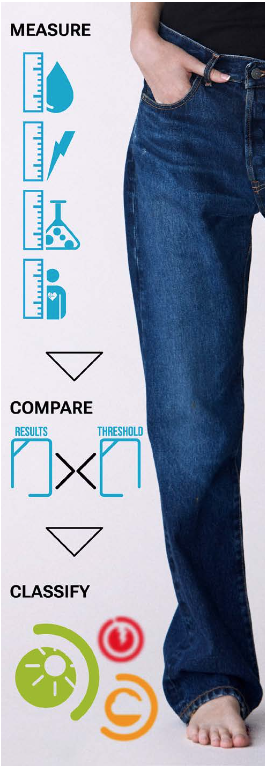
Another high-impact process weighing down the average chemical EIM score is potassium permanganate spray, which is toxic to workers. Despite the harm it can do, this solution—often shortened to PP blasting—is still used in 9 percent of the processes studied.
The report calls on the industry to phase out both pumice stones and PP sprays, finding alternative options that are less impactful to the planet and people in the supply chain.
To protect workers’ well-being, laundries can also invest in automation to cut back on repetitive movements that can strain muscles. For instance, manual scraping can be replaced with lasering.
Globally, the fashion industry uses 79 trillion liters of water annually. Based on an average garment weight of 0.6 kilograms, EIM data shows that the average water used for jean finishing has dropped to 30 liters, yet this is above EIM’s recommended amount of 22.5 liters. Companies could get closer to this goal by choosing fabrics that require less washing, upgrading washing machines and opting for processes like ozone-powered treatments.
EIM plans to update the report on an annual basis, providing an evolving tool for the industry to continue to do better.
As noted in the report, “There is no doubt that it is recognized that a sector-wide transformation to responsible production is a climate and biodiversity imperative, and that all parts of the supply chain must embrace all opportunities to act, and EIM is eager to catalyze support for this shift.”