


How Fashion for Good is Addressing Apparel’s Post-Production Impact
When targeting clothing’s environmental impact, the focus is often placed on production. But apparel’s impact doesn’t end there.
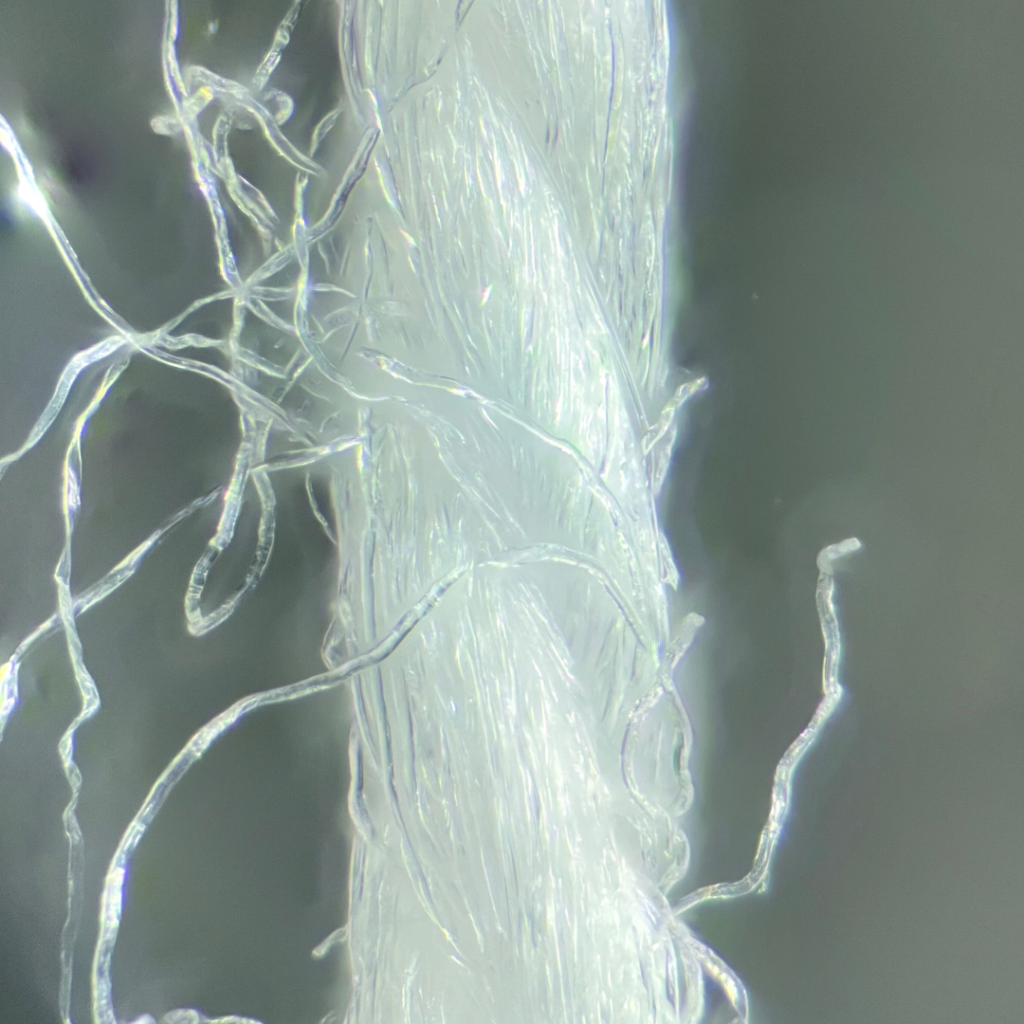
As garments are laundered and worn, small fiber pieces break off. Although small, these tiny fibers—referred to as microfibers, microplastics or fiber fragments, among other names—have a collective impact. Fashion for Good has teamed with The Microfibre Consortium on a study titled “Behind the Break: Exploring Fibre Fragmentation,” which will help guide the industry in how to address and reduce shedding and release of these fragments. Brands like Levi Strauss & Co., Bestseller and Inditex have signed on to the project.
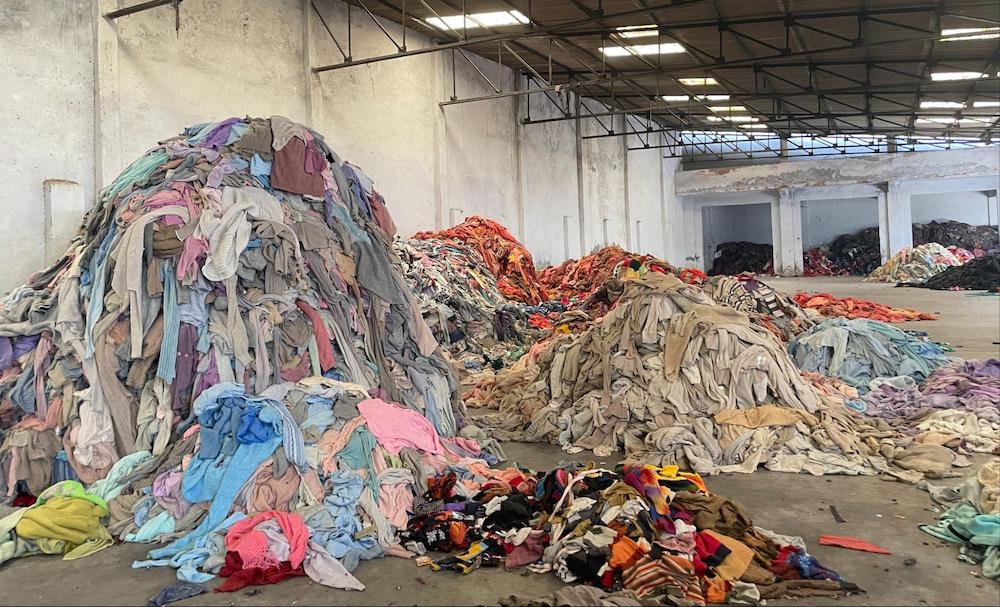
In another initiative, Fashion for Good is investigating where textile waste is concentrated. The digital tool World of Waste provides a regional view of waste, including the volume and types of waste, allowing it to more easily be recycled.

Carved in Blue caught up with Katrin Ley, managing director of Fashion for Good, to discuss the fiber shedding issue and its data collection efforts around waste.
Carved in Blue: There is a growing recognition of microfibers’ impact. Why has this been such a difficult issue to solve, despite this momentum?
Katrin: Fiber shedding is a complex issue because textiles shed at every stage of a garment’s life cycle—during production, wear, washing and disposal. Understanding the root causes of fiber fragmentation is challenging as shedding is influenced by multiple factors, including fiber type, fabric structure and exposure to mechanical and chemical stressors. Compounding this challenge is the variety of test methods and research approaches currently used across the industry, making it difficult to collect consistent, comparable data required to establish industry best practices.
Carved in Blue: What led you to launch this study? Why is this type of research project needed?
Katrin: Fiber shedding is widely acknowledged as an environmental concern, yet significant data gaps remain, especially regarding how different materials and production processes contribute to shedding. This study was launched to generate robust, factory floor data to inform best practices for textile design and manufacturing, as well as inform the development of solutions in the future. Without this foundational research, interventions risk being inconsistent or ineffective, which is why a collaborative and scientific approach is essential.
Carved in Blue: How did you select your partners for the study? And what is the value of having both brands and manufacturers participating?
Katrin: We brought together a diverse group of stakeholders, including brands, manufacturers and science-led organizations to ensure a well-rounded approach. This allowed us to develop a project scope that accurately reflects real-world manufacturing while involving the right experts for the testing and analysis of the sample.
Carved in Blue: As you mentioned, among the study goals is to fill in data gaps. Could you provide more detail on what we don’t know about fiber fragmentation?
Katrin: While we know that all fiber types shed from textiles, many critical questions remain unanswered. We still lack consistent data on how different fabric compositions, weaves and processes influence shedding rates. Our Behind the Break report gives an overview of these knowledge gaps and highlights the need for comprehensive testing to measure the true shedding of textile materials. This includes traditional tests that measure the amount of fiber fragments captured in a sample to allow fabric-to-fabric comparisons, as well as more advanced techniques which characterize the fibers to more accurately differentiate between potential contamination and the fibers which are being studied within a sample. The report also underscores the importance of investigating the environmental fate of these particles—how they degrade, accumulate and interact with ecosystems. By addressing these gaps, we can develop more effective strategies and inform industry best practices.
Carved in Blue: One of the fabric types you’re studying is cotton wovens. Often, cotton is treated differently in the microfiber conversation since it’s biodegradable, but why should we be talking more about microfibers from these fabrics, such as denim?
Katrin: Fibers that are not synthetic, such as cotton, have been overlooked due to the focus on tackling plastic pollution across industries. This has led to an underestimation of the fiber fragment concentrations in the environment that derive from all fiber types (synthetic and non-synthetic), creating the misconception that fiber fragments are predominantly microplastics. However, a growing body of research shows that all fiber types can accumulate in the environment and cause harm to ecosystems and human health. Therefore, it is important to consider all fiber types, including cotton, to understand the true scale of fiber fragment exposure and the problem at hand.
Note: When we talk about cotton, we are referring to the fibers which have undergone any form of mechanical or chemical treatment during the manufacturing of a garment, as these treatments can make fibers more resistant to degradation in the environment. We are not referring to the raw, unprocessed form of cotton, which is directly taken from a plant, which is inherently more prone to be biodegradable under specific natural conditions.
Carved in Blue: How do you see this changing how the industry produces garments?
Katrin: As more consistent data becomes available, we expect brands and manufacturers to integrate strategies for more responsible garment design and manufacturing, aimed at minimizing fiber shedding alongside other key sustainability metrics like energy use and water consumption. This could include adopting innovations such as chemical finishes or dyes designed to reduce abrasion and shedding. However, while design decisions can reduce fiber shedding, garments will continue to shed throughout their lifecycle. Therefore, it is essential to adopt solutions across the entire supply chain. As a result, we may see increased interest in innovations upstream of the supply chain, as well as greater investments in post-production solutions, such as filtration systems in washing machines or wastewater treatment facilities, to capture fibers before they enter the environment.
Carved in Blue: As part of your focus on textiles’ post-purchase impact, you also teamed up with industry players to track textile waste. Why is World of Waste’s data collection so necessary?
Katrin: The fashion industry still lacks transparency on textile waste flows, making it difficult to scale circular solutions. World of Waste is the first free platform that consolidates global critical data from various research projects on textile waste. By making this information accessible, it helps in the identification, comparison and utilization of textile waste hotspots by brands, recyclers and policymakers, such as for feedstock sourcing and facility planning for advanced recyclers. Without this kind of data, recycling initiatives often lack the supply chain visibility needed to function efficiently.
Carved in Blue: What have you learned so far from this mapping tool? Were there any surprising findings?
Katrin: With data from 12 countries, 26.6 million tons of textile waste has been mapped so far, which is almost one-third of the estimated 92 million tons generated globally per year. Out of these 26 million tons, more than 50 percent is cotton and cotton-rich. This contrasts with production figures, where polyester dominates the market, accounting for 57 percent of production in 2023. The USA and India have the highest textile waste quantities—including post-industrial and post-consumer—with per capita figures for USA being significantly higher. Notably, data for China is currently unavailable on the tool; however, the platform will continue to add more countries through the inclusion of additional projects.
Carved in Blue: The denim world has increasingly been incorporating recycled materials into jeans. How can they use World of Waste to facilitate cotton recycling?
Katrin: Denim brands looking to incorporate more recycled materials can use World of Waste to identify sources of post-consumer and post-industrial cotton waste. By understanding where large volumes of cotton-rich waste are located, brands and recyclers can build more efficient collection and processing systems. The platform also provides insights into waste quality and composition, helping to match supply with appropriate recycling technologies and ultimately driving circularity in denim production.