


How Hong Kong Design Institute Graduates Used TENCEL™ in Their Fashion Show Looks
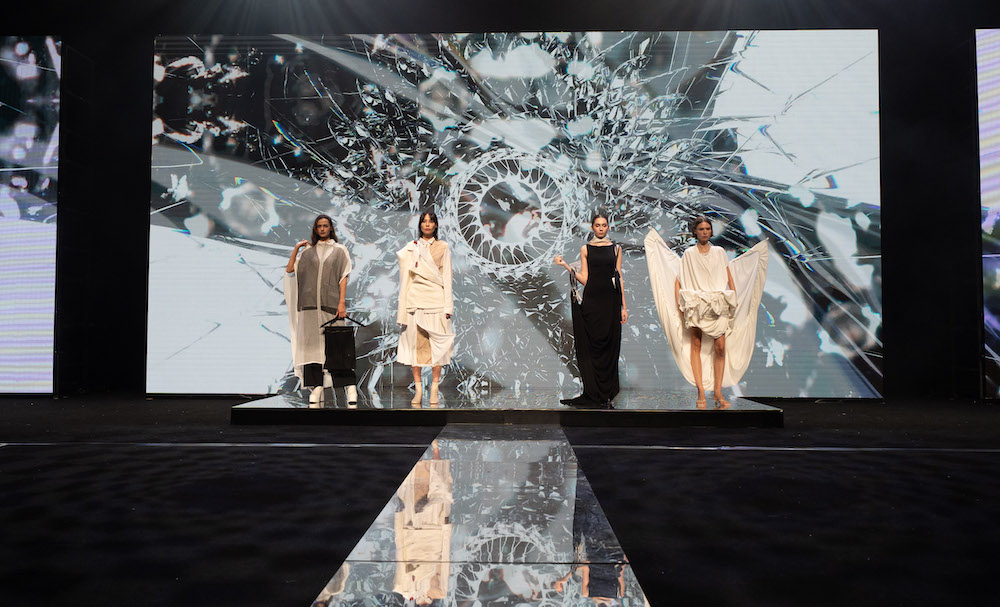
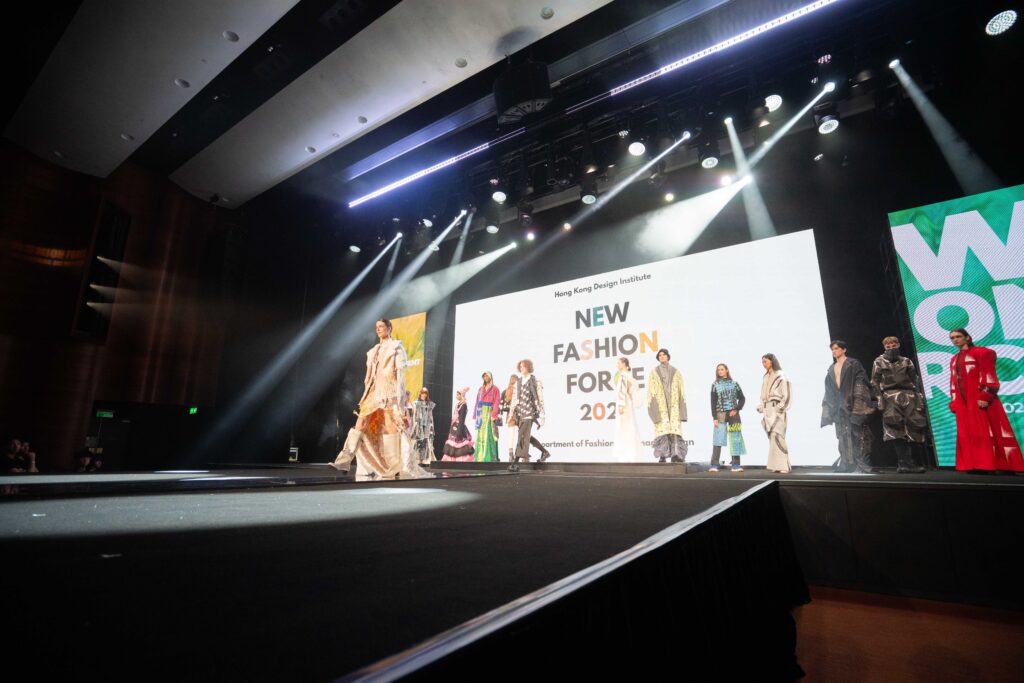
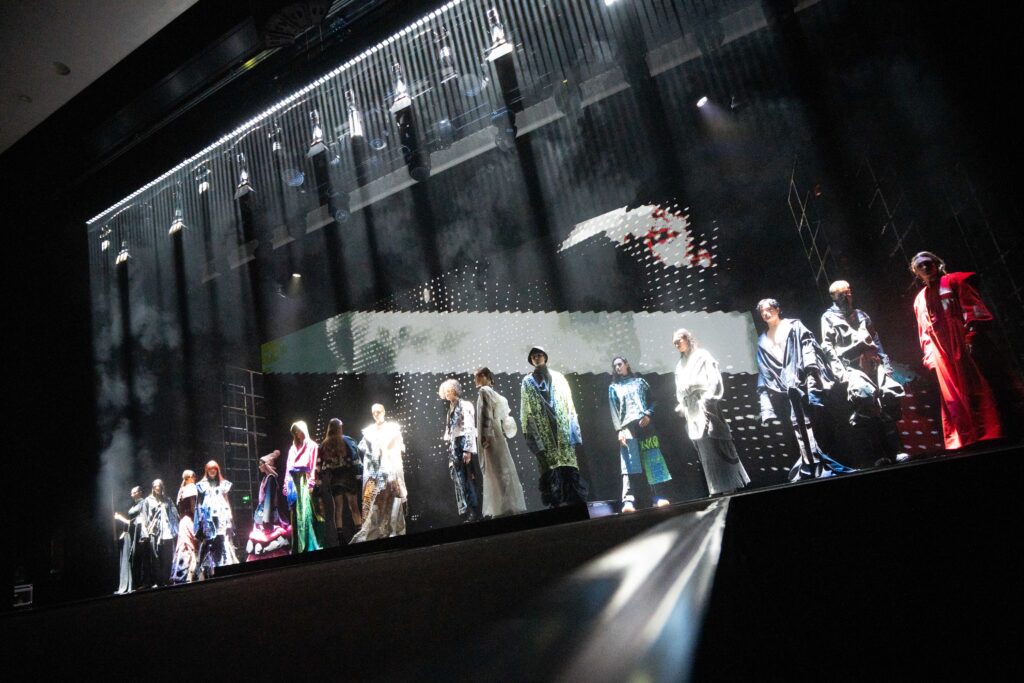
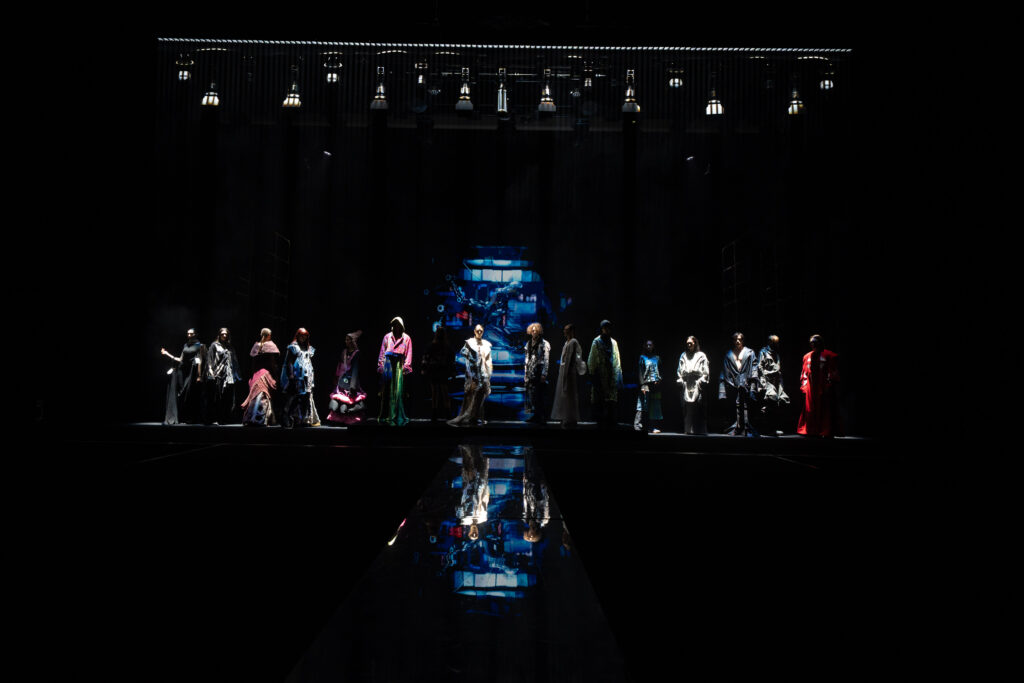
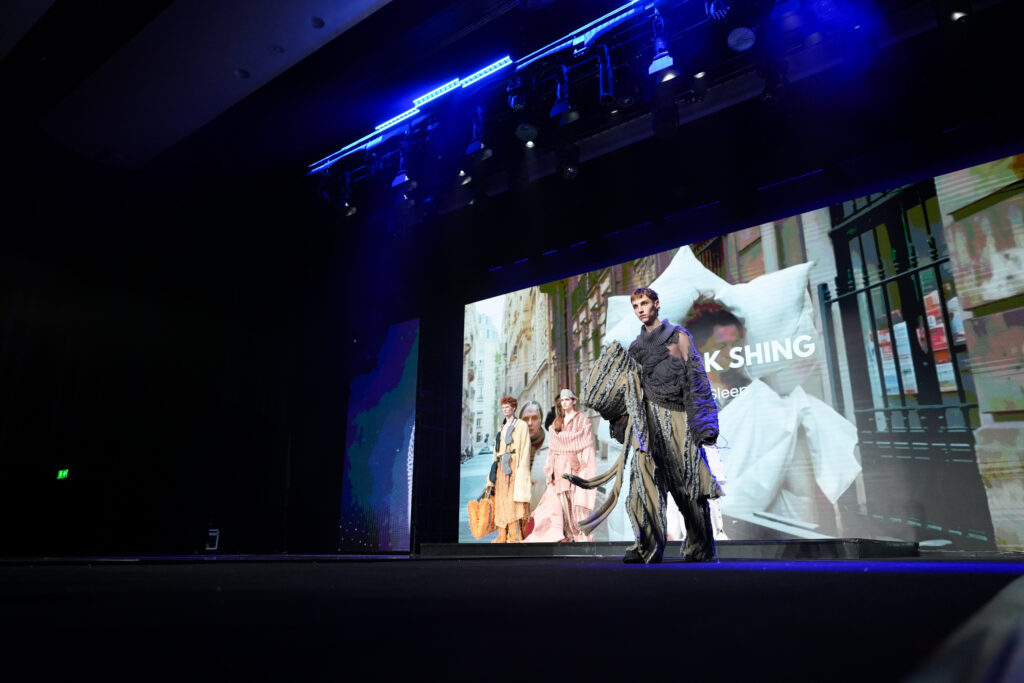
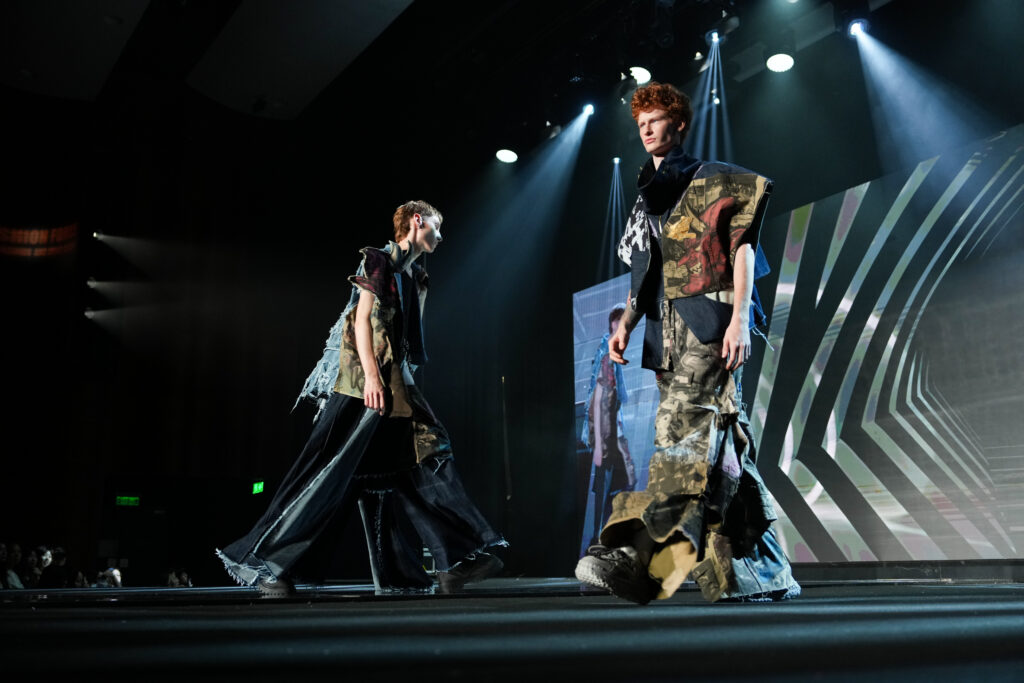
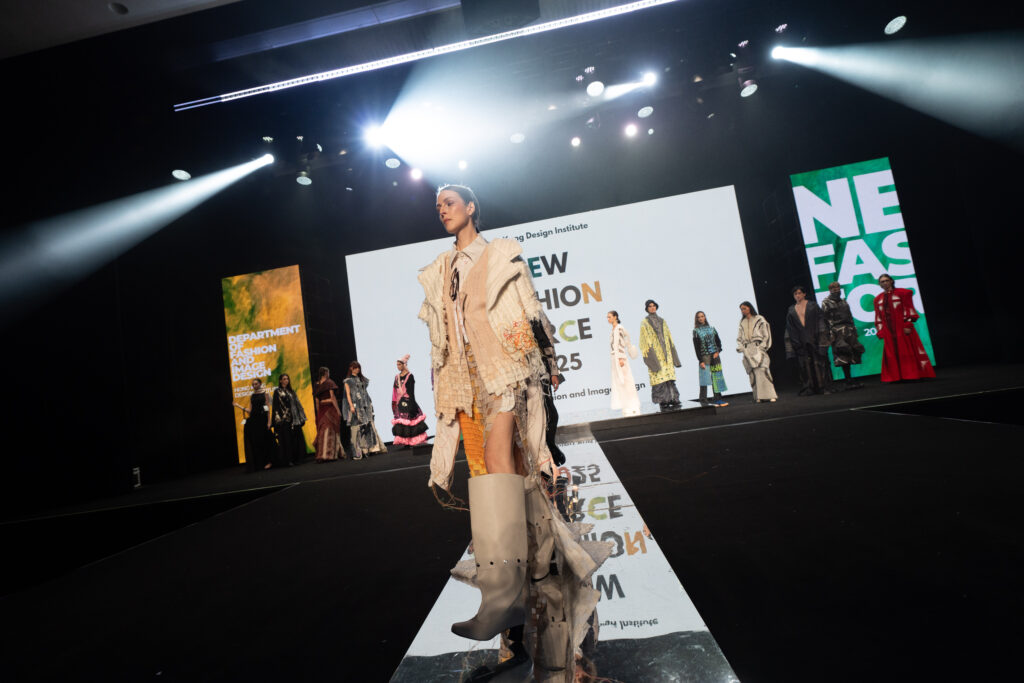
Each year, the Hong Kong Design Institute showcases students’ work at the “New Fashion Force” show.
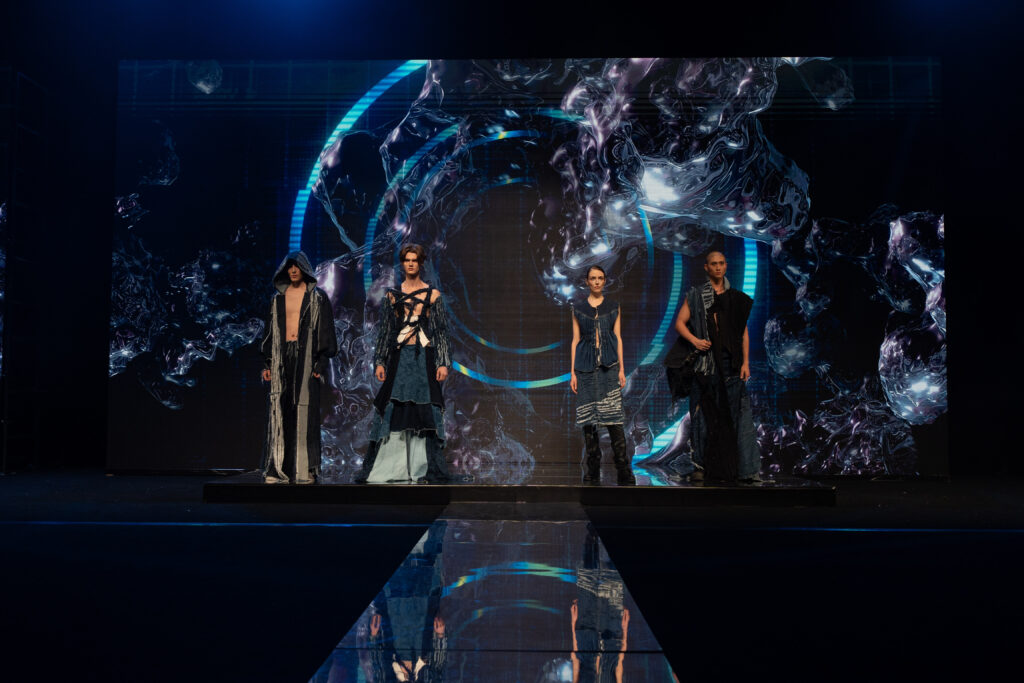
Held on July 8 this year, the presentation featured looks from about 30 Higher Diploma in Fashion Design graduates. Some of the graduates’ designs will also be featured as part of HKDI’s Emerging Design Talents 2025 exhibition, on through Sept. 21.
Among the student designers at the show were participants in HKDI’s “Denim 9” program, which gives talented pupils a chance to have a deep education in the world of denim. Lenzing Group is among the industry partners for Denim 9, and our Application Innovation Center provides mentorship and workshops to the students.
To get more insight into the program, Carved in Blue spoke with Dr. Travis Lee, a teacher at Hong Kong Design Institute, and Sun Kwok from Lenzing’s Application Innovation Center as well as two student participants.
Carved in Blue: Please talk about the “Denim 9” program and how it has worked since last year.
Travis: The “Denim 9” is a specialized incubation program that mentors nine of our most talented Higher Diploma in Fashion Design students in HKDI, immersing them in the world of denim through advanced techniques and direct industry collaboration. The initiative guides students through a comprehensive journey, beginning with foundational lectures before moving to firsthand industry engagement. This includes visits to key partners like Lenzing and other leading denim companies for insights into fabric sourcing and hands-on technology training. The experience is deepened by a series of company visit and immersive study trips to the Greater Bay Area, where students gain practical knowledge of manufacturing, dyeing and R&D in major factories and labs.
Throughout the program, students receive continuous guidance through a series of targeted mentoring meetings with industry experts and designers to refine their concepts and navigate technical challenges. This intensive journey culminates in a practical application where the students present their collections to a panel of industry professionals at presentation sessions. Their work was finally showcased at our graduation fashion show, “New Fashion Force 2025.”
Carved in Blue: Could you share more about New Fashion Force?
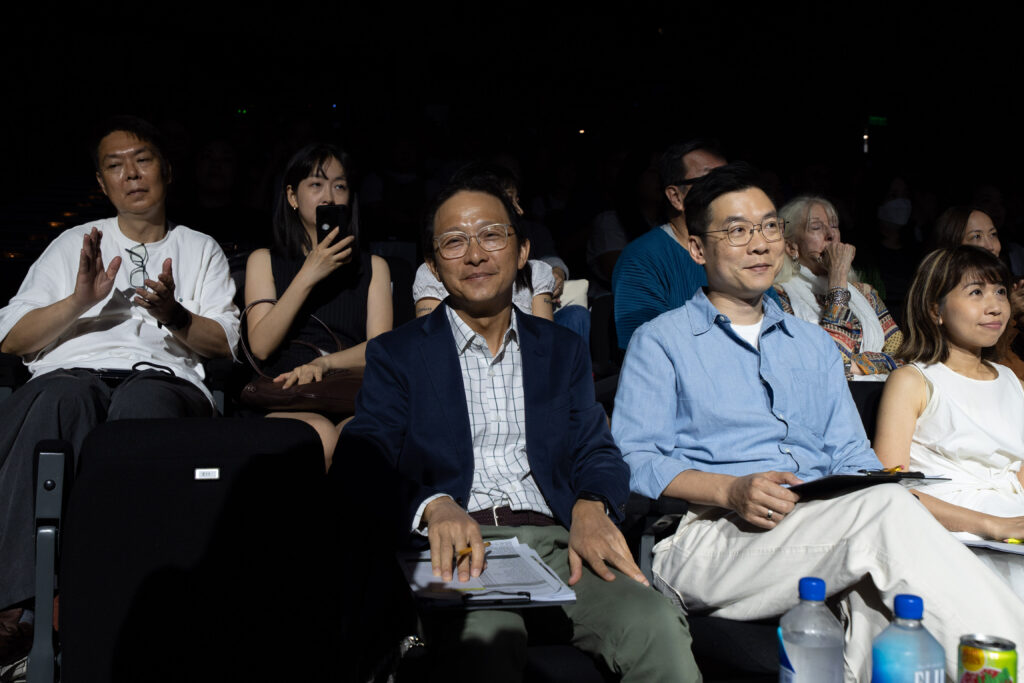
Travis: “New Fashion Force” is the annual graduation fashion show for the Higher Diploma in Fashion Design at the Hong Kong Design Institute (HKDI). It serves as the premier platform for graduating student finalists to present their final collections to a wide audience, including industry professionals, media and the public. The event is the culmination of their studies, showcasing their creative vision, technical skills and unique design philosophies developed during their time at the institute.
A key aspect of “New Fashion Force” is its deep integration with the fashion industry. The event is consistently supported by leading industrial partners who sponsor various awards, such as “The Best Sustainability Award.” This collaboration not only provides students with invaluable recognition but also reinforces the strong ties between HKDI and the professional fashion world. Ultimately, “New Fashion Force” embodies its name by introducing the next wave of creative talent to the fashion industry, celebrating their hard work and charting the future course of fashion.
Carved in Blue: How you see the importance of industrial partners’ enrollment for your program?
Travis: The enrollment of industrial partners is the absolute cornerstone of the “Denim 9” program’s success. Their involvement is crucial because it bridges the critical gap between academic theory and real-world application. The clothing industry—such as denim or knitwear area—relies on highly specialized technology and expertise that we cannot replicate in a classroom; our partners provide irreplaceable hands-on training with advanced equipment and deep knowledge of industrial processes. Furthermore, visits to their labs, factories and design studios give students an invaluable, firsthand understanding of the entire production life cycle, from a design concept to a finished garment.
Beyond the technical education, these partnerships are vital for our students’ professional growth. When they interact with and receive feedback from industry leaders, they are not just learning—they are building a professional network that is essential for their future careers. Moreover, the sponsorship of essential materials and techniques are fundamentally important, often being the deciding factor in a student’s ability to realize their creative vision.
In short, our industrial partners act as co-educators, ensuring our curriculum remains relevant and providing experiences that equip our students with the practical skills and connections needed to thrive in the competitive fashion industry.
Carved in Blue: What was the role of the Application Innovation Center? How did you facilitate the students’ projects?
Sun: During our first seminar session with the students, we introduced our company background, sustainability concepts and the properties of our fibers. The students expressed strong interest in our materials and the machinery available at AIC, which they saw as valuable tools for transforming their creative ideas into actual garment outfits.
AIC served as a key enabler and collaborative partner throughout the students’ project journey. We provided access to our sustainable fiber materials and available machinery, empowering students to experiment and bring their design ideas to actual outfits. Our team also offered technical guidance and practical support, helping the students to navigate the process of turning their creative concepts into fully realized garment collections. Throughout the process, we also encouraged them to embed sustainability principles into their work, aligning with AIC’s mission to promote responsible innovation in fashion.
Carved in Blue: Were there any difficulties working with students?
Sun: Students consistently demonstrate unlimited creativity, often presenting ideas that challenge us at every stage of development—including feasibility assessment, material selection, garment construction and time management. Despite these complexities, what continues to impress us is their resilience, determination and persistence. Their commitment drives us forward together to transform their concepts into tangible outcomes.
Carved in Blue: What has AIC gained through this partnership?
Sun: Through this collaboration, AIC gained valuable insights into emerging design perspectives and the evolving expectations of the next generation of creators. Engaging with students allowed us to test the versatility and performance of our materials in unconventional applications, fostering innovation and continuous improvement. Additionally, the partnership strengthened our role as a facilitator of sustainable fashion education and reinforced our commitment to nurturing talent and creativity within the industry.
Here, two students share the concepts for their collections and how they worked with Lenzing to bring these creations to life. One of the students, Chau Ching Miu, received four major awards at the show, taking home Overall Winner, Best Sustainability Award, Best Womenswear Award and HKFDA Creativity Award.
Chau Ching Miu
My graduation project, “Anatomy: Rights of Garments,” is a collection that takes inspiration from human anatomy and explores the fascinating connections between our bodies and clothes. By using creative elements to represent the human form as clothing, it’s a deep dive into the rights and significance of garments. It also aims to defy the laws of physics through the use of diverse materials, challenging our traditional perceptions of clothing.
I was drawn to TENCEL™ fibers for their incredibly smooth and fluid texture, which was perfect for expressing the “stretched skin” sensation in my collection. By using TENCEL™ Lyocell and Modal fibers in varied knitting structures, I was able to mimic the elasticity and fragility of human skin, creating an intimate tactile experience that connects directly with the wearer.
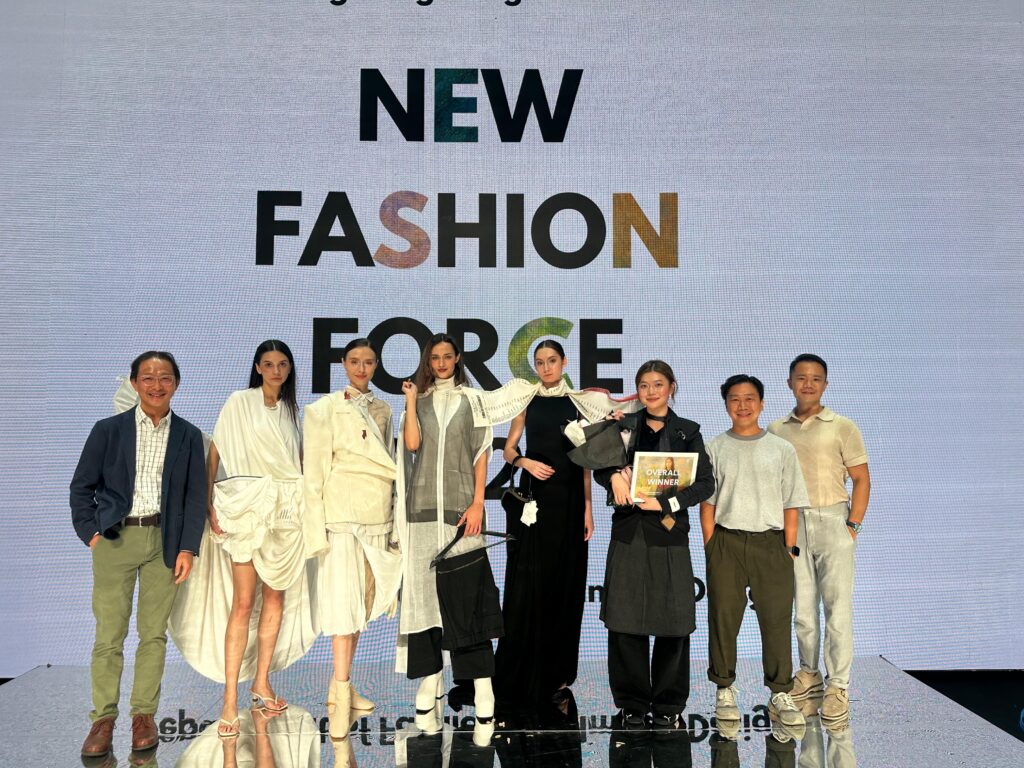
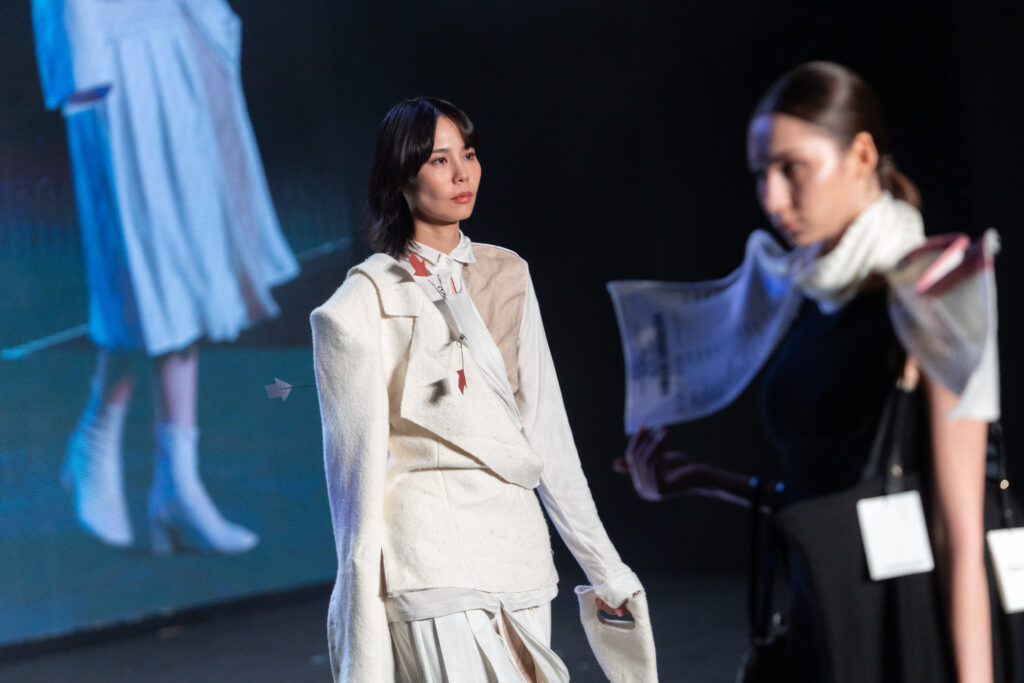
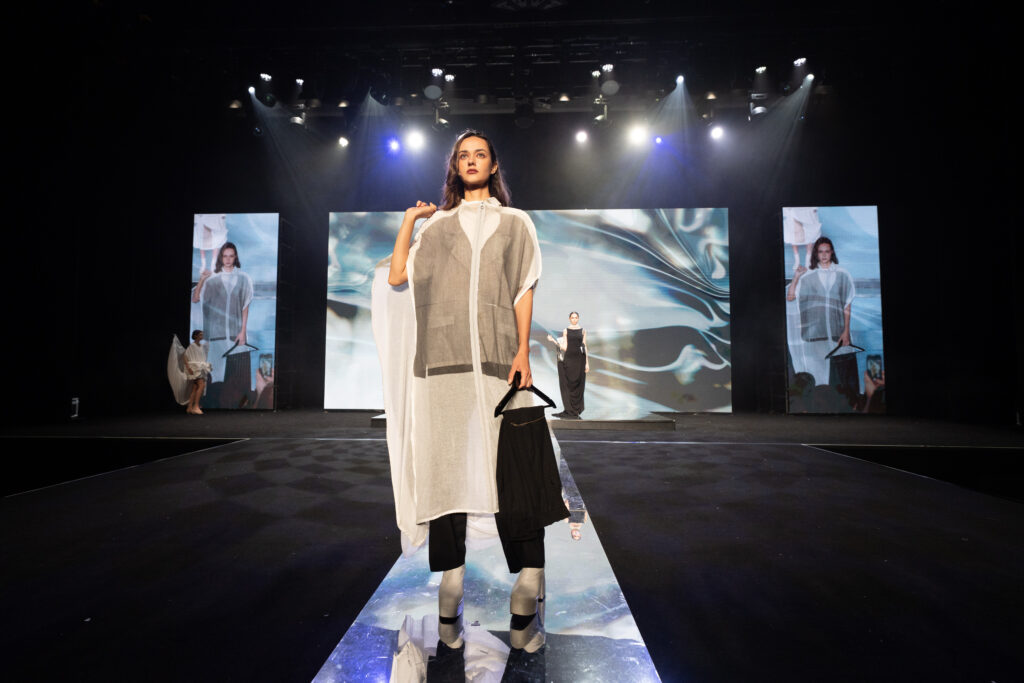
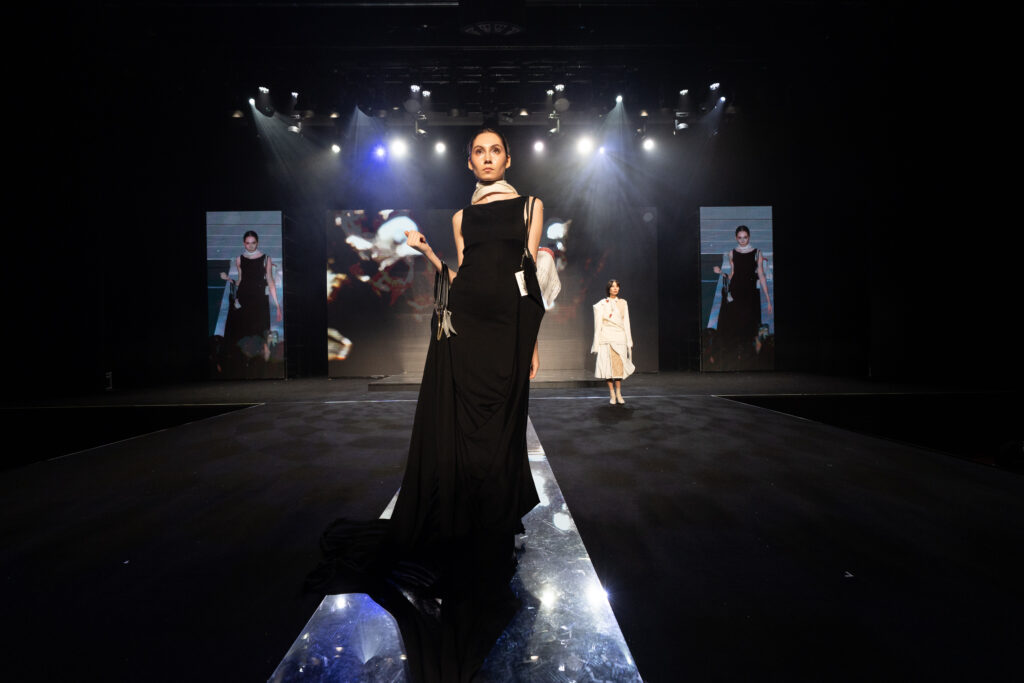
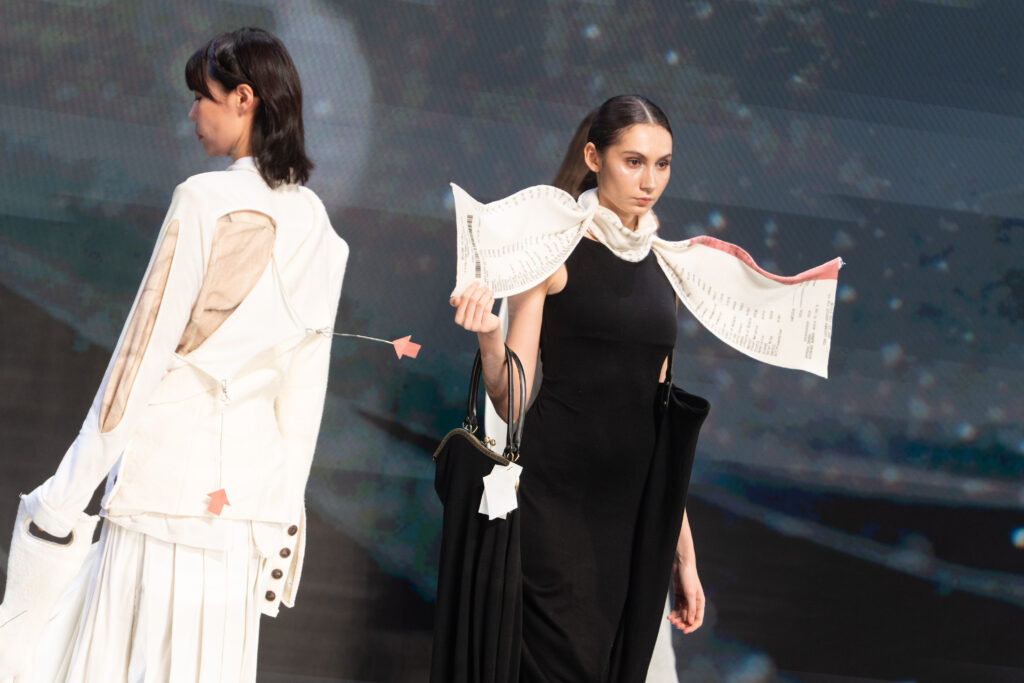
Working with Lenzing was truly memorable. At the Lenzing Application Innovation Center, we experimented with fabric dyeing, knitting and wool boiling. On top of technical support, Lenzing also provided a wide range of products for testing and production, which really helped bring my ideas to life. I’m super grateful for all the amazing support from the Lenzing AIC team—they made the whole experience inspiring and smooth.
Yeung Chui Hing (Elia)
Everyone has their own form of healing, It is a personal journey. Working is a kind of healing for me. I feel satisfied when working, and it is the only way to feel alive. Working until sunrise every day, completing all tasks within the timeframe, is the epitome of a workaholic. I want to create pieces that reflect the life of a workaholic and looking for ideas to recycle fashion waste and make my collection more sustainable.
My work explores experimental fabric manipulation, transforming unconventional materials into innovative textiles through dedicated research. The collection reimagines workwear with deconstructed tailoring and functional details. A chromatic narrative of soot grays yielding to ember reds and molten golds traces the workaholic’s nocturnal-to-dawn transition. Every piece integrates upcycled textiles, embedding sustainability into its core philosophy.
Ultimately, sustainable design is about the responsibility to create solutions that meet present needs without compromising future generations. It’s not just an add-on but a mindset shift.
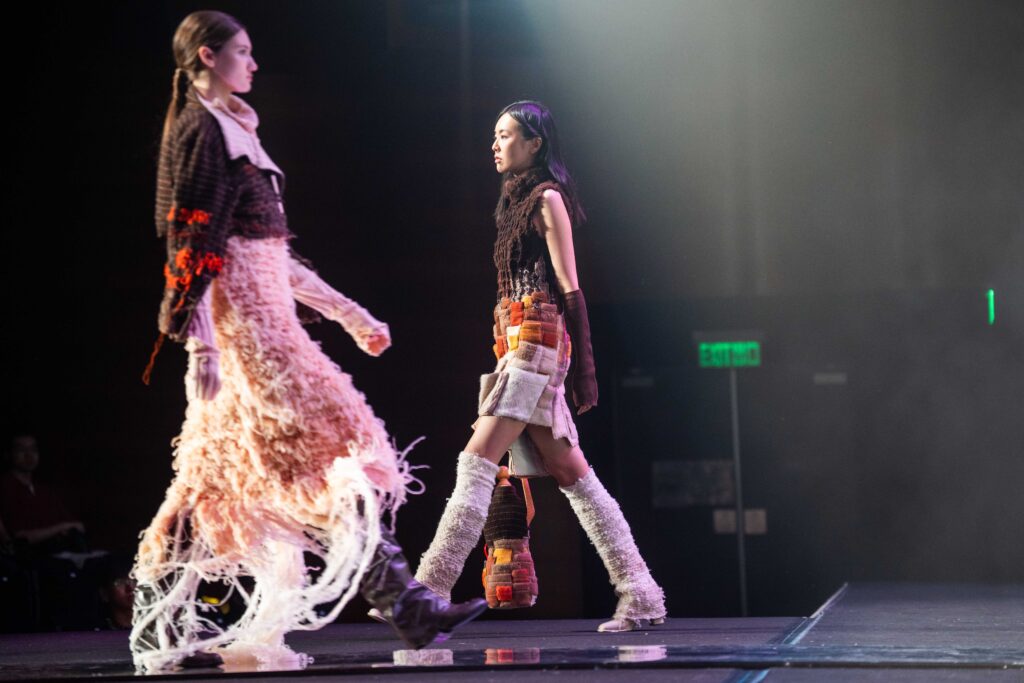
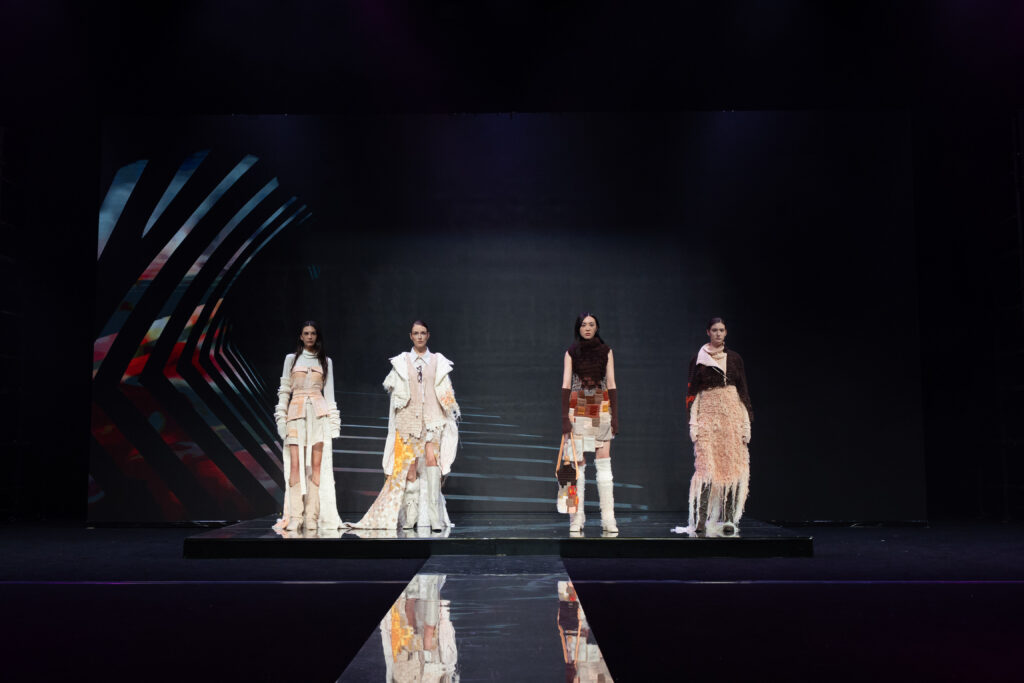
In my design, most items are made from 100 percent cotton and dyed using natural dyes. To incorporate the concept of workaholism, many fabrics undergo intricate processes. One textile highlights the importance of recycling by using reclaimed fabric scraps from different factories, cut into square pieces and assembled into a pixel art representation of a sunrise. Additionally, I have repurposed collected waste yarns to crochet a long skirt and leg warmers. Furthermore, most of the fabrics are woven from TENCEL™, which is a regenerative material that enhances durability and timelessness.