


How the European Commission’s Clean Industrial Deal Would Boost Green Manufacturing
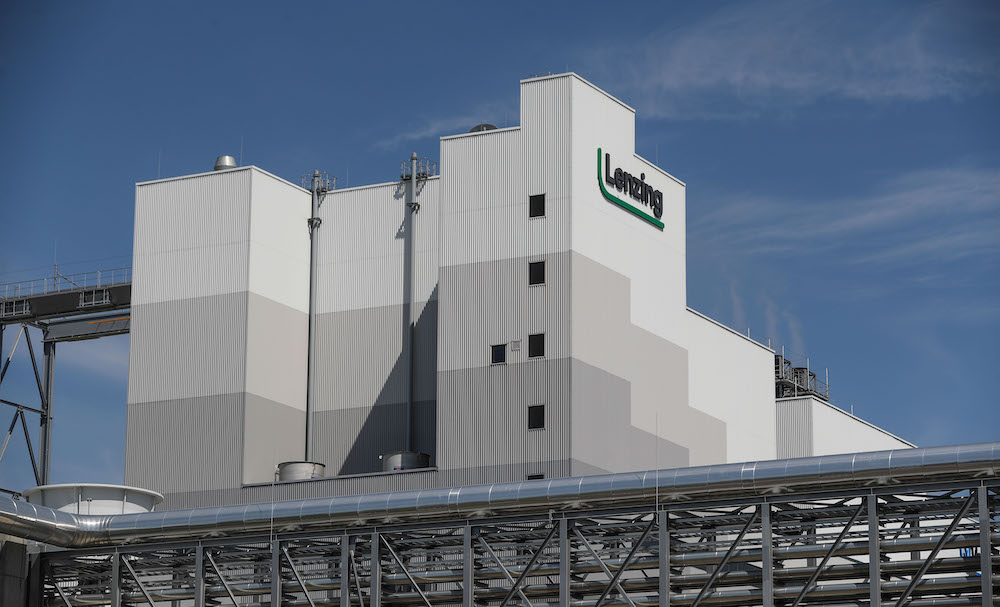
Wood-based fiber maker Lenzing Group is among the companies advocating for the implementation of the European Commission’s Clean Industrial Deal, seeing the initiative as crucial to encourage sustainable investment.
Lenzing CEO Rohit Aggarwal was one of 400 business leaders that met with Commission President Ursula von der Leyen in Antwerp, Belgium on Feb. 26 to discuss the deal. If enacted, the deal will allocate more than 100 billion euros to help EU companies simultaneously reduce carbon while becoming more competitive.
“International trade tensions, volatile energy markets, and the need to decarbonize industries demand urgent collective action,” Rohit Aggarwal said. “We must continue to support Europe’s green leadership and ensure that those investing in sustainability are incentivized. We must act now, work together and translate ambition into tangible results. The Clean Industrial Deal is an important initiative for Europe’s industrial and sustainable future. It will strengthen Europe’s net-zero industry, expand green technology manufacturing and enhance industrial competitiveness.”

This deal comes at a time when Europe’s manufacturing sector is stalling, with output dropping 2.6 percent between 2023 and 2024. Capacity reductions have a human impact, with over 31 million people employed in manufacturing. The deal will establish a Union of Skills that will help individuals gain expertise in areas like clean technology, digitalization and entrepreneurship. It is estimated that the efforts surrounding the deal will create 500,000 new jobs.
One pillar of the Clean Industrial Deal is affordable and cleaner energy. EU companies pay roughly four to five times as much as competitors for energy. The Affordable Energy Action Plan focuses on ramping up clean energy while also improving energy efficiency so the continent reduces its reliance on imported fossil fuels. In Lenzing’s plants in Austria and the Czech Republic, we are using a biorefinery concept that takes the leftover wood material from our fiber production process and uses it as a bioenergy source.
Another issue facing EU industries is declining demand. Addressing this, the Industrial Decarbonisation Accelerator Act sets up sustainability, resilience and “made in Europe” procurement criteria for the public and private sector. The deal also focuses on trade and creating opportunities for EU companies abroad.
Circularity and access to materials is also part of the deal’s plan to decarbonize manufacturing. Among the action items is establishing mechanisms so companies can join together to aggregate demand for raw materials and opening an EU Critical Raw Material Centre that can purchase materials for companies to achieve better scale and prices. In 2026, a Circular Economy Act will go into effect that calls for 24 percent of materials to be circular by 2030. In our own operations, Lenzing has developed solutions such as LENZING™ ECOVERO™ with REFIBRA™ technology to reuse textile waste and keep resources in circulation.
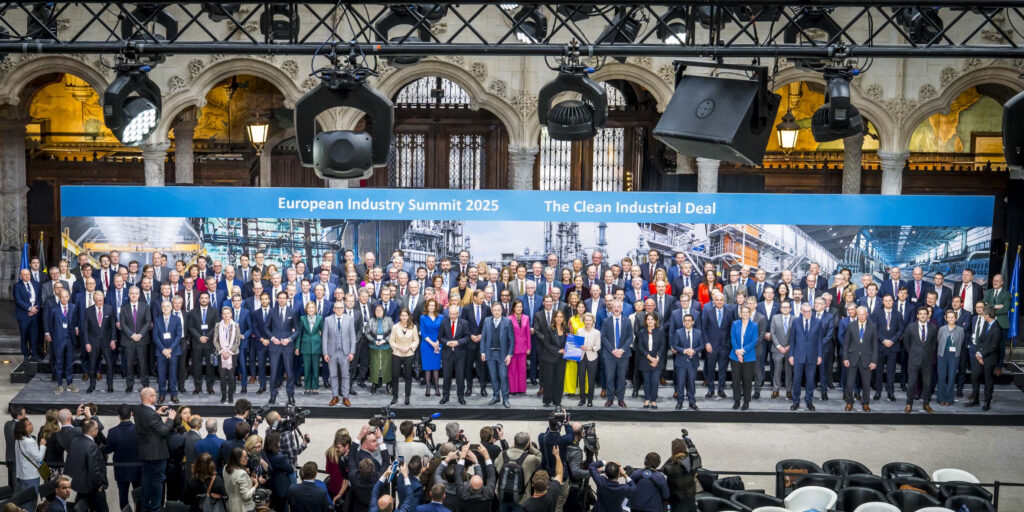
The Clean Industrial Deal stems from the Antwerp Declaration presented to Commission President Ursula von der Leyen and former Belgian Prime Minister Alexander De Croo in February 2024. While 73 business leaders initially presented the declaration, it has now been signed over 1,300 times. Out of the 10 actions laid out in this document to encourage investment, improve sustainability and protect jobs, Ilham Kadri, president of the European Chemical Industry Council, Cefic, said that nine are addressed in the Clean Industrial Deal.
“We need to transform Europe’s ambition ‘to be,’ into a determination ‘to do,’” she said. “Every day, Europe is falling behind its goals and is losing quality jobs for our current and future generations of workers. In the turbulent times we are in we need bold action from the European leadership.”