


Ian Berry Talks Türkiye, Denim as a Medium and Seeing His Work in Murals
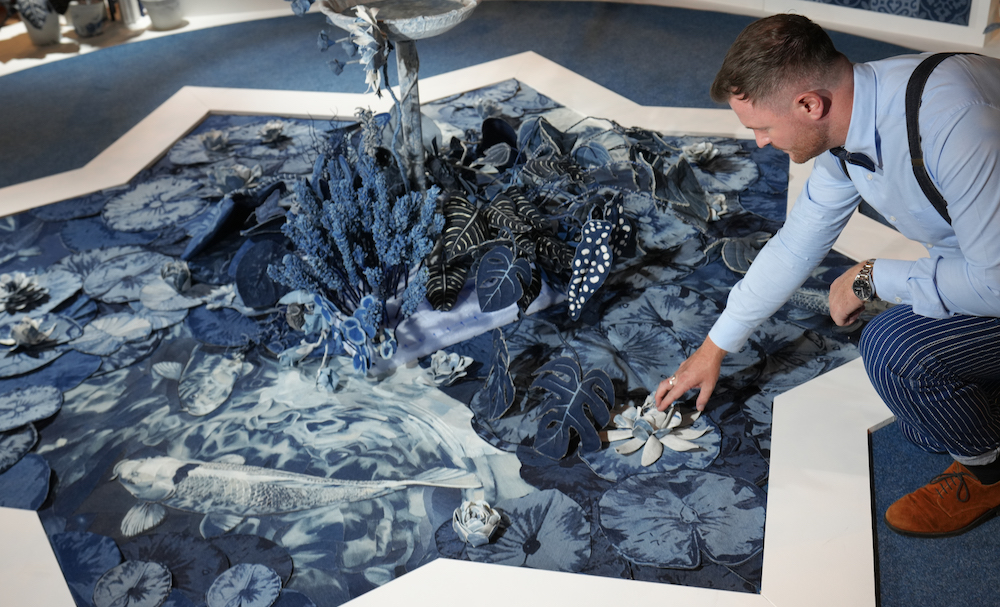
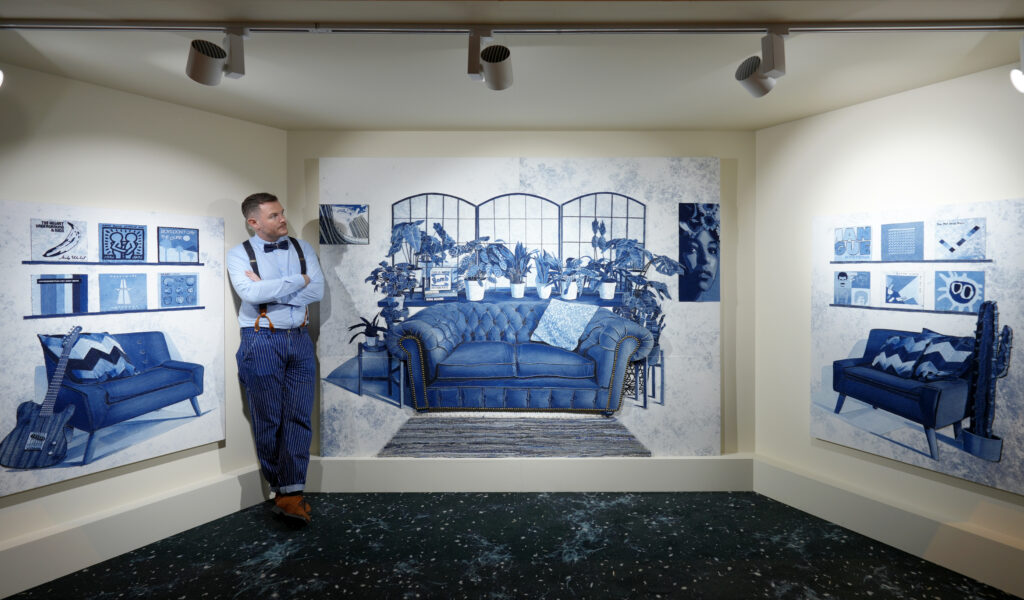
In Ian Berry’s hands, denim jeans turn into immersive works of art. Identifying as an artist who just happens to use denim as a medium, Ian takes the fabric and uses it like paint to create layered, textured depictions of subjects like portraits and slices of urban life.
Although he has been making denim-based art for almost two decades, Ian recently ventured into new geographic territory with his first solo show in Türkiye at Kalyon Culture.
Here, Ian shares what it was like pioneering a new artistic process, what stood out about his Türkiye show and his career highlights.
Carved in Blue: How did you arrive at your signature art style and medium?
Ian: It was by accident as I was seeing a pile of old jeans and all the shades. I had just done a collage out of newspaper and thinking I could do the same with denim. I’m proud to have developed it and pushed it over many years after, and I’m still pushing it. I also loved thinking about my connections with the material and then later, other people’s connections. What it means to the everyday person, not the experts.
Sometimes I got pulled too much into the “industry” and found out too much about the material, and I have to try and remember what it means to the normal person.
I’ll admit sometimes I wish I never did, as it became such a big part of my identity. First and foremost, I’m an artist. It’s just my medium.
It was a blessing and a curse finding denim as my medium. Especially in the early days, being the first and being in the mainstream press, including the fashion press, helped me get it out there, but it was long before the importance of social media. Now there’s times I just want to be an artist and be totally unaware of the “industry.”
Carved in Blue: What is the most challenging factor in working with denim rather than a more common art medium?
Ian: When I started, there was nothing to look at, and I made a lot of mistakes while trailing the medium and techniques. There was no “Dummies Guide to Denim Art.” How to match the pieces and how to cut the material without too much fraying was hard, as well as how to glue. There are many challenges, from getting enough of the right shade, to the size of jeans making it hard to do bigger pieces.
Carved in Blue: Your piece “The Morning After” is currently on view as part of the Weltmuseum Wien’s exhibit “Who’s Wearing the Pants?” How does that particular work reflect the exhibit’s theme?
Ian: It was nice to get included in that show alongside many interesting garments that told so many stories. I am there to help tell the denim part of the story. And while I now can have a very love-hate relationship with the material because of the industry and current politics that have been intertwined with the fabric, I do love the history of the fabric and the garment and often get so pulled into this as an artist and can’t resist doing something about it, as with my Denim Legends ongoing project and other work. “The Morning After” I think both portrays the girls wearing the pants but also shows the other aspects of what this material can do.
Carved in Blue: Since that exhibit is all about legwear through the ages, what is your favorite period in fashion history?
Ian: I can’t say I am the biggest expert on fashion so much and prefer more timeless pieces, too.
I think in denim, it has to be the fifties. The simplicity, the film star looks that have filtered down even to today. I’ve also very much liked workwear, much from the earlier parts of that century.
I can find fashion a bit stressful to think about and to keep up with, with the seasons and trends all while talking about sustainability, which seems sometimes too contrasting to the message. Don’t get me wrong, I respect a lot and when it is original, and do think periods can have a look, and should do. Of course, there are many designers I admire and see some at the top as artists, indeed many undiscovered ones, too, but it feels like many by default just go off trend reports, Pinterest and regurgitation and fast turnaround. “Look mum, I’m a designer,” give over. Normally it’s the factories too that must do much of the hard work and work out the pattern for it; it can jar with me, when it’s the Western designer getting the accolade.
Carved in Blue: “Beyond Denim” was your first solo exhibition in Türkiye. What attracted you toward showing your work in the country?
Ian: It was a place low on the list of places I wanted to show in truth, and I think anyone reading this and from the industry who knows me would know why. But Kalyon Kultur in Istanbul came to me with a proposal: “We want to show Istanbul the original with working with denim art,” and that got my attention.
It was a big lesson for me, too, as I found so many amazing people in Istanbul and Türkiye and I got a very overwhelming response. I let just a few bad people put me off previously, and it was a lesson to not do that.
It also gave me a chance to see Istanbul, and I went four times. I love the city; it has so much beauty and history.
Carved in Blue: What was the response to the “Beyond Denim” show?
Ian: It was incredible. I think it had 40,000 visitors and so much action and positivity online and in the media.
I’ve had exhibitions with bigger attendance, but with this one it felt like everyone was posting on social media and it was getting so many posts, reels and stories each day. I remember a previous show I had had and speaking to the museum, thinking it wasn’t doing so well as I was only getting one or two posts a day; to then find out it had been sold out every day for months. That was also another big lesson to me in understanding social media isn’t everything.
However, on the flip side, what is special about this show was I had that contact here with people as I would often write back. It kept the energy for me and was nice that even if I was away from it, [I could] still feel people are enjoying it.
Another interesting observation was that when people would share it, I’d write to them and say, “Thank you, I hope you enjoyed it?” and the replies were worth it. They would often say, “It’s the best show I have ever seen,” or variants on that or other kind words. I found it interesting, as they often didn’t say that on the original post, but having that connection and communication, we were able to talk about the show, and I could get that feeling I get when I am in the gallery when people speak to me. Nothing had replicated that in-person feeling like this.
Carved in Blue: You are now subsequently showing “Secrets in the Garden” in Ankara. Could you tell us about that?
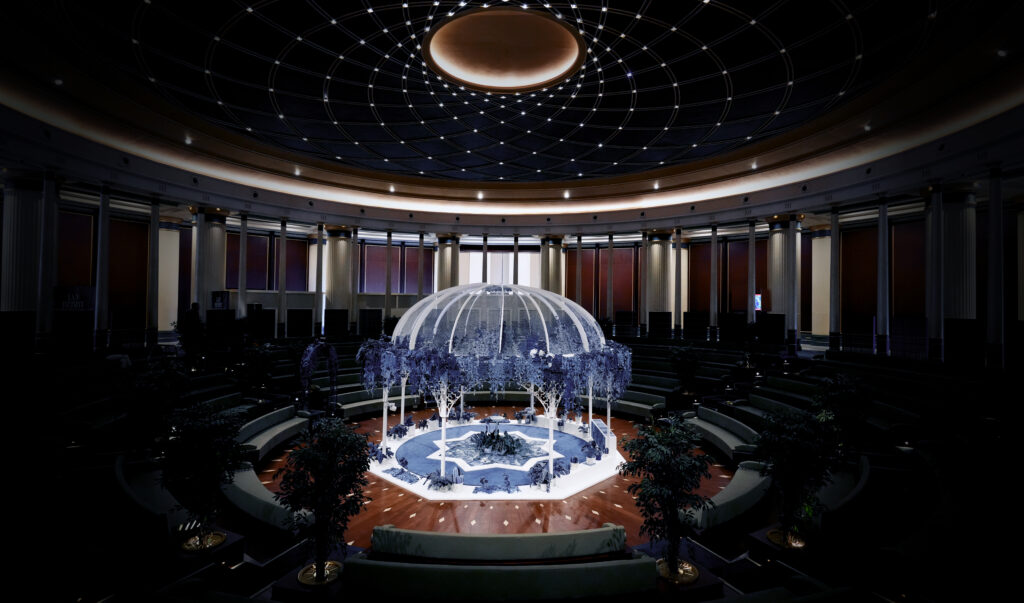
Ian: One of the team of the First Lady of the Republic of Türkiye, saw the show in Istanbul and really enjoyed it and went back and told her about it and it was requested to show there, at the Presidential Library. I saw the connection with her being the Chairperson of the United Nations Secretary General’s Advisory Board of Eminent Persons on Zero Waste.
We had to work out how to move the work across the country and install it in the venue, I am proud to be the first person to get an exhibition where it was displayed, but of course that comes with its challenges! It is such a beautiful room that I was so scared something may get damaged.
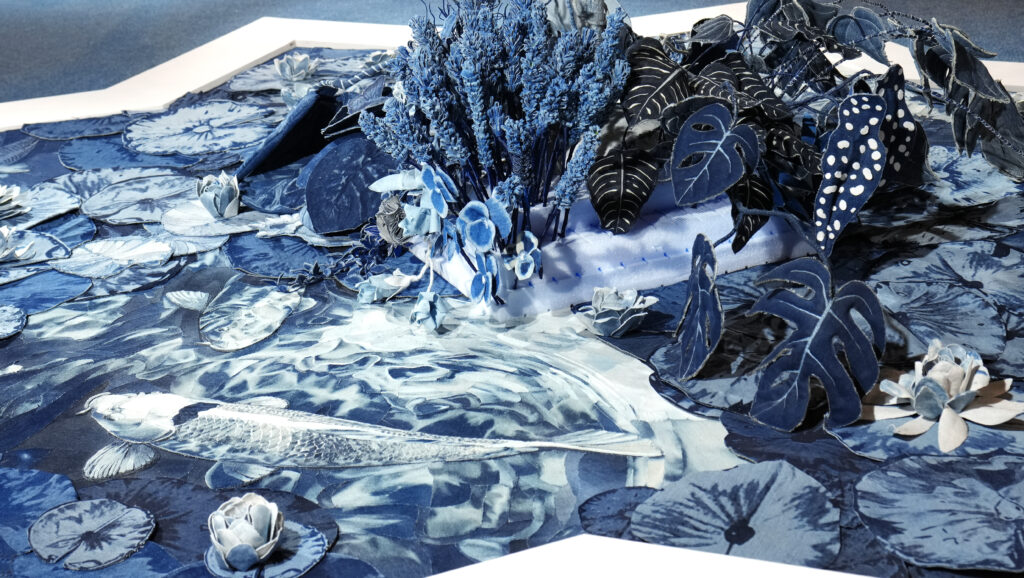
I wanted to try and reflect the building, and we made a new version of the Secret Garden the center piece. I gave it more of a Turkish feel in the design.
We then had a to build an exhibition space from scratch, and the Kalyon Kultur team was amazing. We were ready to open, with Her Excellency cutting the ribbon. It was nice for her to give such a reaction to the work she saw for the first time in real life and was amazed at the detail with just denim. She also found it very interesting, and we spent some time with some clips from the Fast Fashion Graveyard, and I told her more about the Atacama Desert clothes dump that I had visited.
Carved in Blue: Did you take any inspiration back from your travels to Türkiye?
Ian: Having spent time in Ankara and even down in Istanbul, I was very inspired by a lot of the tiles, like in the hamams or the mosques, and I love to make denim shine and like the idea of making more of the tiled works.
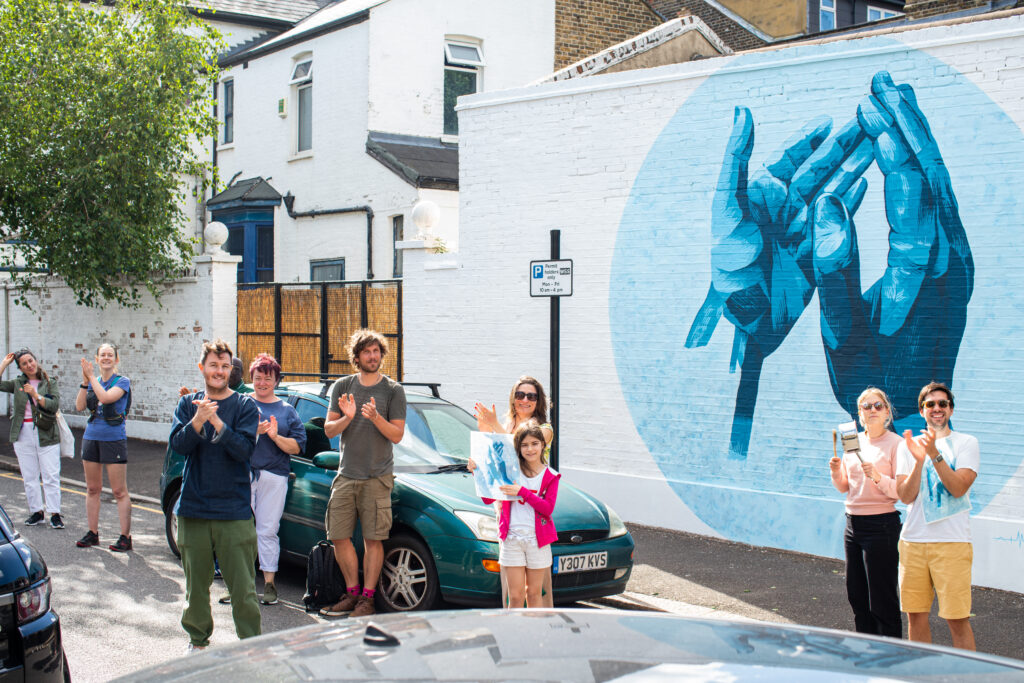
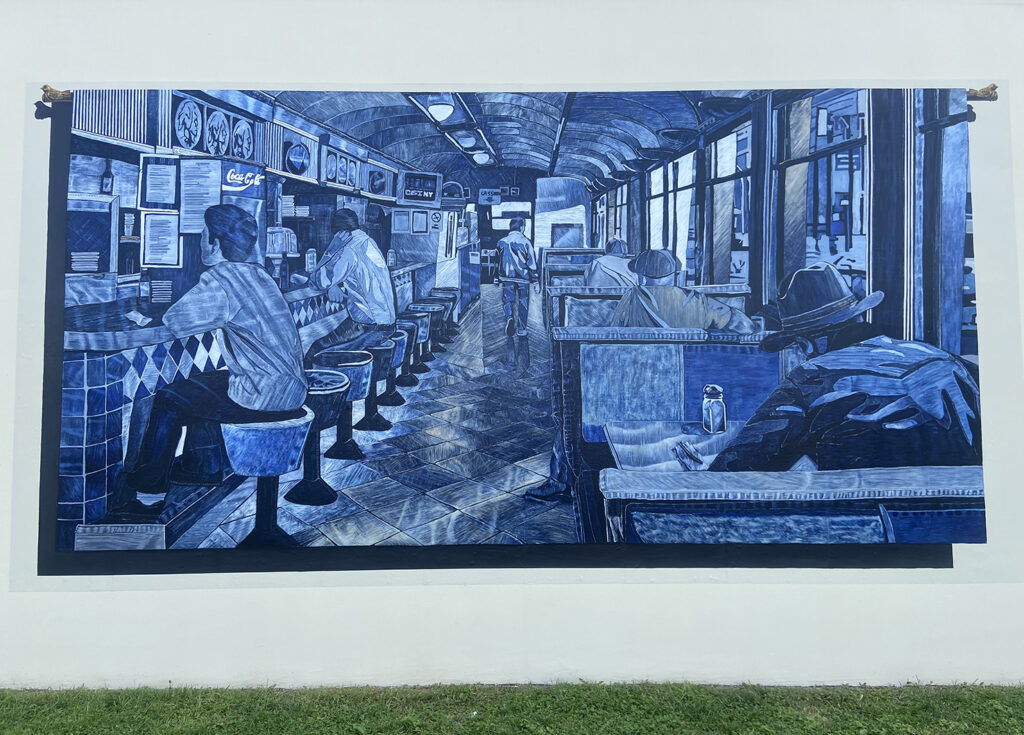
Carved in Blue: Over the years a few of your works have been turned into painted murals. What has it been like to see these recreations take shape?
Ian: It was a nice full-circle moment for me, as when I started to work with denim, I had been really into street art and the scene and thought I would do more work in denim, but on the street. So now, working with some people to get my work on murals is really cool and to see them larger on walls for all to see is great.
I was actually even included in a book recently, called “Street Beauty,” that included my “Clapping Hands Mural” by Atma in Walthamstow, London. I was alongside many of my favorite artists when I first started to cut denim. There was also a beautiful recreated piece in Kentucky for a special project, and it’s crazy how long it took and the level of detail, sometimes too good as it was an old piece of mine made in 2012 and you see your improvements over time. Tanya Neitzke painted one of my old diner scenes for Quilt City USA Murals in Paducah.
Carved in Blue: What has been the highlight of your career so far?
Ian: I think I’ve always been so busy and on with the next job that I don’t think I appreciate some of the moments I have gone through and that I was living the dreams I had years before. Also, the dreams grow and change.
There’s been many highlights that I think 20 years ago I would have not believed they were possible.
Navigating Covid with several museum shows and getting great attendance figures has been really special, and they have been like mid-career surveys. They got some of the venue’s biggest numbers, or the biggest. I want to have the museum shows as it’s where art should be and put together correctly, and I love to work on them creating each room.
For me, it’s the biggest privilege being able to travel and see the world with my work. Meeting new people and seeing the world through the people you meet not as a tourist.
While I loved the job, I don’t know if it was the biggest highlight, but going to Chile to do the work for Levi’s, which is now permanently in the Santiago Metro, was special for me for several reasons. I’d found myself stopping enjoying what I do. While I had lots of work and job offers on, it had been like my heart was ripped out and I was not liking the material. I was burned out and exhausted and hardly had the fight in me. I was thinking of working with something else or even quitting all together.
But going there refreshed my energy. Seeing this special part of the work and also doing these portraits, which were some of Chile’s most successful musicians. It gave me back my life and my confidence.
Carved in Blue: What is next for you?
Ian: Sadly, I never say what I am going to do in future. But I will be revisiting two different countries that I have been before and I’m excited for it.
You can find out on @ianberry.art