


Kipas’ Contra Colors Concept Produces Vintage Looks with Eco-Conscious Processes
Denim producers and their customers are often seeking a lived-in, distressed look. But giving dark and black wash jeans this treatment has typically taken a lot of resources, including water, chemicals and manual labor.
Changing the game for deep denim processing, Turkish textile mill Kipas collaborated with dye manufacturer Archroma and laundry innovator Jeanologia to create Contra Colors, a concept that allows for high contrast looks with a greatly reduced environmental impact. Contra Colors creates denim that is a strong fit for lasering, allowing for easier and eco-friendlier finishing with vintage effects.
Carmen Silla, marketing director at Jeanologia; Julio Perales, technical and product segment manager denim at Archroma; and Mustafa Güleken, general manager at Kipas, chatted with Carved in Blue about the development of Contra Colors and how TENCEL™ fibers are used in the concept.

Carved in Blue: What have traditionally been the challenges of trying to achieve washed-down looks on black and indigo dyed denim? How did you seek to address these through Contra Colors?
Mustafa: The primary challenge in achieving washed-down looks on black denim lies in the extensive post-processing required, including manual work and washes after laser applications. This additional effort is particularly necessary for black fabrics, posing a significant hurdle in the denim market.
The development of Contra Colors aims to eliminate these extra processes. At Kipas, we focus on creating solutions that enhance both design and production, while considering the entire product lifecycle. Our goal is to foster eco-conscious innovations that support responsible manufacturing.
Today’s trend is shifting from conventional methods toward more sustainable practices at every stage. Collaboration and recognizing our role in the production chain are essential. Responsible production involves minimizing resource use, transforming materials, reducing environmental impact and ensuring recyclability.
Our R&D emphasizes the entire supply chain, creating fabrics that not only reduce resource usage in our processes but also promote sustainability in subsequent stages. For instance, our designs minimize wash times and utilize user-friendly materials to engage consumers in sustainability.
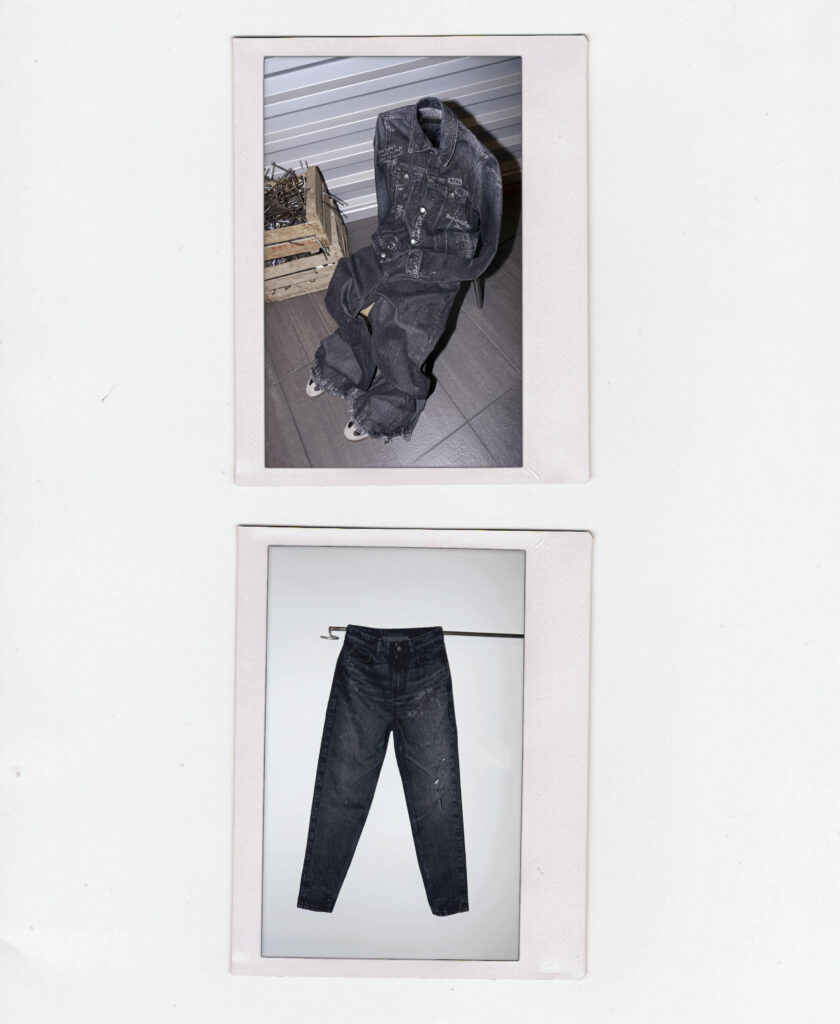
Additionally, the Contra family enhances laser applications by shortening washing times, enabling quicker high and low contrasts and giving fabrics a more three-dimensional quality, making them laundry friendly. This holistic approach improves both functionality and sustainability in denim production.
Carved in Blue: While lasers are a great lower-impact solution for finishing, why is not every jean the best candidate for lasering? How do jeans need to be made to get the optimal laser results?
Carmen: To work sustainably, efficiently, it is essential to take a holistic approach that connects the fabric with the desired finish. A key part of this process is the use of the LSF—Light Sensitive Fabric Test methodology. This test analyzes the fabric’s characteristics and its reaction to laser light, classifying fabrics as highly, moderately or lowly sensitive to laser. This classification enables garment manufacturers and fabric mills to determine the types of finishes that can be achieved efficiently and sustainably.
For example, in the case of Contra Colors, Kipas’ range of fabrics based on Archroma’s Denim Halo dyeing technology exhibit a high sensitivity to laser, key for achieving sustainable finishing, making them ideal for outstanding results with lower impact.
Carved in Blue: What is different about the Contra Colors dyeing process that enables easier lasering?
Julio: The primary distinction of Contra Colors lies in the high superficiality of the yarn coloration. This is achieved through the patented Denim Halo dyeing process from Archroma, which allows for a much easier laser effect compared to standard yarn coloration systems, particularly those using sulfur dyes.
The superficial or ring effect is extremely difficult to achieve in conventional applications. Sulfur dyes tend to diffuse deeply into the core fibers of the yarn, resulting in high solidity.
Denim Halo in Contra Colors fabrics makes the wash down time cycles at the laundry shorter and more efficient than the standard procedures without the use of hazardous chemicals such as potassium permanganate or even pumice stones.
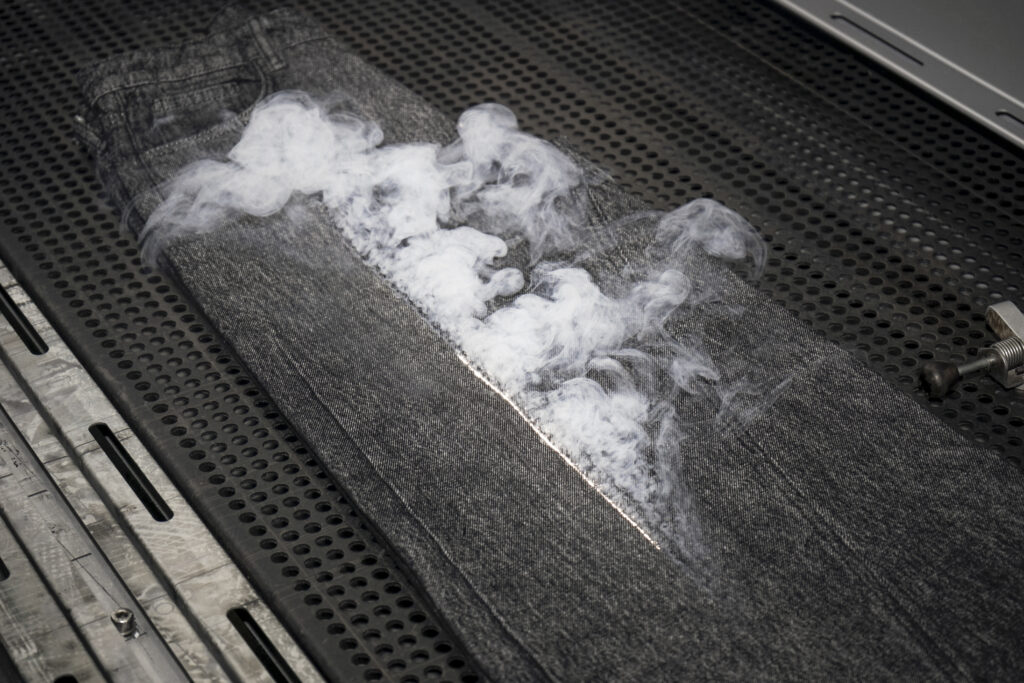
With Denim Halo, Kipas have found a way to produce low-impact denim fabrics, using Jeanologia’s laser technology and Atmos.
Carved in Blue: Could you explain in more detail how Denim Halo works, including how this translates to the Kipas concept?
Julio: The Denim Halo process involves the application of a special ingredient applied as a yarn pretreatment, which prevents the diffusion of the dyestuff. This keeps the color superficial, forming a ring on the yarn, with the surface well colorated and the internal fibers remaining undyed.
Denim Halo also enables the high color intensity, clean and luster shade, in black and sulfur dye colors.
The application of the special ingredient reduces the consumption of mercerizing bath, resulting in less salt generation in the wastewater and reducing the shrinkage of the yarn during the yarn dyeing, which results in less yarn breakages.
All these benefits are inherent to the Contra Colors fabric from Kipas, embracing a new way to produce better denim.
Carved in Blue: Which types of low-impact laundry processes are Contra Colors fabrics most suited for?
Carmen: Contra Colors fabrics can be applied to any laundry process, delivering excellent, low-impact results. However, the Atmos process deserves special mention—Atmos is the new stone wash. This process eliminates pumice stones, reduces chemicals and cuts water consumption by up to 80 percent, all while maintaining a natural and authentic look. Contra Colors fabrics achieve incredible contrasts and high and lows in seams. In this sense, the holistic approach behind the development of these fabrics takes performance to the next level when laser marking is combined with the Atmos process. This synergy achieves exceptional levels of quality and brightness, delivering spectacular results while using fewer resources, embodying the principle of doing more with less.
Carved in Blue: How are you using TENCEL™ within Contra Colors?
Mustafa: Within Contra Colors, we have integrated TENCEL™ fibers into our fabric compositions, enhancing the performance of our textiles. In addition to the previously mentioned features of Contra Colors, we have expanded our collection to include textures and worn-in appearances that align with current trends. This allows for the creation of unique outfits, further broadening the versatility of the Contra family.
Carved in Blue: What looks and finishes have you created so far using Contra Colors and Jeanologia’s technology?
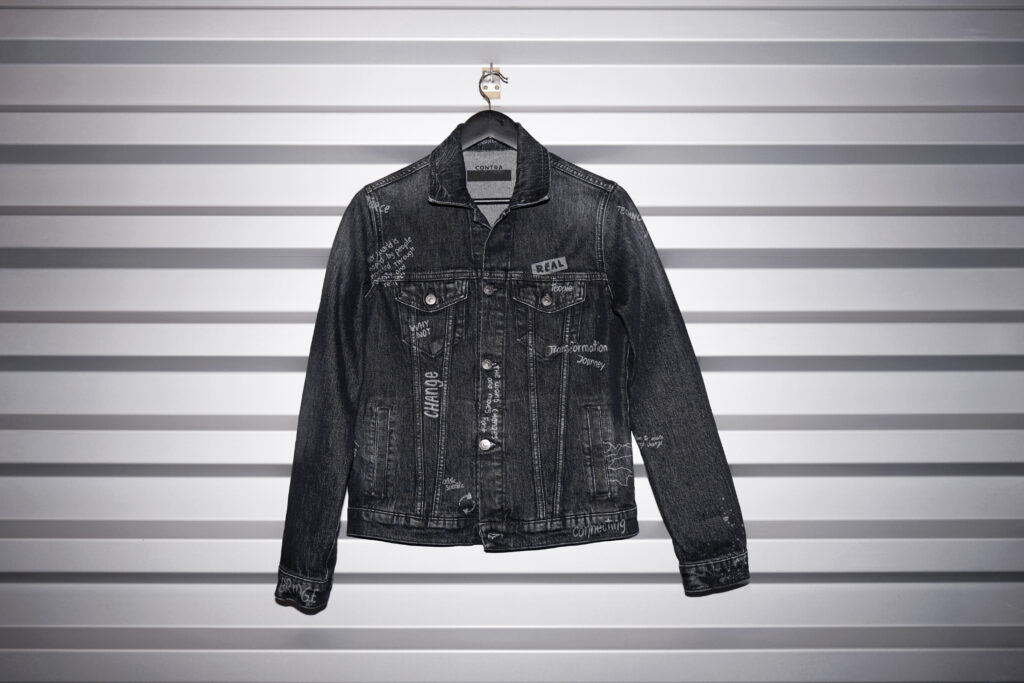
Mustafa: With Contra Colors, we have achieved a range of distinctive looks and finishes through our washing processes. Specifically, we can now easily create contrasting visuals and transitions from black to grey without the need for additional laundry treatments. This means we can attain the authentic appearances commonly seen in denim much more quickly, using less water, energy and time.
Additionally, we have the capability to produce various designs in a more three-dimensional look using laser technology. Our Contra concept has resulted in a broad family of fabrics, ranging from lightweight options to authentic 13.5 oz. fabrics, as well as high-elasticity rigid products. We offer a variety of fabric textures, from more subdued surfaces to those with prominent textures, allowing us to meet the diverse needs of many brands.