



Mills Update: Pakistan Producers on Tariff Preparedness and Textile Trends
In a time of trade volatility, brands are shifting their sourcing strategies to guard against tariffs. Denim manufacturers are soldiering on, leaning on innovation and their internal capabilities to drive business while also keeping a watchful eye on the situation.
Ahead of Kingpins Show Amsterdam, held on April 16-17, Carved in Blue caught up with denim mills to discuss the sourcing landscape, their latest launches and where denim trends are headed for Fall/Winter 2026. Here, executives from Artistic Denim Mills, Indigo Textile, Naveena Denim Lahore, Rajby Textiles and US Denim discuss what tariffs mean for their operations and the widespread trend of wide-leg jeans.
ARTISTIC DENIM MILLS

Zahra Ahmed, director
Carved in Blue: Tariffs are top of mind right now for the industry. How are trade policies impacting your business—particularly in the U.S.?
Zahra: The biggest challenge we are facing is the uncertainty. Five years ago, the industry had to adjust when Covid dramatically challenged the supply chain and changed consumer behavior. Today, the set of challenges is different, but it only emphasizes the importance of an agile and adaptable mindset. With the tariffs, we have to keep an eye on the cost of raw materials, price out the uncertainty and find the line between risk and reward. Brands are in a tough spot and are not going to be motivated to pass those costs on to their consumer, which puts pressure on manufacturers. Our focus is on high-quality, core products that speak to consumer needs, rather than wants as we navigate this complex environment.
Carved in Blue: What do you expect consumers will be looking for in Fall/Winter 2026? How are you developing denim to meet their expected wants?
Zahra: For FW26, the trend forecast is fit driven. We continue to see innovation in the wide-leg category as it expands to include barrel and curved silhouettes. Colors are muted and natural toned, and denim washes range from authentic with texture to flat and clean. Overall, the market is leaning towards a very classic, pared-down look.
Carved in Blue: What collections are you debuting at Kingpins Amsterdam this April? Do any of your textiles incorporate TENCEL™ Lyocell and/or Modal?
Zahra: Lenzing products are a key component in our product offering. Utilizing TENCEL™ Lyocell allows us to bring a soft hand feel to our recycled cotton ranges. In addition, the drapability of the fiber allows denim to be at the forefront of the trouser trend.
INDIGO TEXTILE
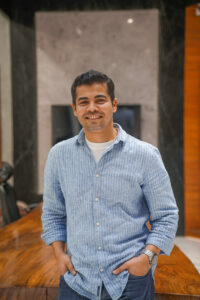
Shakaib Nazim, general manager sales & marketing
Carved in Blue: Tariffs are top of mind right now for the industry. How are trade policies impacting your business—particularly in the U.S.?
Shakaib: We are closely monitoring the evolving trade policies and their potential impact on global supply chains and logistics. The U.S. market remains one of our key stakeholders, and we continuously adapt our strategies to align with changing market dynamics. Flexibility and resilience are crucial in ensuring smooth operations and sustained partnerships.
Carved in Blue: What do you expect consumers will be looking for in Fall/Winter 2026? How are you developing denim to meet their expected wants?
Shakaib: Consumers are increasingly drawn to natural comfort, versatility and sustainability in denim. Our upcoming Autumn/Winter 26/27 collection, launching in mid-April, embraces this shift with premium blends like cotton-TENCEL™, cotton-linen and cotton-linen-TENCEL™. As market needs evolve, we’re stepping up with non-stretch denim that balances tradition with modern innovation. At Indigo Textile, we don’t just follow trends—we craft them through continuous innovation in fabric development and processes.
Carved in Blue: What collections are you debuting at Kingpins Amsterdam this April? Do any of your textiles incorporate TENCEL™ Lyocell and/or Modal?
Shakaib: April marks a key moment for us as we introduce our latest innovations for Autumn/Winter 26/27. We continue to explore new possibilities with premium fiber blends, including TENCEL™ Lyocell and Modal, carefully integrating them into our textiles for enhanced softness, durability and sustainability. Our approach is driven by market insights and a deep understanding of industry needs—ensuring our denim remains at the forefront of both innovation and responsibility.
NAVEENA DENIM LAHORE (NDL)

Umair Masood Tata, director
Carved in Blue: Tariffs are top of mind right now for the industry. How are trade policies impacting your business—particularly in the U.S.?
Umair: Trade policies and tariffs play a crucial role in Pakistan’s denim manufacturing industry, particularly for exporters targeting the U.S. market. Despite Pakistan’s inclusion in the U.S. Generalized System of Preferences (GSP), denim and other apparel items remain excluded, subjecting exports to tariffs of 9 percent to 12 percent. This puts Pakistani manufacturers at a disadvantage compared to competitors from countries with free trade agreements, such as Mexico and Vietnam. Gaining a more favorable trade status with the U.S. would significantly enhance cost competitiveness.
Global trade shifts, including U.S. tariffs on China, have led American buyers to diversify sourcing, benefiting Pakistani manufacturers. However, rising raw material costs, logistical challenges and stricter sustainability regulations, such as the Uyghur Forced Labor Prevention Act (UFLPA), pose additional hurdles. Increased scrutiny on cotton sourcing requires compliance with ethical and sustainable practices.
To navigate these challenges, our denim mill has prioritized sustainable and innovative production methods, aligning with the growing U.S. demand for eco-friendly products. Additionally, we are diversifying our customer base by partnering with niche brands and retailers that value quality and sustainable manufacturing over low-cost production.
The future of U.S.-Pakistan denim trade will depend on policy changes, potential trade agreements and global economic trends. Any reduction in tariffs or trade facilitation between the two countries would greatly benefit Pakistan’s denim industry, improving competitiveness and strengthening market presence in the U.S.A.
Carved in Blue: What do you expect consumers will be looking for in Fall/Winter 2026? How are you developing denim to meet their expected wants?
Umair: For Fall/Winter 2026, fashion consumers are embracing a blend of comfort, vintage aesthetics and sustainability. Soft, breathable fabrics with luxurious hand feel are at the forefront, offering both warmth and style. Silhouettes are shifting towards wide-leg cuts, loose fits and flared designs, reflecting a relaxed yet sophisticated look.
While Gen Z gravitates toward minimal, eco-conscious denim, millennials and boomers favor timeless styles with vintage-inspired washes, natural fades and worn-in textures that add depth and authenticity. The return of low-rise jeans alongside classic cuts reflects a seamless fusion of nostalgia and modern wearability.
At NDL, we are crafting denim that aligns with evolving consumer expectations—prioritizing supreme softness, durability and responsible innovation. Our approach focuses on breathable, lived-in fabrics that capture the authenticity of vintage aesthetics while seamlessly integrating comfort and eco-conscious practices. For Fall/Winter 2026, denim isn’t just about style; it’s about a purposeful fusion of heritage, functionality and sustainability.
Carved in Blue: What collections are you debuting at Kingpins Amsterdam this April? Do any of your textiles incorporate TENCEL™ Lyocell and/or Modal?
Umair: This April, we’re introducing ‘’FluffEdge’’—a denim collection that’s not just soft on the inside but also features a uniquely tufted surface. Unlike conventional brushed-back denim, NDL’s FluffEdge denim offers an extraordinary hand feel, thanks to the protruding fibers that enhances its softness.
Crafted using Feather Yarns, this collection delivers the warmth and comfort of a cozy blanket, becoming bulkier and more inviting with every wash.
Beyond FluffEdge, we’re also incorporating banana fiber and TENCEL™ fibers into new fabric developments. TENCEL™ Lyocell, whether blended with back brushing for exceptional softness and warmth or with open-end yarn for a vintage and authentic aesthetic, our focus remains on creating performance-driven fabrics that merge comfort, style and responsible production.
RAJBY TEXTILES
Daniyal Saleem, CEO
Carved in Blue: Tariffs are top of mind right now for the industry. How are trade policies impacting your business—particularly in the U.S.?
Daniyal: Pakistan stands to benefit in this scenario, particularly with its GSP Plus status for the European market. In the U.S., our longstanding partnerships and commitment to exceptional service position us favorably against competitors facing high tariffs. This stability allows us to strengthen our presence and continue delivering value to our customers.
Carved in Blue: What do you expect consumers will be looking for in Fall/Winter 2026? How are you developing denim to meet their expected wants?
Daniyal: For Fall/Winter 2026, consumers will be seeking a balance of authenticity, innovation and elevated comfort in denim. To meet these expectations, we’ve developed our AW collection across multiple directions.
For those drawn to timeless appeal, our Retro Renaissance collection revives vintage aesthetics with compact weaves, a soft touch and distinctive ring effect. Recognizing the industry’s demand for intricate fabric structures, The Fifth Element explores innovative weave designs that push the boundaries of texture and depth. Additionally, with X-Hatch Chronicles, we embrace the growing crosshatch trend, offering fabrics with wider slubs, 3D effect and unique constructions to add dimension and versatility.
Carved in Blue: What collections are you debuting at Kingpins Amsterdam this April? Do any of your textiles incorporate TENCEL™ Lyocell and/or Modal?
Daniyal: At Kingpins Amsterdam this April, we are introducing a range of innovative collections that blend authenticity with cutting-edge sustainability. TENCEL™ Lyocell has been a core component of our developments for years, and this season, we’ve integrated it into our Retro Renaissance collection to create fabrics that capture a true vintage aesthetic while offering an exceptionally soft touch.
Additionally, we are debuting polylactic acid (PLA) fabrics in collaboration with PlaX by Bioworks, reinforcing our commitment to bio-based solutions. By combining TENCEL™ fibers with PlaX, we’ve developed textiles that deliver both sustainability and a luxurious soft handle, ensuring a perfect balance of performance and comfort in our Kingpins Amsterdam lineup.
US DENIM
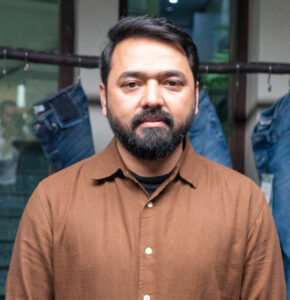
Intizar Ali, general manager research & business development
Carved in Blue: Tariffs are top of mind right now for the industry. How are trade policies impacting your business—particularly in the U.S.?
Intizar: With the recent U.S. trade policies, particularly the introduction of reciprocal tariffs, there’s a lot at stake for Pakistan’s denim industry. These tariffs are meant to counterbalance what other countries impose on the U.S. but may lead to increased prices for American consumers and potential retaliation from affected nations.
To elaborate, here’s how the new trade policies can impact Pakistan’s denim industry.
There will be increased costs and reduced competitiveness. Let’s be real—if Pakistan’s denim gets hit with higher tariffs, it’s going to be more expensive in the U.S. That means it’ll be harder to compete with suppliers from countries that aren’t dealing with the same trade barriers.
It will also lead to more market diversification. To mitigate the impact of U.S. tariffs, Pakistan’s denim manufacturers may explore alternative markets, such as Europe or emerging economies, to reduce reliance on the U.S. market.
There’s also the question of trade agreements. We might see the industry pushing harder for things like GSP reinstatement or other favorable trade terms to regain a competitive edge.
We’ll also see a focus on value addition and sustainability. Emphasizing sustainable practices and producing value-added products could help Pakistani manufacturers differentiate their offerings and justify premium pricing, potentially offsetting tariff impacts.
While these tariffs present real challenges, Pakistan’s denim industry has room to adapt. By diversifying markets, advocating for better trade terms and embracing innovation, manufacturers can navigate this shifting landscape while continuing to grow.
Carved in Blue: What do you expect consumers will be looking for in Fall/Winter 2026? How are you developing denim to meet their expected wants?
Intizar: For Fall/Winter 2026, we see two key directions gaining traction: rigid denim and comfort stretch, both offering rich character across a full range of weights, from heavy to medium and lighter options. These fabrics cater to trending fits like baggy, wide-leg, mom jeans and balloon styles, ensuring versatility for evolving consumer preferences.
Shoppers today aren’t just sticking to conventional blends like 100 percent cotton or cotton-elastane—there’s a growing demand for premium blends like TENCEL™ Lyocell and linen, which enhance comfort while maintaining the authentic denim look and feel.
Our Fall/Winter 2026 collection is designed to align with these shifts, offering a diverse range of shades, textures and constructions, along with unconventional colors and surface finishes that bring a fresh perspective to denim.
Carved in Blue: What collections are you debuting at Kingpins Amsterdam this April? Do any of your textiles incorporate TENCEL™ Lyocell and/or Modal?
Intizar: At this season’s Kingpins Amsterdam, we’re unveiling our FW 26/27 collection—The Raw Edition, a true celebration of denim in all its forms. The collection spans from rigid, true-to-era authenticity to lightweight, airy fabrics that balance comfort and style. Our color story moves beyond classic indigo, introducing a dynamic palette featuring smoky indigos, green casts, fresh greys, deep blacks, versatile overdyes and a rich family of sulfur-dyed hues.
We’re also pushing the boundaries of weave, exploring unconventional constructions and dobby designs alongside traditional 3×1 twills. In terms of character, the collection offers everything from crunchy, marble-textured denim to super-clean aesthetics and from rugged, durable fabrics to ultra-soft, premium finishes.
As for TENCEL™ fibers, we’ve thoughtfully incorporated it across our range, from rigid to super stretch fabrics, enhancing both comfort and luxury. This blend delivers the best of both worlds—an authentic denim look with a modern, elevated softness. TENCEL™ plays a key role in refining our premium offerings, whether used subtly to add comfort or as a defining element for a silky touch.
Additionally, we’re introducing chapter two of our Roots collection—Equilibrium, a capsule collection created in collaboration with Ani Wells. This collection highlights sustainable fibers like regenerative cotton, TENCEL™ Lyocell, linen and hemp, all dyed with natural indigo using eco-conscious techniques.
To hear more from Pakistan-based mills, see part one here.